
Planning · 6 min read
Low-maintenance yard options: artificial turf vs. pavers, rock and mulch
Each surface does one job well. The low-maintenance yard is the one that puts each material where it belongs.
Updated · By The Turf Factory
The short answer
No single surface wins everywhere. Artificial turf fits play and pet areas you want soft and green, pavers fit paths and patios, organic mulch fits planting beds and the ground under trees, and rock fits slopes and spots where you want a long-lasting surface without plants. Most low-maintenance yards combine two or three of them.
Match the material to the job
The low-maintenance yard is not one material. It is the right material in each spot: turf where people and pets play, pavers where people walk and sit, mulch where plants grow, and rock where you want a permanent cover on a slope or in a strip with no plants.
University extension services make the same point from the water side. Colorado State University Extension’s xeriscape guidance suggests mulched beds, decks and paths as alternatives to lawn, and grouping plants by water need (CSU Extension). It also notes that a xeriscape still needs some care. No option on this page is zero maintenance.
How the four compare
Each surface trades something. The table below is a qualitative summary of the sources listed with this guide and of how our turf is built.
| Artificial turf | Pavers | Rock | Organic mulch | |
|---|---|---|---|---|
| Soft to sit, play or land on | Yes | No | No | Somewhat |
| Supports plants and soil life | No | No | No (adds no nutrients) | Yes, improves soil as it breaks down |
| Heat in full sun | Gets hot | Varies by material and color | Stores and radiates heat | Insulates the soil |
| Lets water soak in | Through the backing and base | Only permeable paver systems | Yes | Yes |
| Weed control | Good with a weed barrier and sound edges | Depends on joints and base | Better with landscape fabric | Fair; weeds pull easily |
| Ongoing upkeep | Brush, rinse, clear debris | Sweep, reset or refill joints as needed | Clear debris, occasional weeding | Replenish every year or two |
| Best spots | Lawns, play and pet areas | Paths, patios, seating | Slopes, narrow strips without plants | Planting beds, under trees |
Heat: the honest picture
Turf and rock both get hot in direct sun, and living plants stay cooler. Plan shade and placement around that.
A UF/IFAS study reported that artificial turf can reach about 174°F on the hottest days, while natural grass stayed near 102°F, and that water-scarce xeriscapes ran much warmer than living lawns (UF/IFAS). The same article notes that California’s artificial turf athletic fields were watered in summer to keep them usable.
Rock has its own heat problem. NDSU Extension calls rock mulch a heat trap that can scorch plants, and warns it may contribute to the early death of heat-sensitive plants (NDSU). Colorado State advises against large areas of unshaded rock next to a house (CSU Extension). Organic mulch is the cool option: UF/IFAS says it moderates soil temperature, keeping soil cooler in heat (UF/IFAS Florida-Friendly Landscaping).
If heat is a concern, put turf where trees or structures give afternoon shade, keep rock away from walls and heat-sensitive plants, and use mulched beds near the house.
Drainage and stormwater
Rock, mulch and turf over a compacted aggregate base let rain soak in. Solid paving sheds it unless you choose a permeable system.
The EPA describes permeable pavement, including interlocking pavers, as an alternative to traditional paving that lets rain soak through to the soil and gravel below, which reduces runoff and helps filter pollutants (EPA). If you are adding a large patio, ask about permeable pavers.
For turf, drainage depends on the backing and the base. Our crews grade the area to slope 1–2% away from the house, then build 3–4 inches of crushed aggregate base in compacted layers. Premier Pet Flow 55 uses flow-through backing so pet areas rinse clean. One exception: Premier Putt has a non-permeable, rubber-backed construction, so a putting green built with it needs drainage planned around it.
Weeds and upkeep
Every surface needs some weeding at the edges. The difference is how often and how much work it takes.
- Organic mulch. UF/IFAS recommends a 2- to 3-inch layer on beds to reduce weed germination and hold moisture (UF/IFAS). It breaks down, so Clemson says to replace it every year or two (Clemson HGIC). NDSU notes weeds in shredded bark are sparse and pull out easily.
- Rock. It lasts for years, but NDSU found rock works best for weeds when paired with landscape fabric, and Clemson notes that gaps between larger stones let weed seeds through. CSU warns never to use sheet plastic under any mulch because it blocks air and water.
- Pavers. Low weekly effort. Plan on sweeping, and on keeping joints filled so weeds have less room.
- Artificial turf. No mowing, watering or fertilizing to keep it green. Brush, rinse and clear debris. Our installs use edging and an optional geotextile weed barrier under the base. See how to maintain artificial turf for the full routine.
When turf is not the best choice
Turf is the wrong pick for some spots, and saying so up front saves you money.
- Planting beds and under trees. Plants need soil that breathes and organic matter. Use mulch here.
- Unshaded spots against a hot wall where nobody plays. Turf adds heat and you get no use from the softness. Mulched beds with plants stay cooler.
- Main walkways, grill areas and seating pads. Pavers handle concentrated foot traffic, furniture legs and heat sources better.
- Steep slopes you will never walk on. Clemson notes rock reduces erosion on slopes.
- If you want living plants for cooling and wildlife. UF/IFAS points to Florida-Friendly Landscaping, with drought-tolerant grass, mulch and native plants, as a middle path.
If you are weighing turf against keeping a real lawn, read artificial turf vs. natural grass.
Where turf fits, and how to combine it
Turf earns its place where you want a soft, green surface that stays usable without mowing or watering: lawns, kids’ play areas and dog runs.
- Play areas and lawns. Malibu Flow 65 is a W-blade landscape turf that needs no infill, so there is less to top up. See playgrounds and backyard lawns.
- Pet areas. Premier Pet Flow 55 has a shorter 1.25-inch pile and flow-through drainage. See pet turf and the best artificial turf for dogs.
- Side yards and strips. Tropical Flow 50 is our lighter option for side yards and medians.
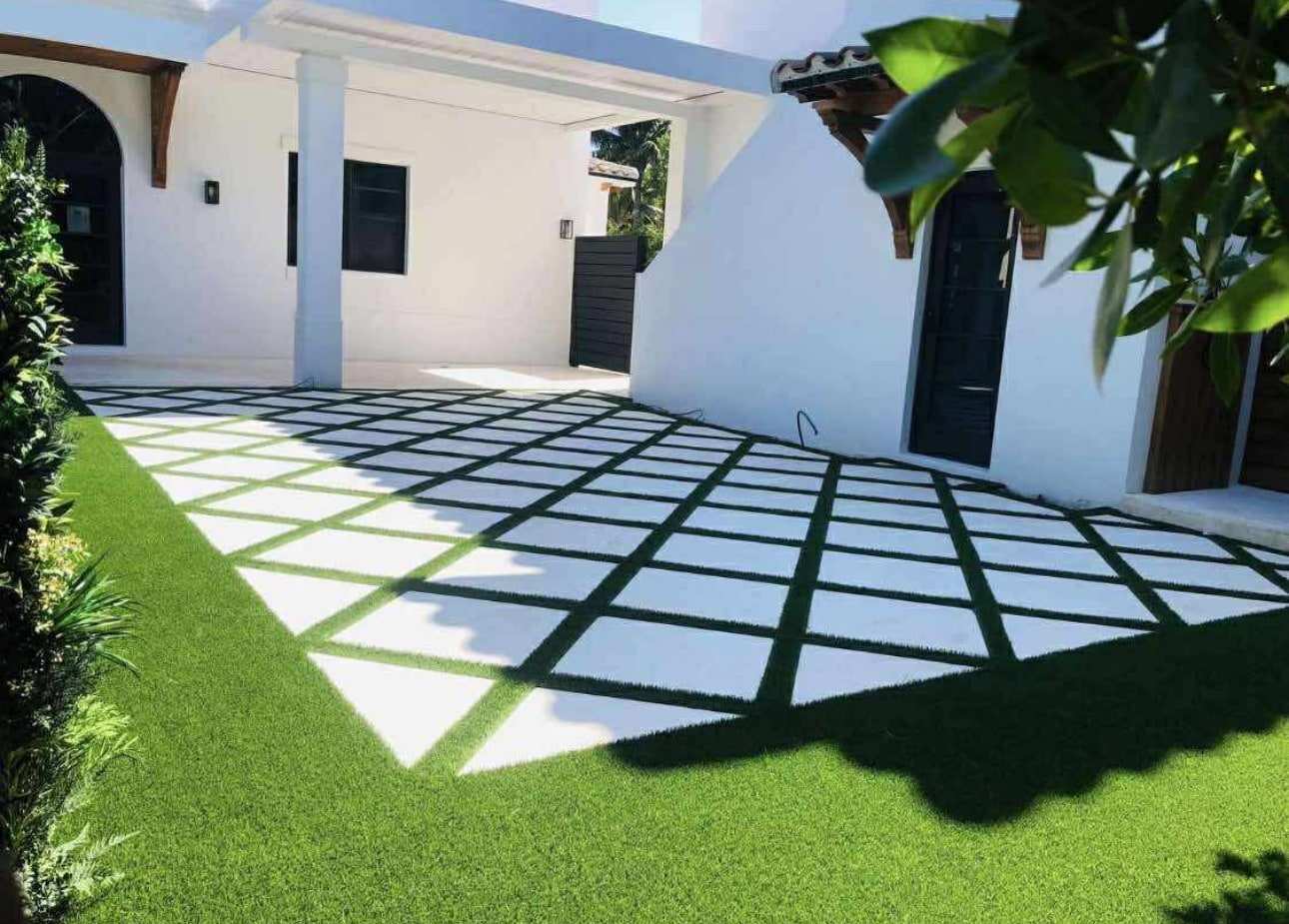
Combinations work well. A paver border gives turf a clean edge and a hard surface for mowers, wheelbarrows and foot traffic. Pavers set in a grid with turf in the joints, like the courtyard above, give you a walkable surface with green between the stones. Mulched beds along the house and under trees keep plants cool while the turf handles the open play space. Every landscape model carries a 16-year warranty and is “Made in U.S.A.” and “Lead & PFAS free.” For budgets, see artificial turf cost, and for product choice, how to choose artificial turf.
Not sure which spots should get turf? Your local installer can walk the yard with you and give you a free estimate. Find your local crew.
Plan your yard
Get a free quoteSources
- UF/IFAS: Scorching temps from California turf raise questions about artificial turf, xeriscaping in humid states like Florida (opens in a new tab)
- UF/IFAS Florida-Friendly Landscaping: Principle 4, Mulch (opens in a new tab)
- Colorado State University Extension PlantTalk: Xeriscape mulches (opens in a new tab)
- Colorado State University Extension PlantTalk: Xeriscape basics (opens in a new tab)
- NDSU Extension: Mulch madness (rock vs. shredded bark) (opens in a new tab)
- Clemson Home & Garden Information Center: Mulch or rock, which do you prefer? (opens in a new tab)
- U.S. EPA Soak Up the Rain: Permeable pavement (opens in a new tab)