Nylon or polypropylene: picking the putting surface
Pick nylon if the green is for putting only, and polypropylene if you also plan to chip onto it. Both are short-pile, texturized putting turfs made in U.S.A. with a 16-year warranty. They differ in fiber, backing and infill.
- Premier Putt is texturized nylon at a tight 3/16 in. gauge with a 0.65 in. pile and 40 oz face weight. It is rubber-backed and non-permeable, and infill is optional. Because water does not pass through the backing, the base must be sloped so rain runs off the surface.
- Pro Putt 42 is texturized polypropylene with a 0.62 in. pile, 42 oz face weight and an 18 oz PU finish. It is installed with 1–2 lbs/sq ft of infill and is built for backyard greens and chipping areas.
If you are still comparing turf in general, start with how to choose artificial turf.
Green speed and the Stimpmeter
Green speed is how far a ball rolls, in feet, after it is released down a standard ramp called a Stimpmeter. The USGA’s Stimpmeter is 36 inches long with a notch about 30 inches from the tapered end. When the ramp is lifted to about 22 degrees, the ball releases and rolls onto the green.
The USGA’s method is to roll three balls in one direction on a level spot, average them, repeat in the opposite direction, and average the two results. Slope changes the reading, so the test needs a flat, level stretch. On a backyard green, ask your installer to roll the finished surface with you so you know its speed. We do not publish a single speed for either product because the infill, base and contours all affect it.
Breaks, contours and base shaping
The breaks in a turf green come from the base, not the turf. We follow our normal base process: excavate 3–4 in., set grading and drainage, compact the subgrade, then build 3–4 in. of crushed aggregate in compacted layers. The top layer of fines is where your installer shapes the slopes and contours before it is wetted and compacted.
Faster greens make the same slope play harder. One superintendent quoted by the USGA said hole locations that work at a Stimpmeter reading of 10 feet are often not appropriate at 11 feet because of putting green slopes. Another described training setup staff to make sure the area immediately around the hole is level. Keep cup areas close to flat and put the bigger breaks on the approach.
Cups, fringe and the collar
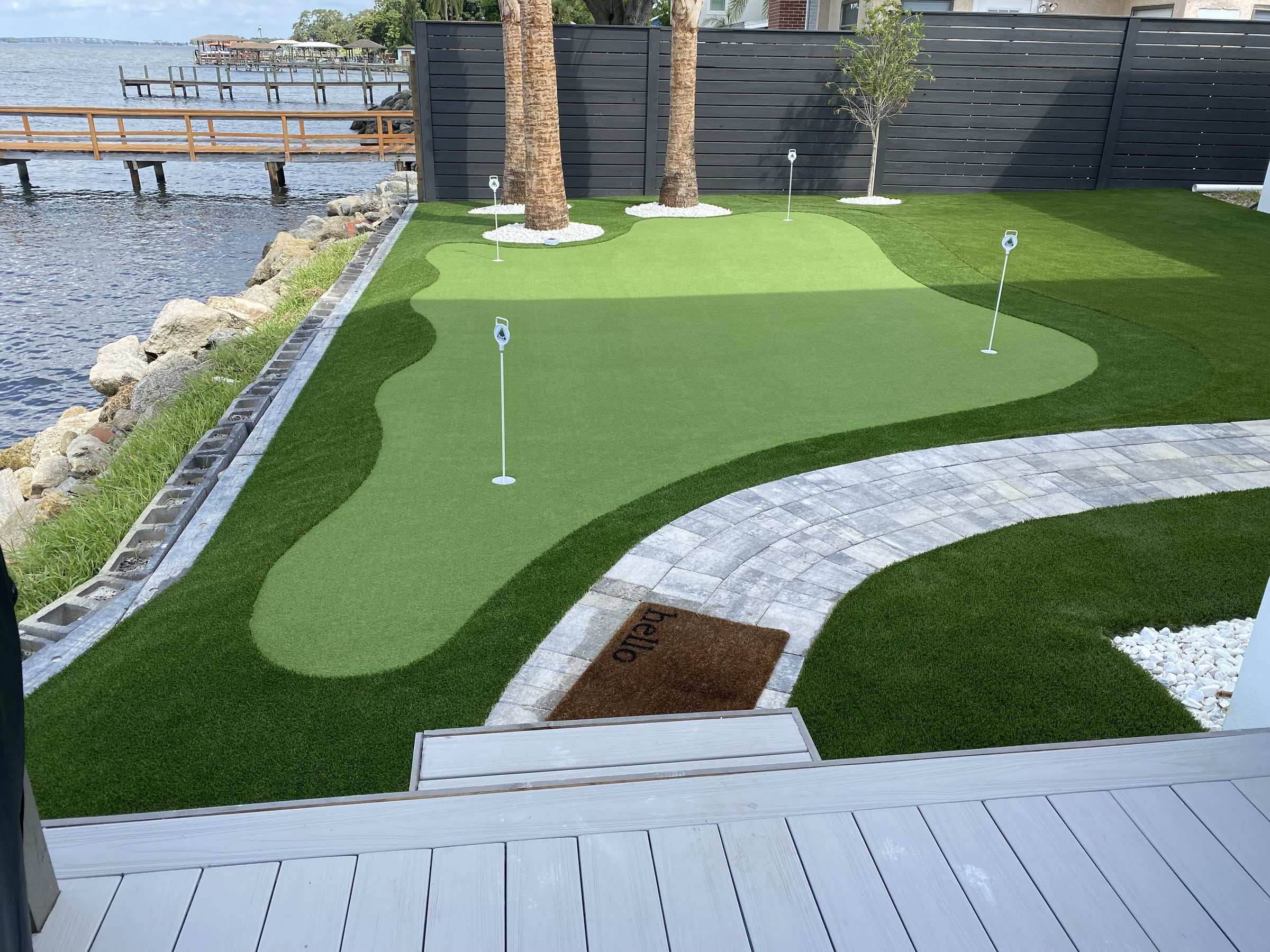
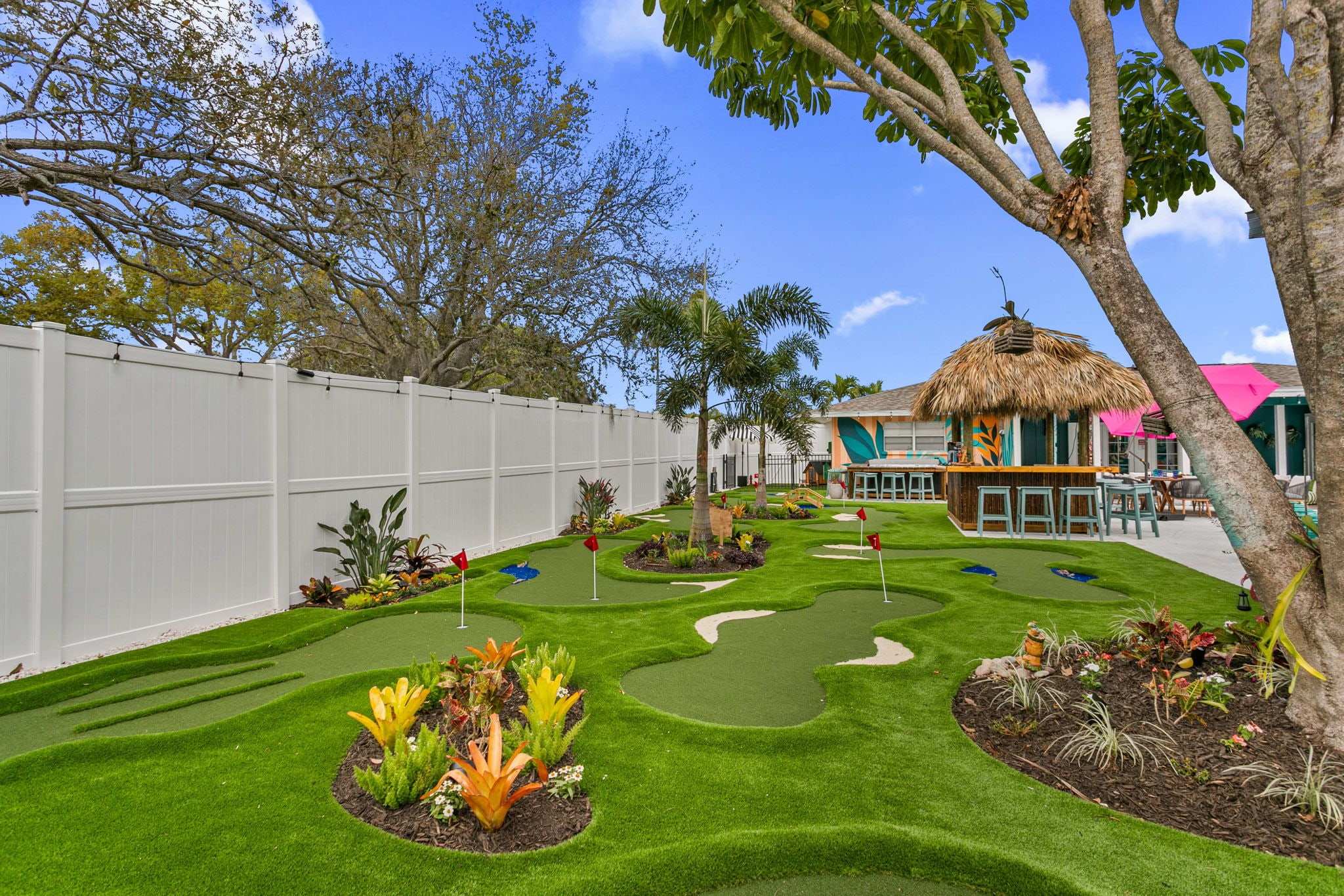
A regulation hole is 4¼ in. wide and at least 4 in. deep under the Rules of Golf, with any liner sunk at least 1 in. below the surface. Tell your installer how many cups you want and where; spreading them out gives you uphill, downhill and side-hill putts from one green.
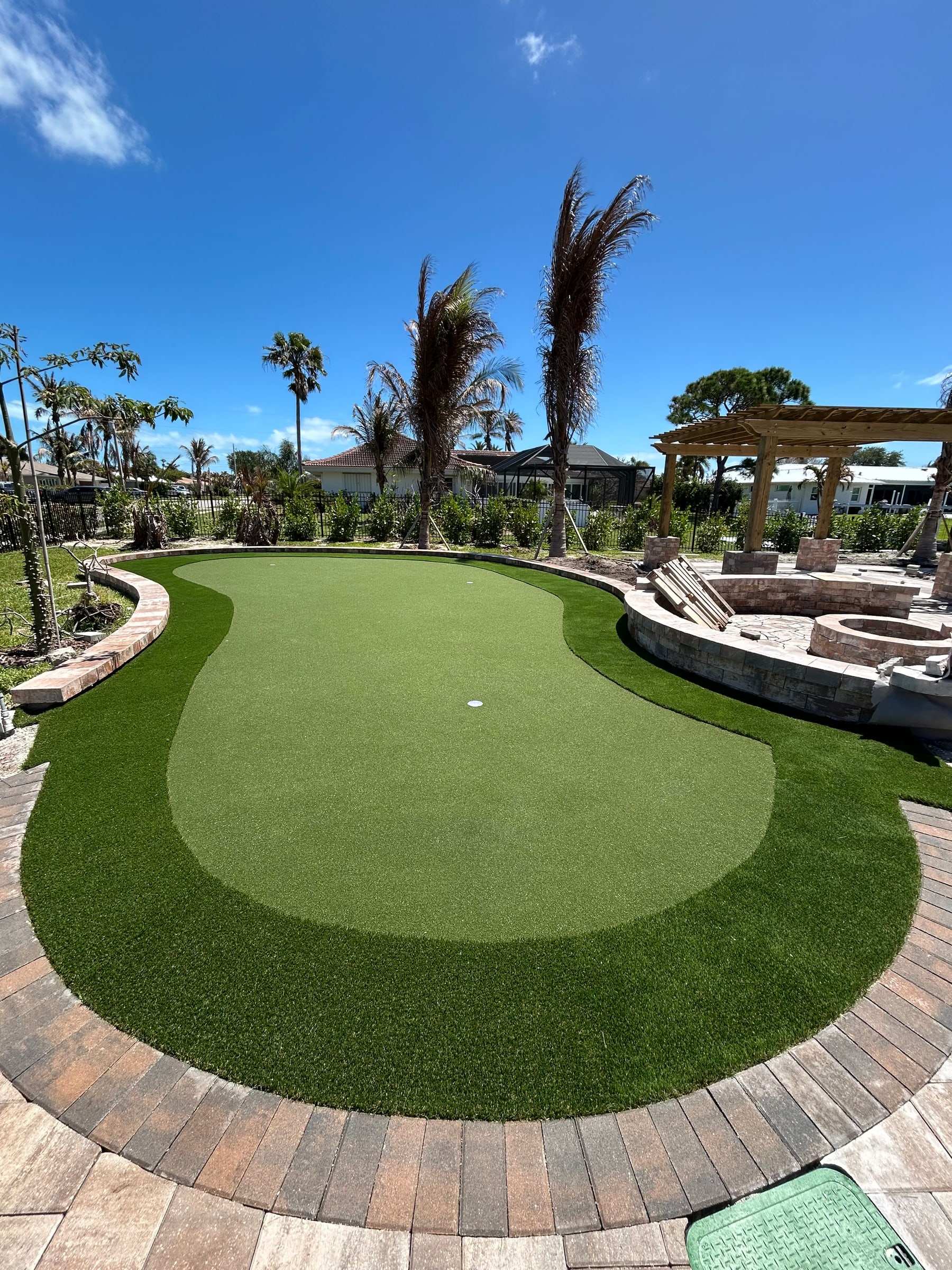
The fringe is landscape turf laid around the putting surface. Bermuda has a 1.5 in. pile, more than twice the height of either putting turf, so it reads as rough and stops balls that run off. It also ties the green into the rest of a turf lawn. For a lighter option on the surrounding lawn, see Tropical Flow 50.
Chipping areas and maintenance
To chip onto the green, choose Pro Putt 42 and plan a landscape turf area to hit from. Keep the putting surface free of leaves and debris, brush infilled turf so the blades stand up, and top up infill in worn spots. Our turf maintenance guide covers the routine, and following your installer’s care steps keeps your warranty valid.
Get a free estimate for your green
Your local installer will measure the yard, walk through surface choice, cup locations and breaks, and give you a written quote. Find your local installer to get a free estimate.