Turf under play equipment needs a shock pad
Playground turf is safe under climbers, slides and swings only when it sits on a shock-absorbing pad rated for that equipment’s fall height. The turf is the wear surface. The pad does the impact work.
The U.S. Consumer Product Safety Commission (CPSC) lists grass and dirt as inappropriate surfacing, and says carpet and mats are not appropriate unless tested to and compliant with ASTM F1292. That standard sets minimum impact attenuation for surfacing in a playground use zone and produces a critical fall height rating for the surface.
CPSC’s rule of thumb is simple: the surfacing’s critical height should be equal to or greater than the fall height of the tallest equipment. Fall height is the distance from the highest designated play surface (a platform, deck or climbing rung you stand on) down to the protective surface below.
How a playground turf install works
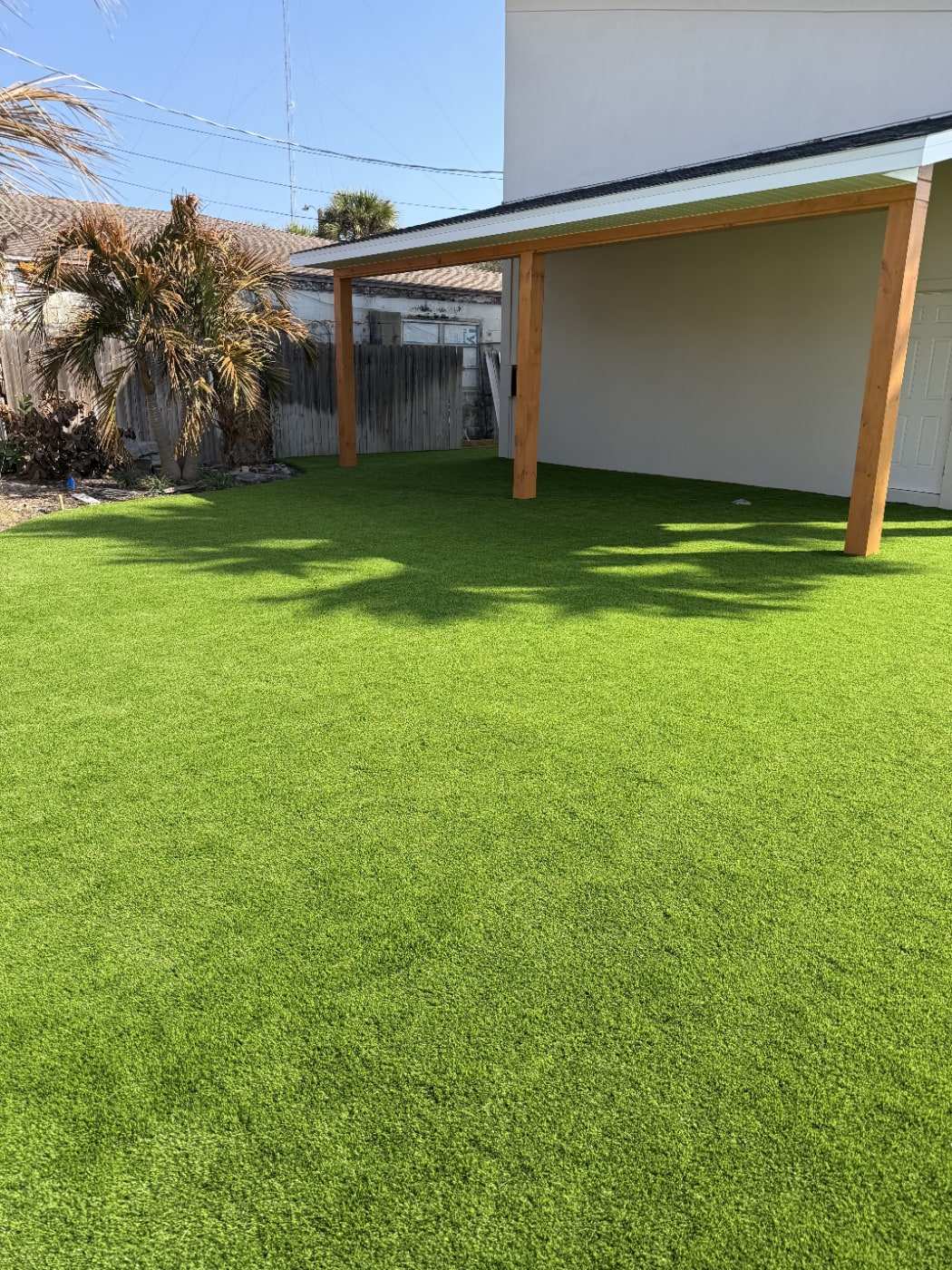
A playground install starts the same way as a lawn and adds a pad layer sized to the equipment. Our installers excavate 3–4 in. of grass, roots and topsoil, check grading and drainage, compact the subgrade, set edging, then build a 3–4 in. crushed aggregate base in compacted layers with a screeded fines top.
Under the play set, a shock pad goes down between the base and the turf. Your installer picks the pad from the pad maker’s ASTM F1292 test data for your fall height and follows that maker’s site requirements, since CPSC notes some systems need specific bases and professional installation. The turf is then laid, seamed, nailed, infilled where the product calls for it, and brushed.
Our turfs do not carry a fall-height rating on their own. The rating belongs to the tested pad-and-turf system, and your installer confirms it before quoting. Ground-level features like playhouses, sand boxes and activity walls do not need protective surfacing, per CPSC, so plain turf works there.
How much area to cover
Cover at least 6 feet in every direction from the equipment, and more around swings. CPSC’s home playground handbook calls for protective surfacing at least 6 feet beyond most equipment. For to-fro swings it extends in front and behind to twice the height of the top bar. For tire swings it extends out by the chain length plus 6 feet.
CPSC also recommends placing play equipment at least 6 feet from fences, sheds, trees and the house. Walk your yard with those numbers before you pick the play set’s spot. The rest of the yard can be standard turf for running and games.
Picking turf for a play area
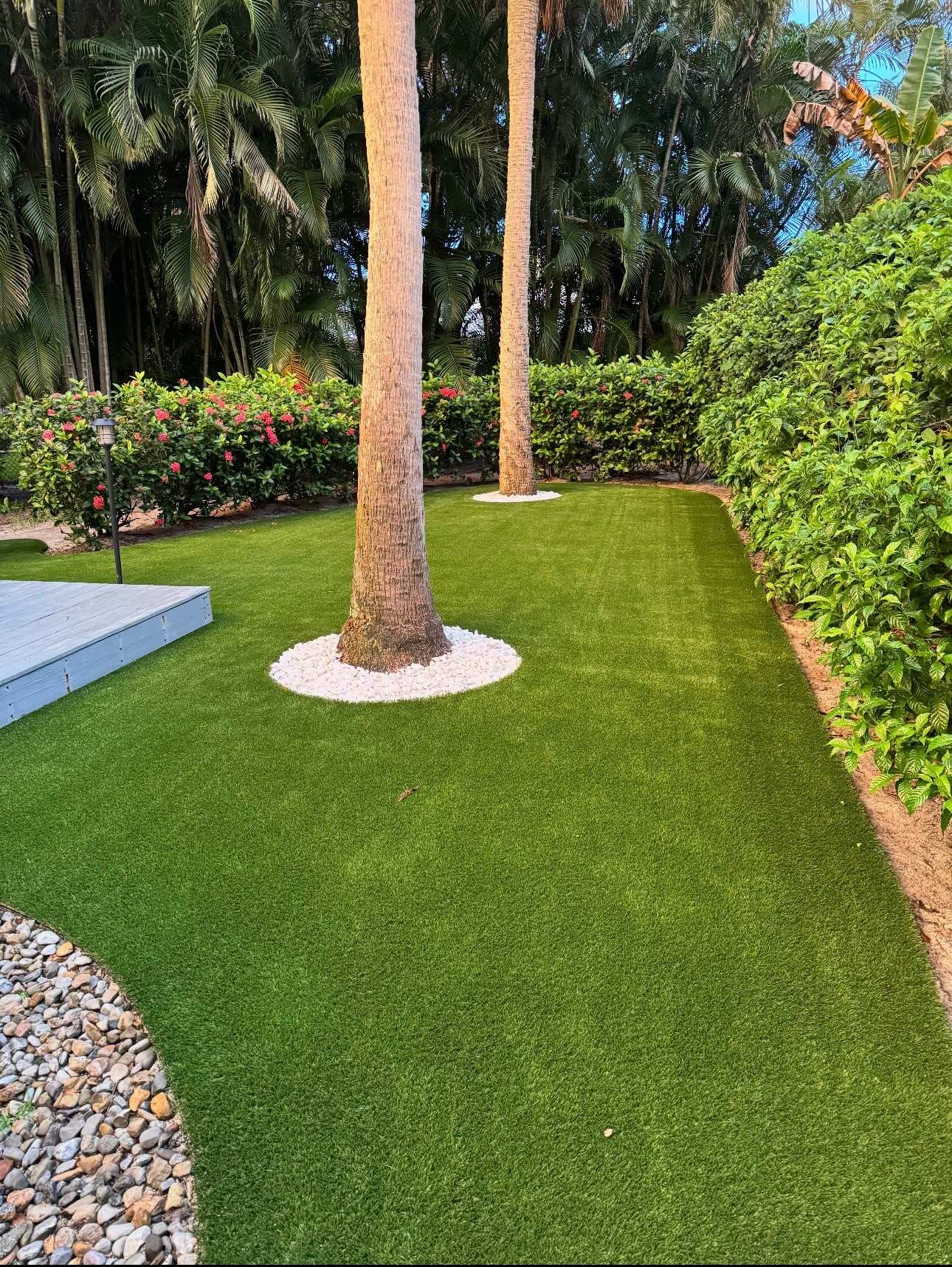
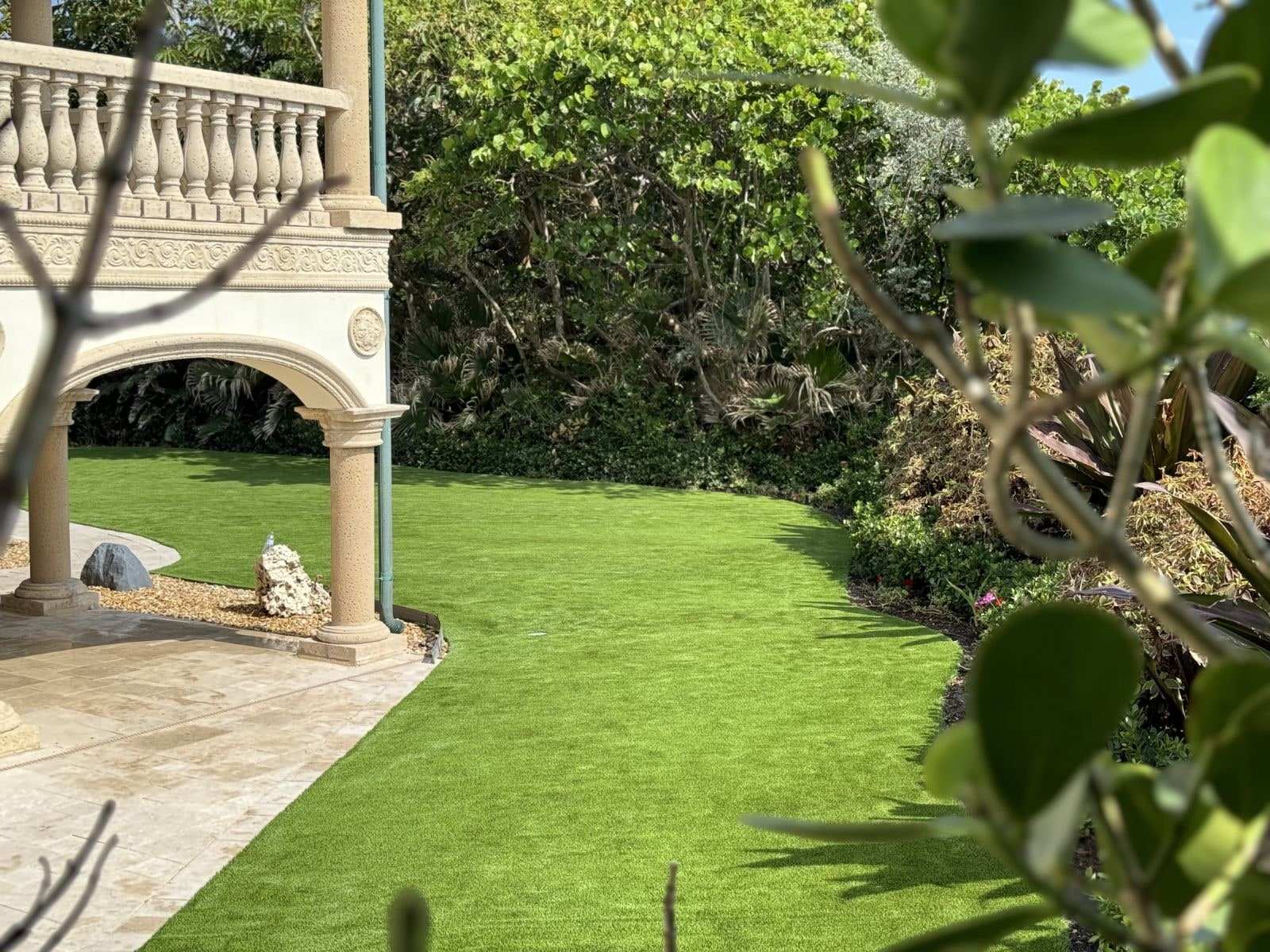
Pick a turf that holds up to traffic and keeps loose material out of the play zone. Malibu Flow 65 needs no infill, so there are no granules to kick out or track in. Premier Pet Flow 55 has a shorter, resilient 1.25” blade built for constant use. Tropical Flow 62 is a W-blade made for sunny yards with moderate to heavy traffic.
All three carry a 16-year warranty (see warranty terms) and are lead free and PFAS free. For a broader comparison, read how to choose artificial turf. Schools and parks building athletic fields rather than playgrounds should look at sports turf.
Heat, shade and supervision
Synthetic turf gets hotter than grass in direct sun, so plan shade and play times. Penn State researchers measured substantially higher surface temperatures on synthetic turf than on natural turfgrass, and found that watering cooled it at first but did not hold for long.
CPSC recommends using trees, shade structures or covered platforms to shade play areas, and warning users that equipment and surfacing in intense sun can burn. It also says toddlers and preschoolers need more attentive supervision, and that supervision alone should not be relied on to prevent injuries. For upkeep, see how to maintain artificial turf.
Get a playground turf estimate
Your local installer will measure the area, note your equipment’s fall height and price the turf and pad system together. Find your nearest installer on our locations page and request a free estimate. For budget ranges, see our artificial turf cost guide.