Green With Every Step
Pile height
2.0"
Face weight
42 oz per SY
Yarn
PE · Slit-film / Mono
Permeability
> 30" per hour
Roll size
15' wide · custom to 220'
Warranty
10 years

Full field, infield or outfield

Baseball fields can go fully synthetic or mix turf and dirt. Common setups:

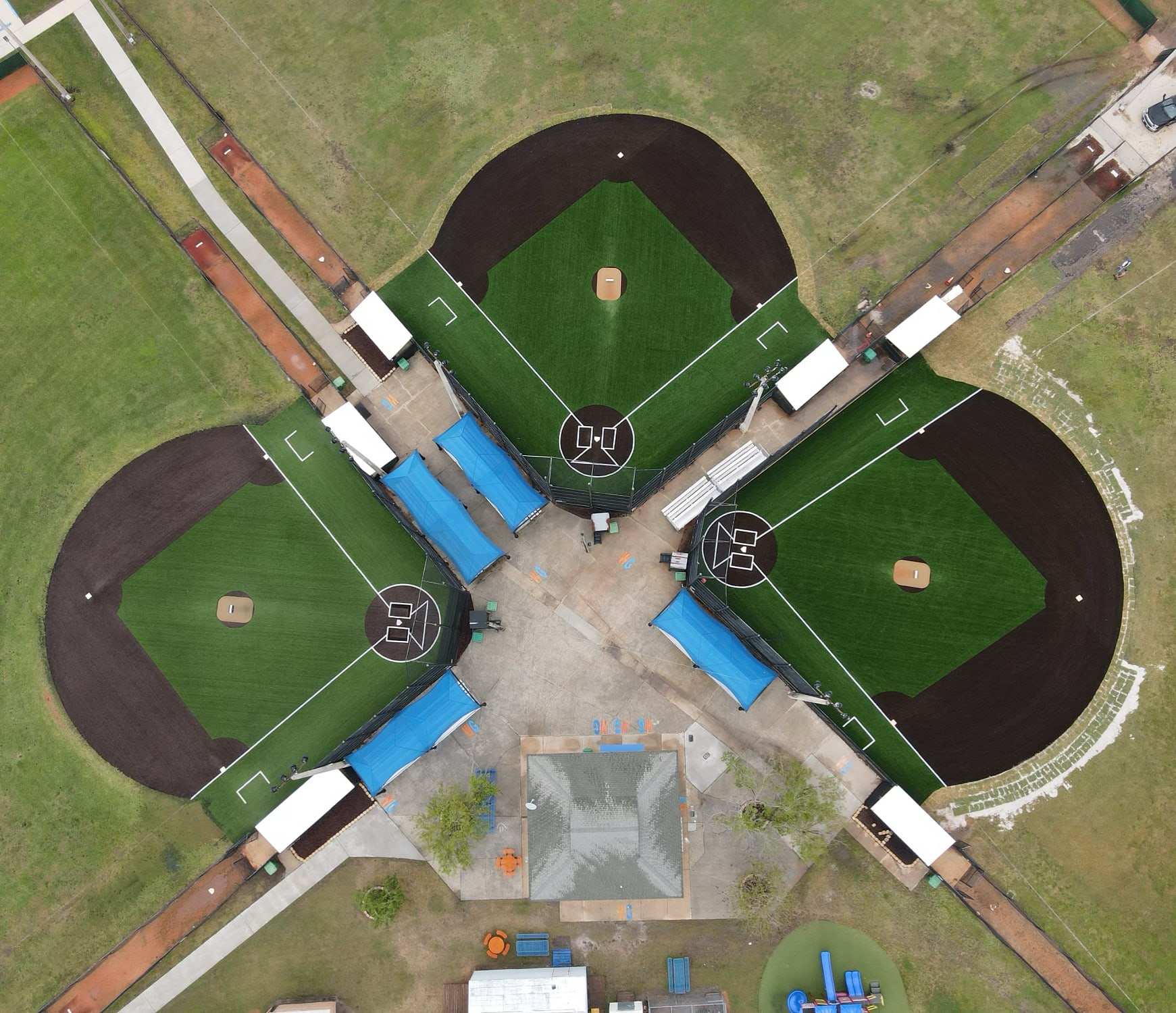
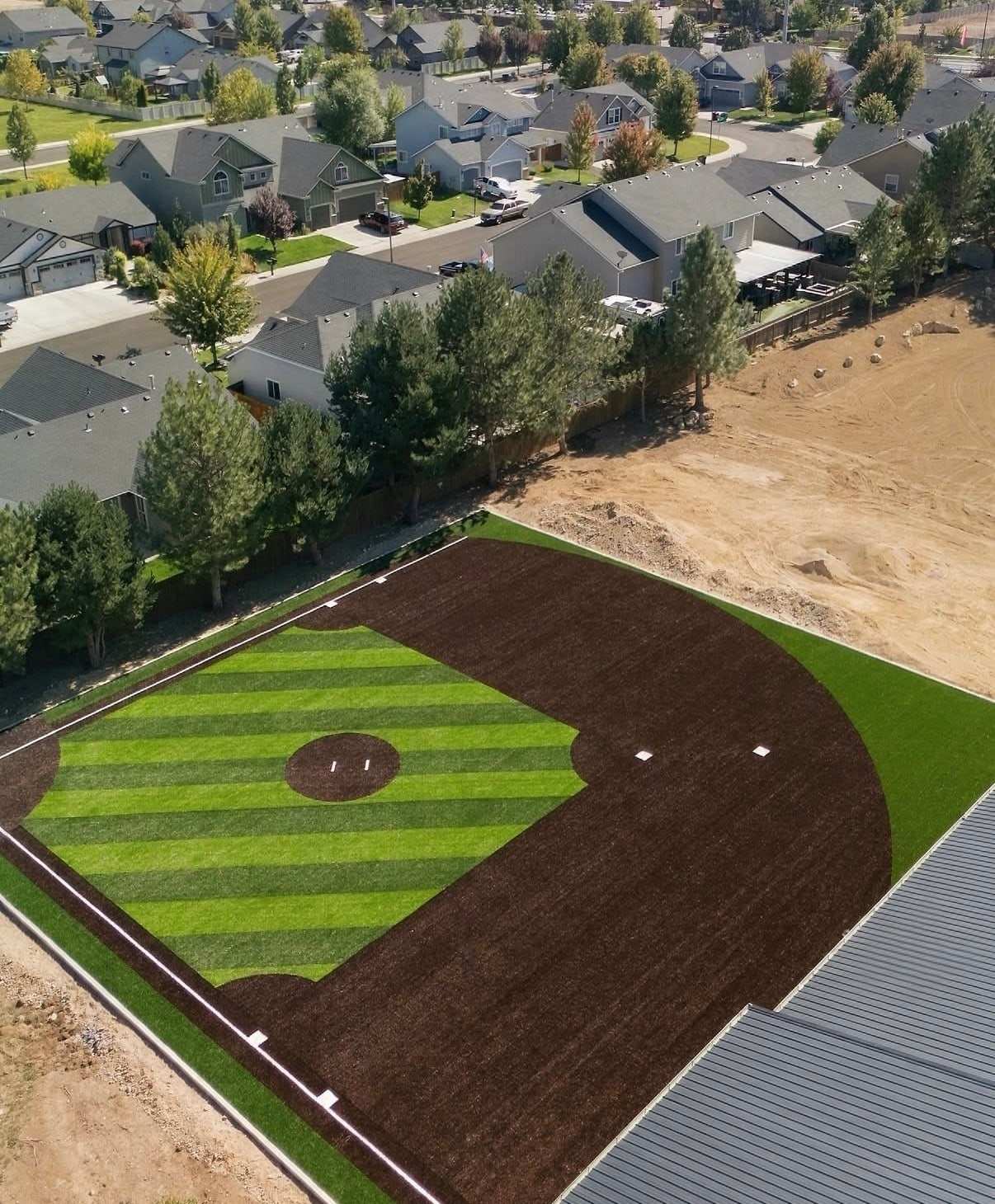
  • Full turf, including base paths and plate areas in brown or clay-colored turf.
  • Turf infield with a natural mound, the most common compromise.
  • Turf outfield with a skinned infield, when a program wants to keep a dirt infield.

Field managers who started with dirt cutouts inside a turf infield have often converted them to turf later. Dirt and clay migrate into the surrounding turf and have to be raked, broomed and power-washed back out. A SportsTurf magazine review of synthetic infields documented exactly that, and one Northeast program said it should have turfed home plate from the start to get more use across seasons.

The mound

You can keep a natural clay mound or build it in turf. NFHS rules allow synthetic material on the mound if it’s securely attached and installed flush with, or slightly below, the surface. The rules set the mound at 10 inches above home plate, with the pitcher’s plate 60 ft 6 in from the back point of home plate.

Layout and look

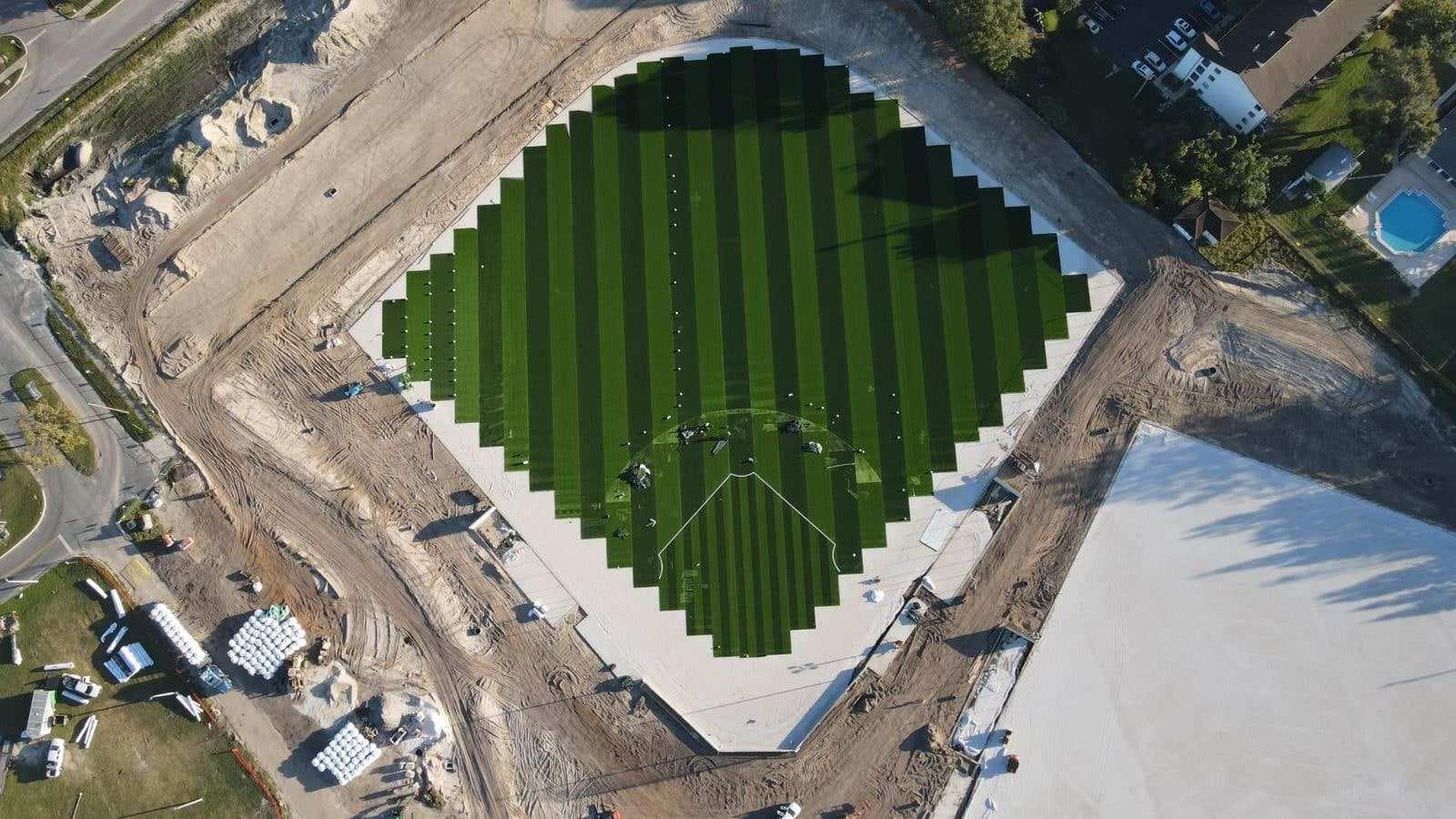
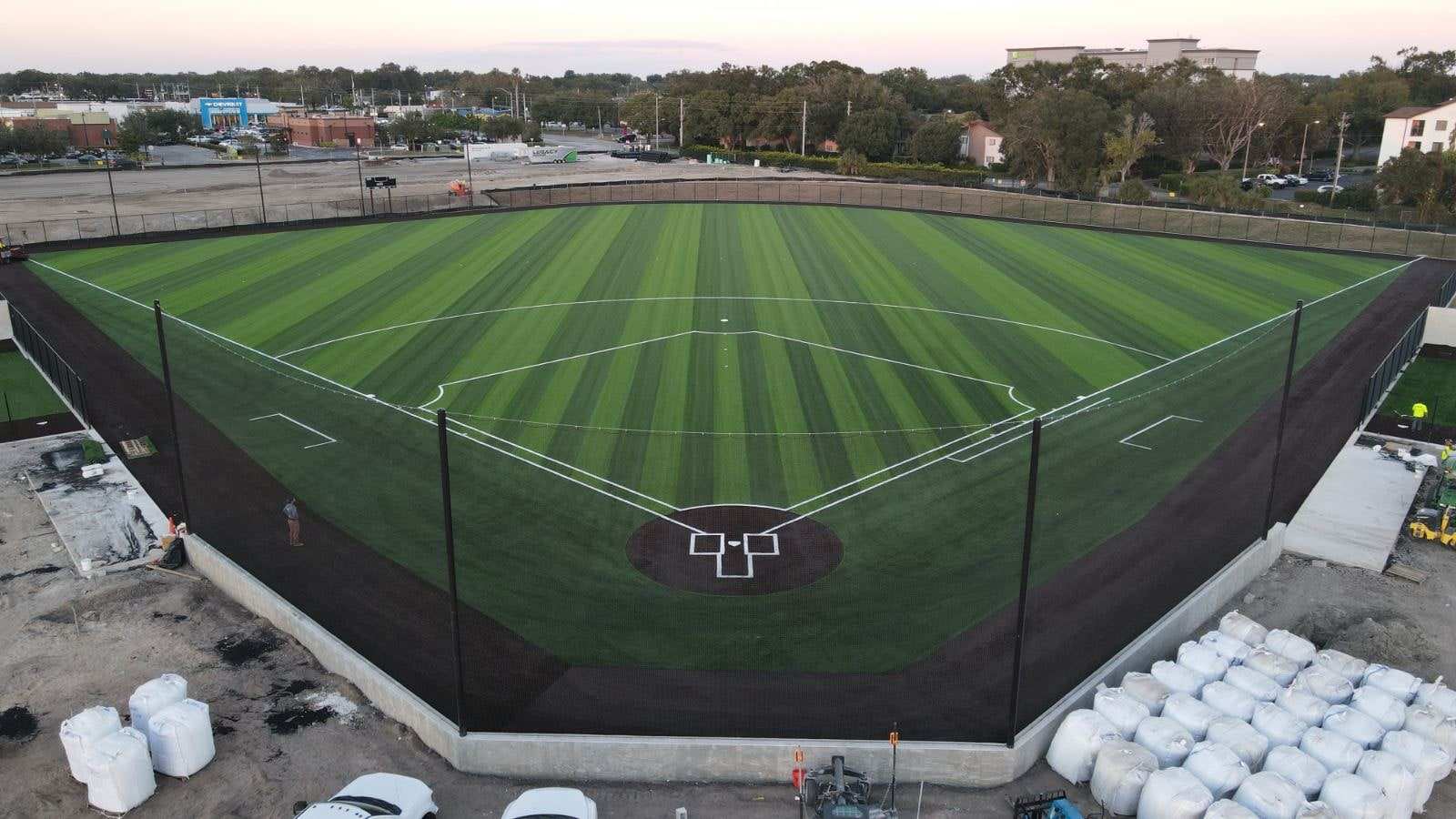
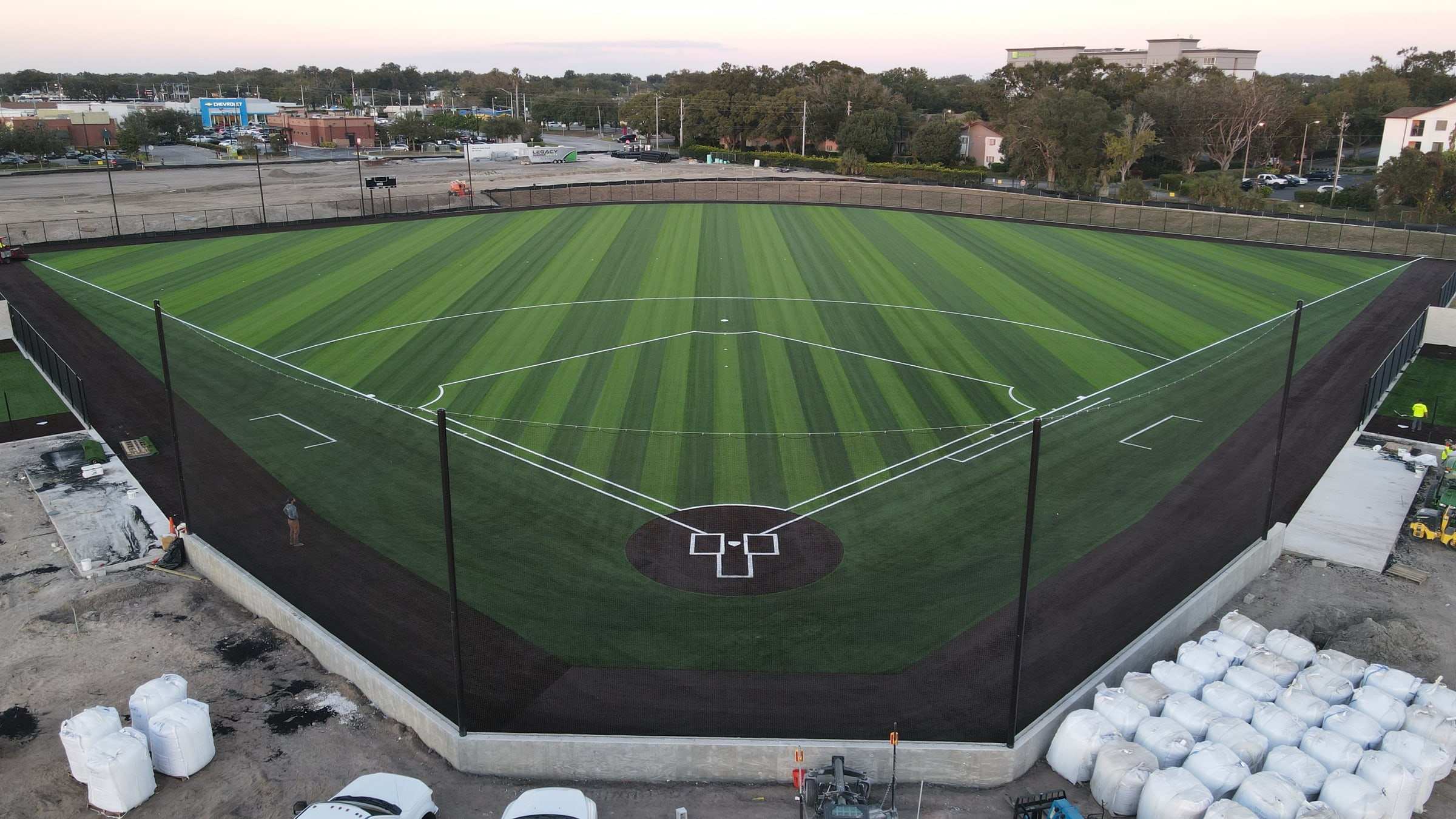
The infield is a 90-ft square under both NFHS and NCAA rules. Fence recommendations differ: NFHS calls for at least 300 ft down the lines and 350 ft to center, while NCAA recommends 330, 375 and 400 ft. We lay outfield rolls in alternating stripes for a mowed look.

Bullpens, cages and practice areas

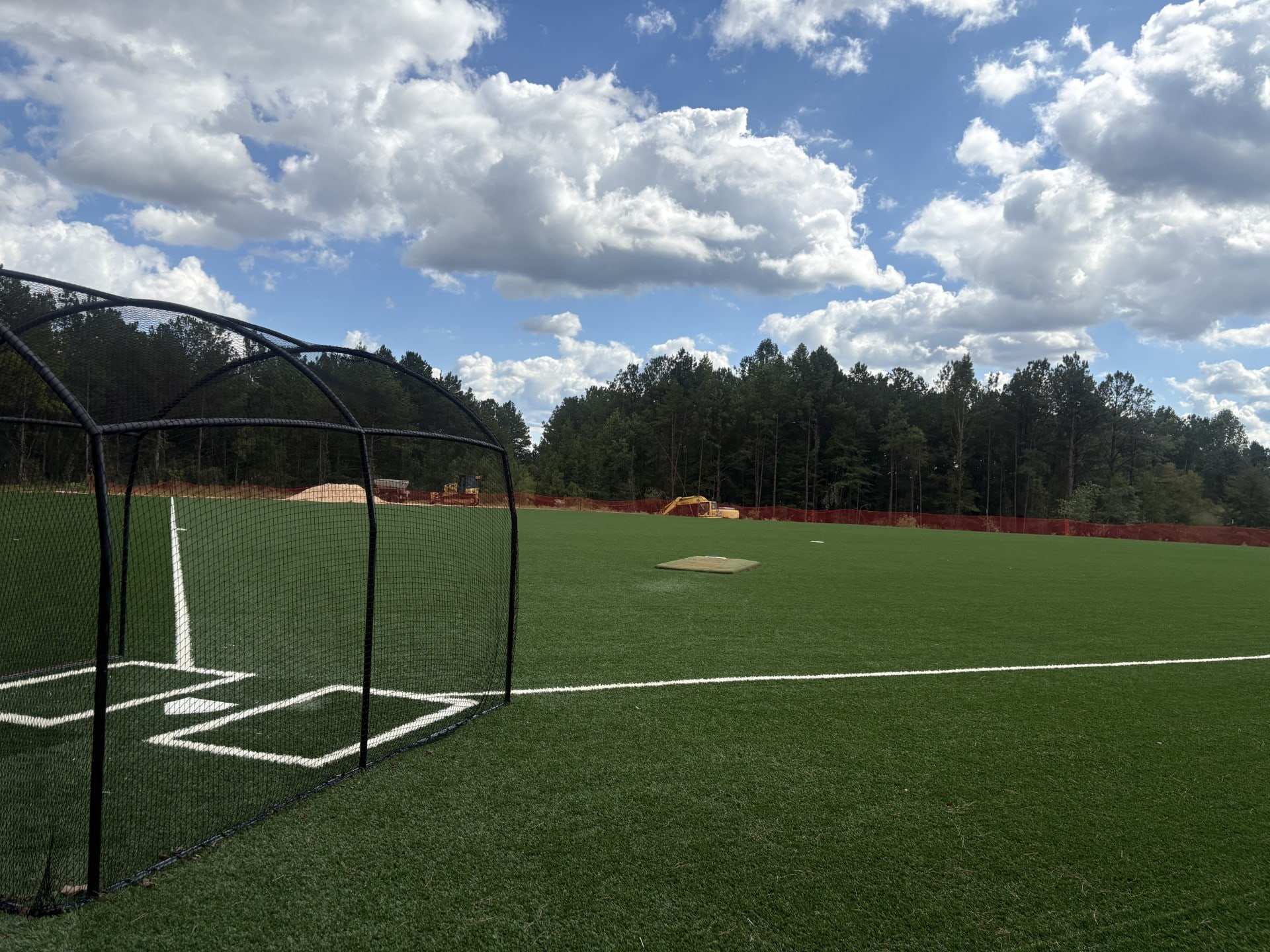
The same project often includes bullpens, batting cages and hitting areas. For cages and indoor training, Legacy Speed is our foam-padded turf with a 3/4-inch slit-film blade and no infill to kick out. Building the cages, bullpens and field in one project keeps the colors and quality consistent and saves a second mobilization.

Built for heavy use

Speed Zone uses a 2-inch pile of slit-film and monofilament polyethylene at 42 oz per square yard, with tuft bind above 8 lbs and grab tear above 200 lbs. It’s perforated for permeability above 30 inches per hour, so a turf infield is ready soon after a storm. Sliding areas and plate areas see the most wear, so plan grooming there in season. Fields should be tested for impact attenuation (Gmax) at least once a year.
Field size

Baseball field dimensions

Field dimensions per NFHS Rule 1-2 and NCAA Rule 1-2 (recommended fence distances).
MeasurementHigh school (NFHS)College (NCAA)
Base paths90 ft square90 ft square
Pitching distance60 ft 6 in60 ft 6 in
Mound height10 in above home plate10 in above home plate
Foul-line fences300 ft minimum (recommended)330 ft (recommended)
Center-field fence350 ft minimum (recommended)400 ft (recommended)

Field dimensions per NFHS Rule 1-2 and NCAA Rule 1-2 (recommended fence distances). Rolls are 15 ft wide and made to custom lengths up to 220 ft, so we plan the roll layout to your exact field.

Planning your baseball field

What goes into a turf baseball field

A synthetic field is a system: the turf, the infill that supports it, an optional shock pad, and the base underneath. Each layer changes how the field plays and how safe it tests.

Infill

Infill holds the fibers upright and adds cushioning. Common options include crumb rubber (ambient or cryogenic, from recycled tires), EPDM, sand or coated silica, organic infills like cork and coconut fiber, and TPE (Synthetic Turf Council glossary (opens in a new tab)). Speed Zone’s fiber blend is built for infill retention, and we pair it with the infill your spec calls for.

Shock pad

A shock pad, or e-layer, is a permeable layer under the turf, typically rubber granulate bound with polyurethane. It adds impact absorption, and it can be reused across more than one turf lifecycle, which lowers the cost of the next replacement.

Impact testing

Field safety is measured as Gmax, the peak deceleration on impact; lower is softer. ASTM F1936 limits each test point to 200, and the Synthetic Turf Council recommends staying below 165 for the life of the field. Test at least once a year (Sports Field Management Association guide (opens in a new tab)).

From spec to game day

  1. Step 01

    Spec & submittals

    Send us your bid spec or tell us how the field will be used. We return spec sheets and samples for your board, architect or athletic director.

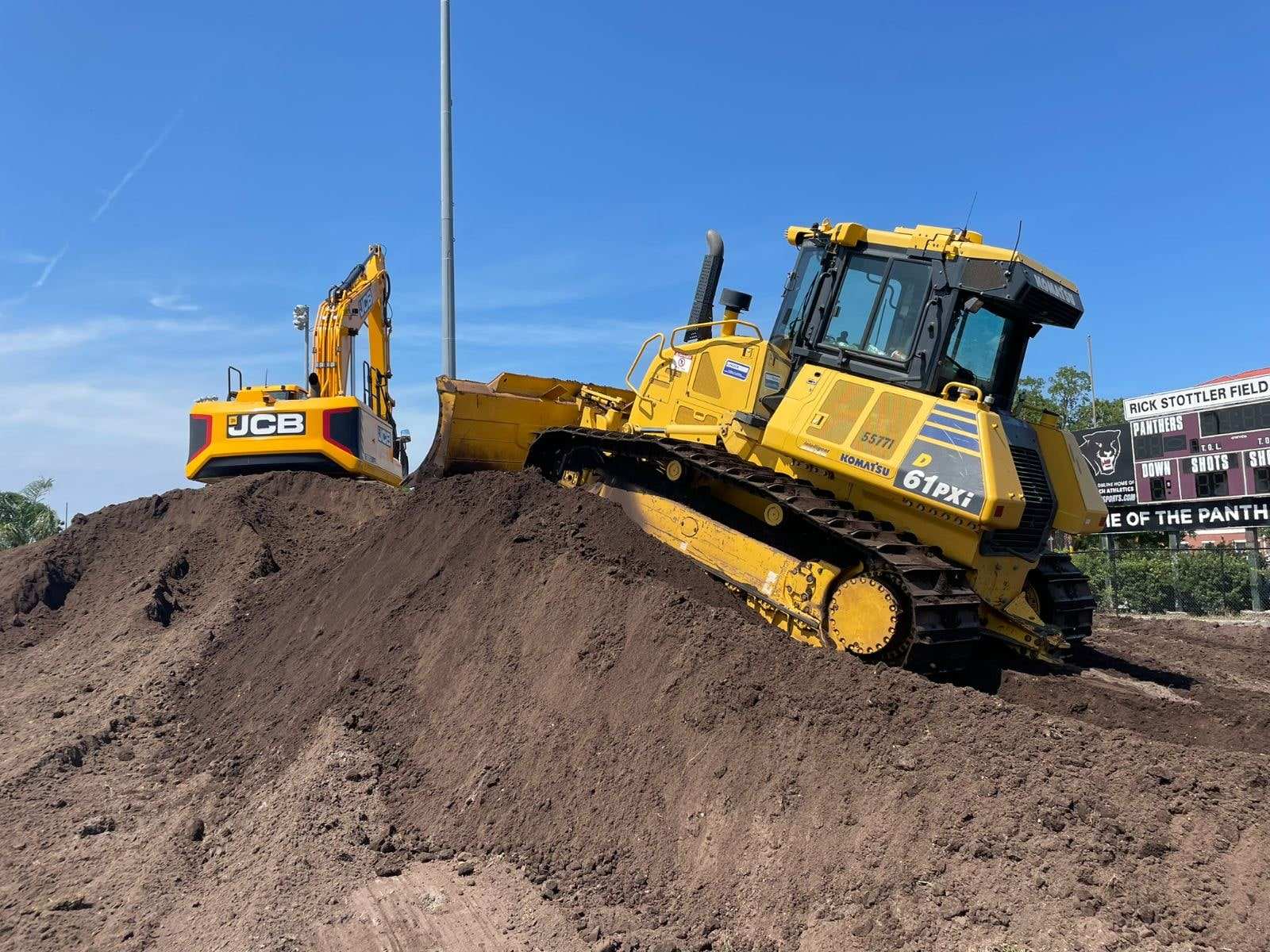
  2. Bulldozer grading a sports field site

    Step 02

    Site work

    Grading and earthwork set the foundation for drainage.

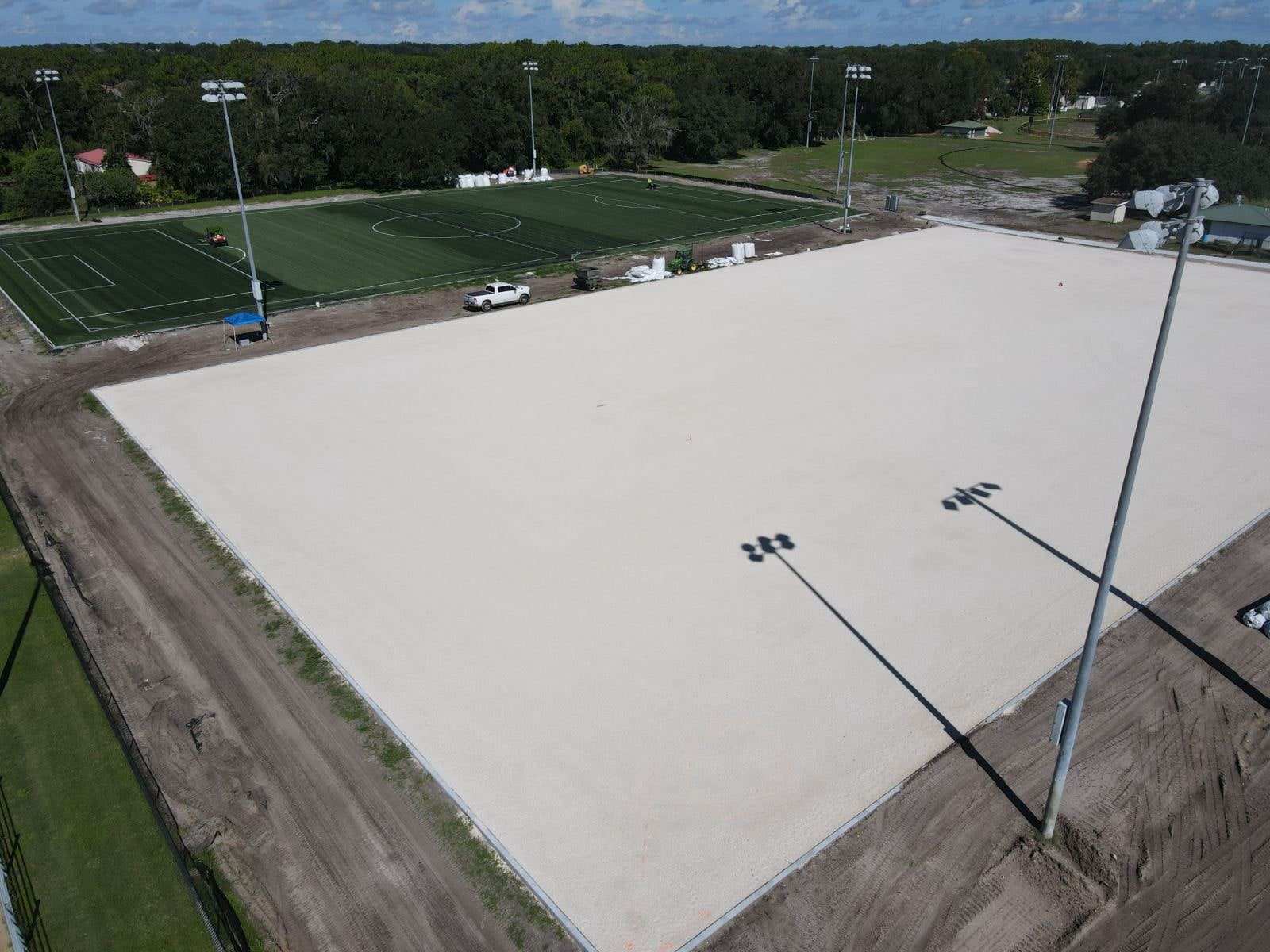
  3. Compacted, laser-graded base next to a finished turf field

    Step 03

    Base & layout

    A compacted, laser-graded base is prepped and the field is laid out.

  4. Striped turf rolls laid on a ballfield

    Step 04

    Roll out & seam

    Custom-length rolls go down, seams are joined and inlaid markings line up.

  5. Finished striped ballfield at dusk

    Step 05

    Infill & game day

    Infill is installed and groomed, and the field is ready to play.

Maintenance

The core tasks are surface cleaning, debris removal, grooming, and redistributing or topping up infill, plus annual impact testing (STC maintenance guidelines (opens in a new tab)). The Sports Field Management Association puts typical synthetic field upkeep at about $5,000–$8,000 a year in materials and 300–500 labor hours. Budget for it from the first season.

Baseball turf FAQ

Questions from baseball programs

Should we turf the whole infield or keep dirt base paths?

Many programs that start with dirt cutouts inside a turf infield later convert them to brown or clay-colored turf, because dirt migrating into the turf becomes a maintenance problem. Turfing the base paths and plate areas also gets the field playable sooner after rain.

Can the pitching mound be synthetic?

NFHS rules allow synthetic material on a mound if it’s securely attached and installed flush with, or slightly below, the surface. Many fields keep a natural clay mound inside a turf infield.

What fence distances should we plan for?

NFHS recommends at least 300 ft down the foul lines and 350 ft to center. NCAA recommends 330 ft down the lines, 375 ft to the alleys and 400 ft to center.

How do you make the outfield look striped?

We lay rolls in alternating directions or shades so the outfield shows mowing-style stripes, and the pattern never fades.

What warranty comes with Speed Zone?

Speed Zone carries a 10-year warranty.