Traction
A 2" pile of slit-film and monofilament fiber gives athletes consistent footing for cuts, sprints and stops.
Built to any spec · Dual Sport field system
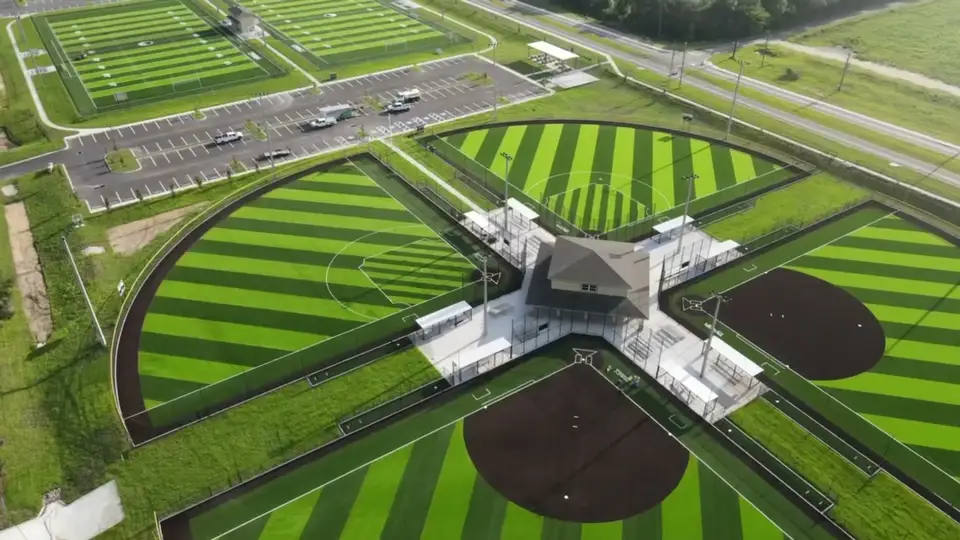
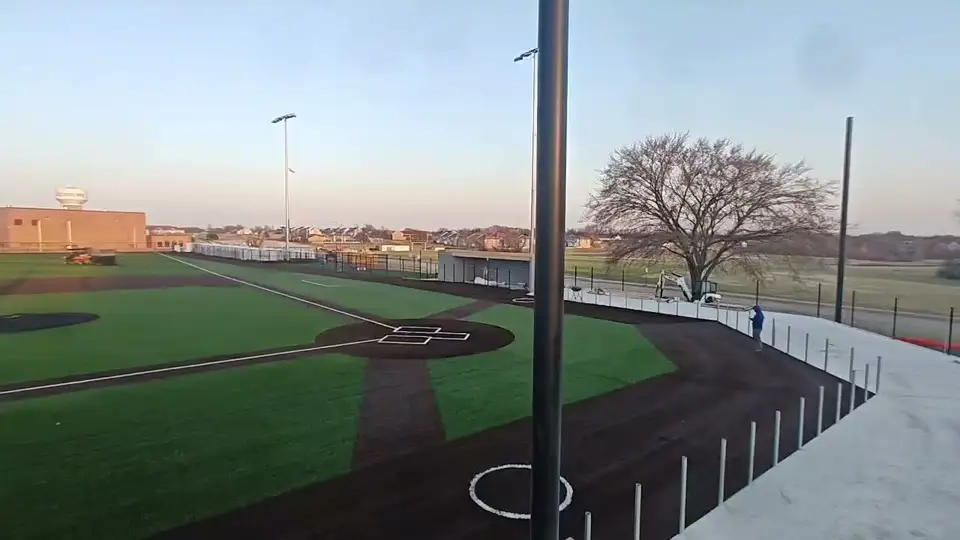
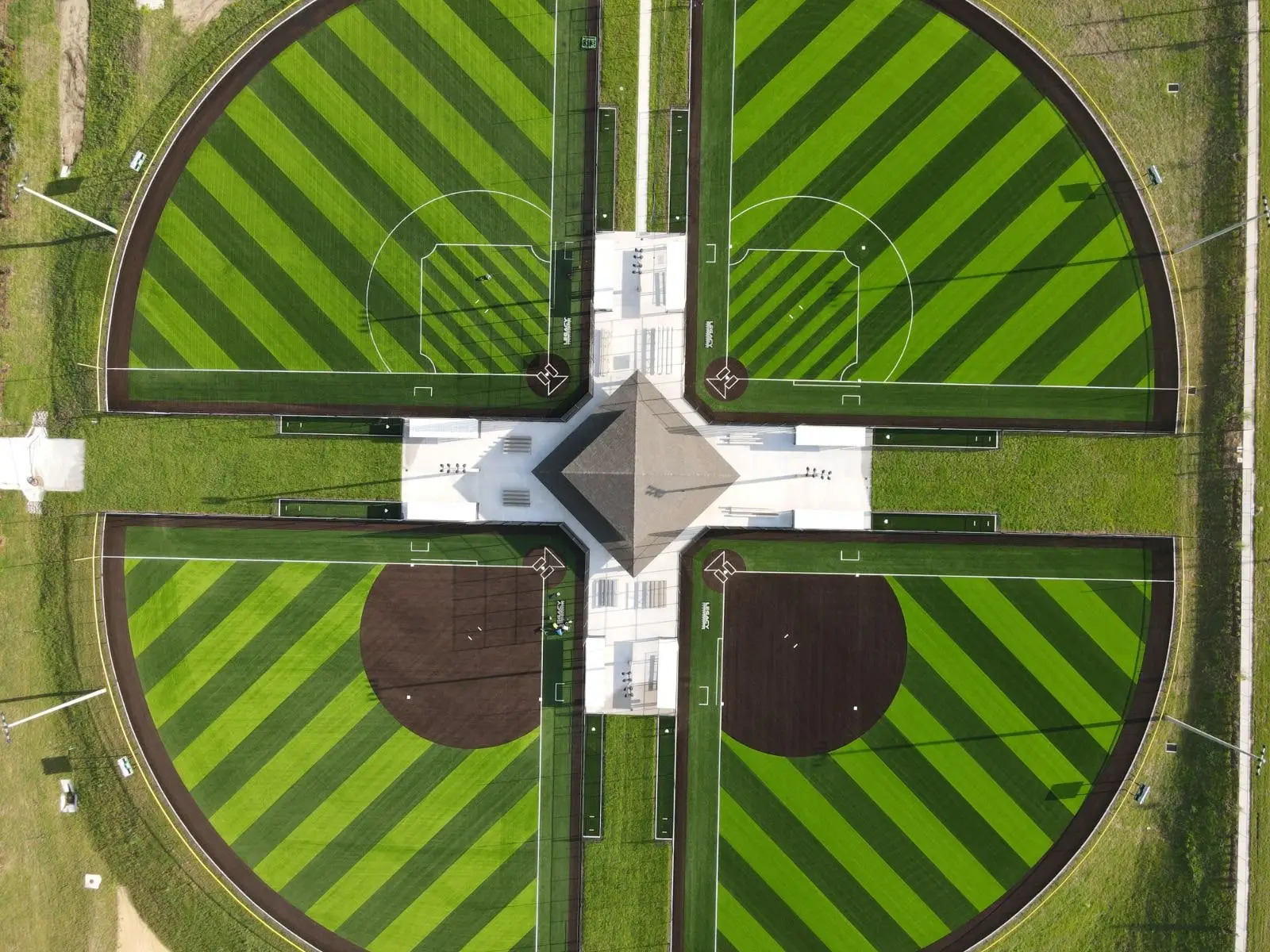
Professional sports turf with a 2" pile optimized for traction, infill retention and balanced shock absorption. Built for schools and parks through professional training and competition fields. Need a different pile, weight, fiber or color? We manufacture Speed Zone to your exact spec.
Custom manufacturing
Because we make Speed Zone in our own factory, we can build it to the exact spec in your bid. Send us the spec sheet and we’ll manufacture to match it, roll by roll.
Shorter or taller pile for your sport and play level.
More or less yarn per square yard for density and durability.
Slit-film, monofilament or a blend, at the denier you need.
Field green or custom colors, with lines, numbers and logos.
Primary backing and polyurethane coating matched to your use.
Perforation pattern and permeability to meet your requirement.
15 ft wide rolls cut to custom lengths up to 220 ft.
Paired with the infill system and shock pad your spec calls for.
How it’s built
Every layer of Speed Zone is engineered to work together, from the fiber to the perforated backing.
Custom formulations for UV resistance, heat stability and fiber longevity.
Dimensional stability and reliable tuft bind under heavy play.
Maximizes tuft lock for tuft bind greater than 8 lbs.
Drains faster than 30 inches per hour, so fields are playable sooner after rain.
Performance
A 2" pile of slit-film and monofilament fiber gives athletes consistent footing for cuts, sprints and stops.
The fiber blend holds infill in place, keeping the surface even through heavy use.
Balanced shock absorption for multi-sport play at every level.
The build
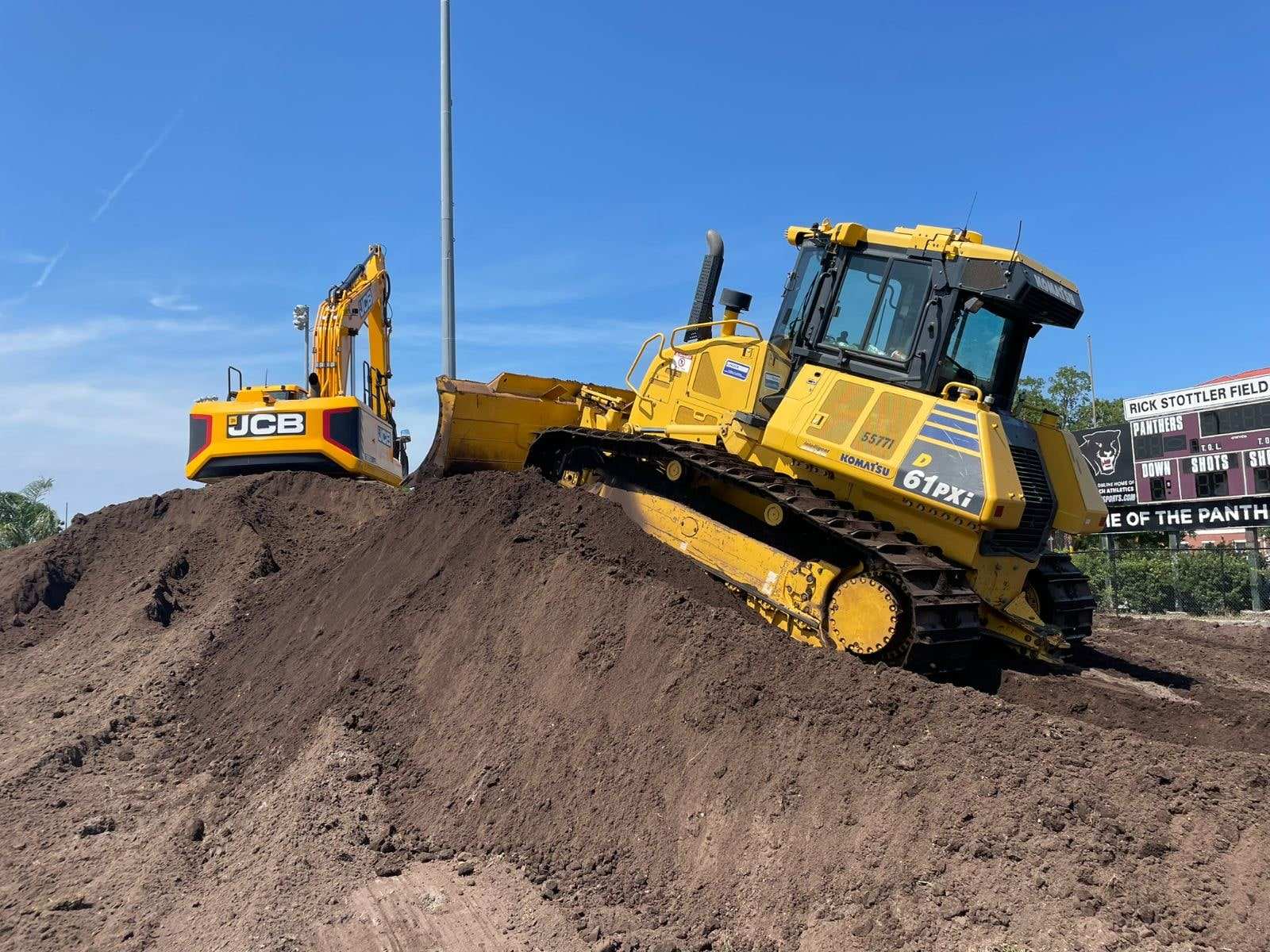
Grading and earthwork set the foundation for drainage.
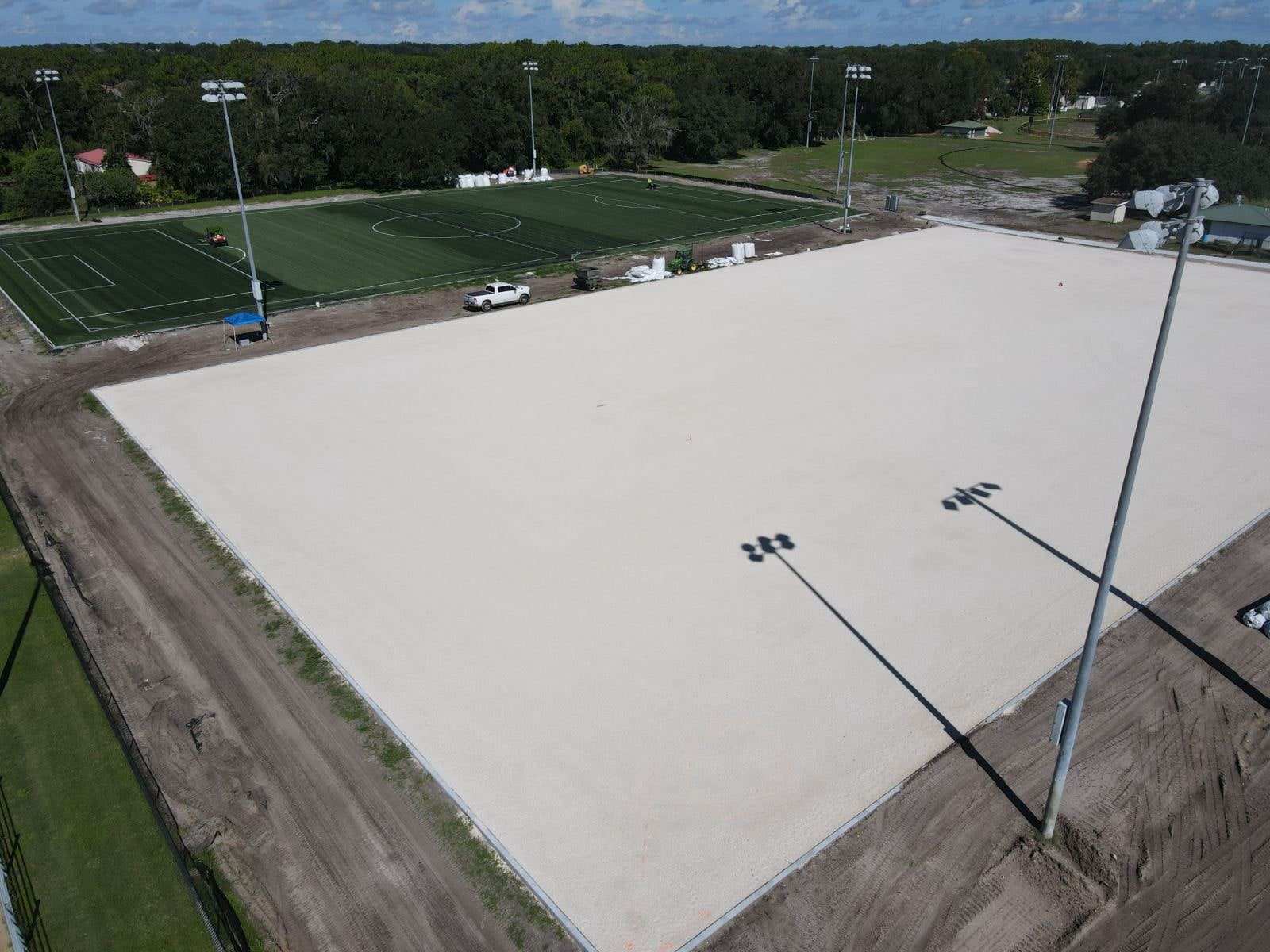
A compacted, laser-graded base is prepped for turf.
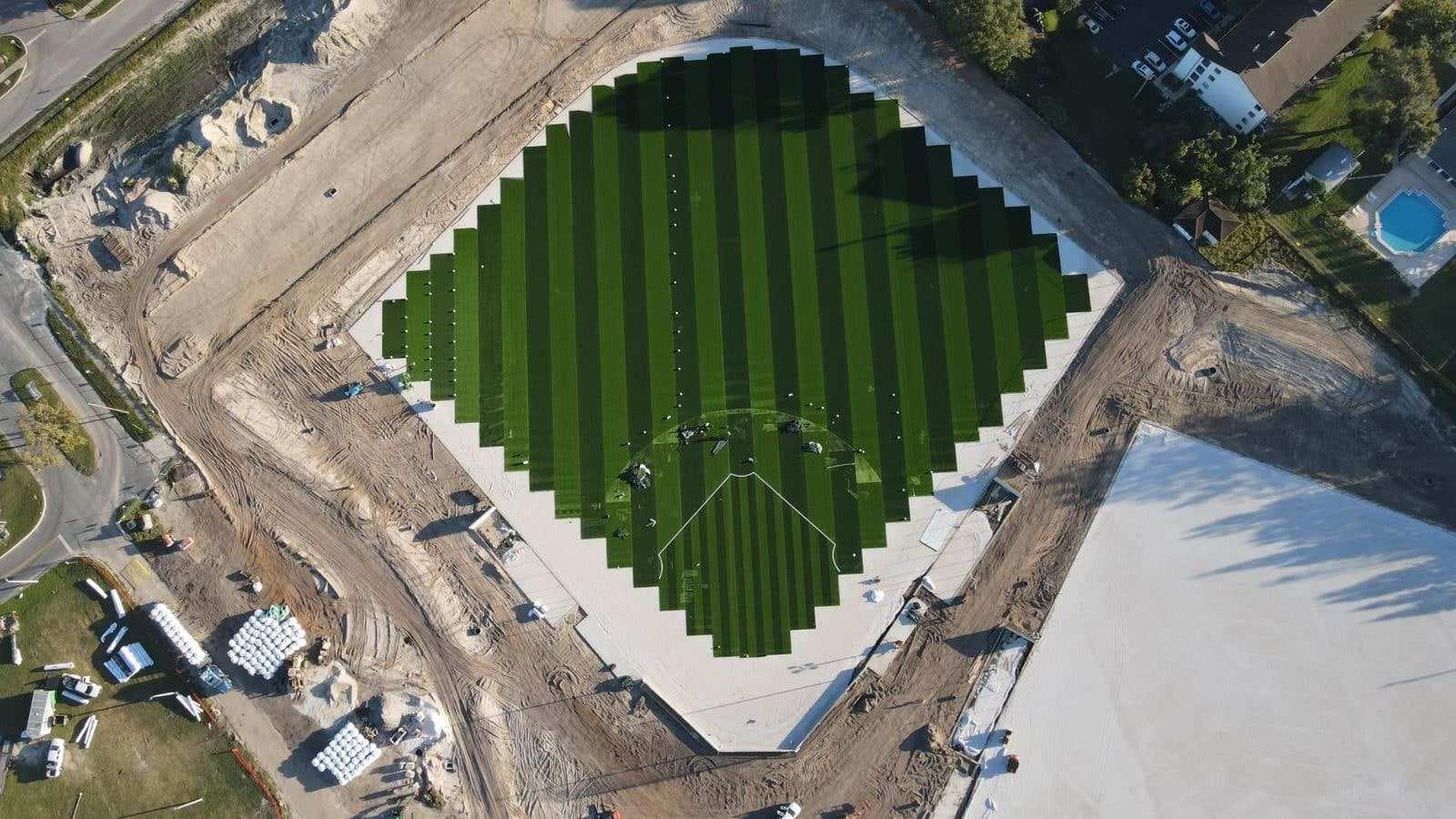
Custom-length rolls go down in alternating stripes.
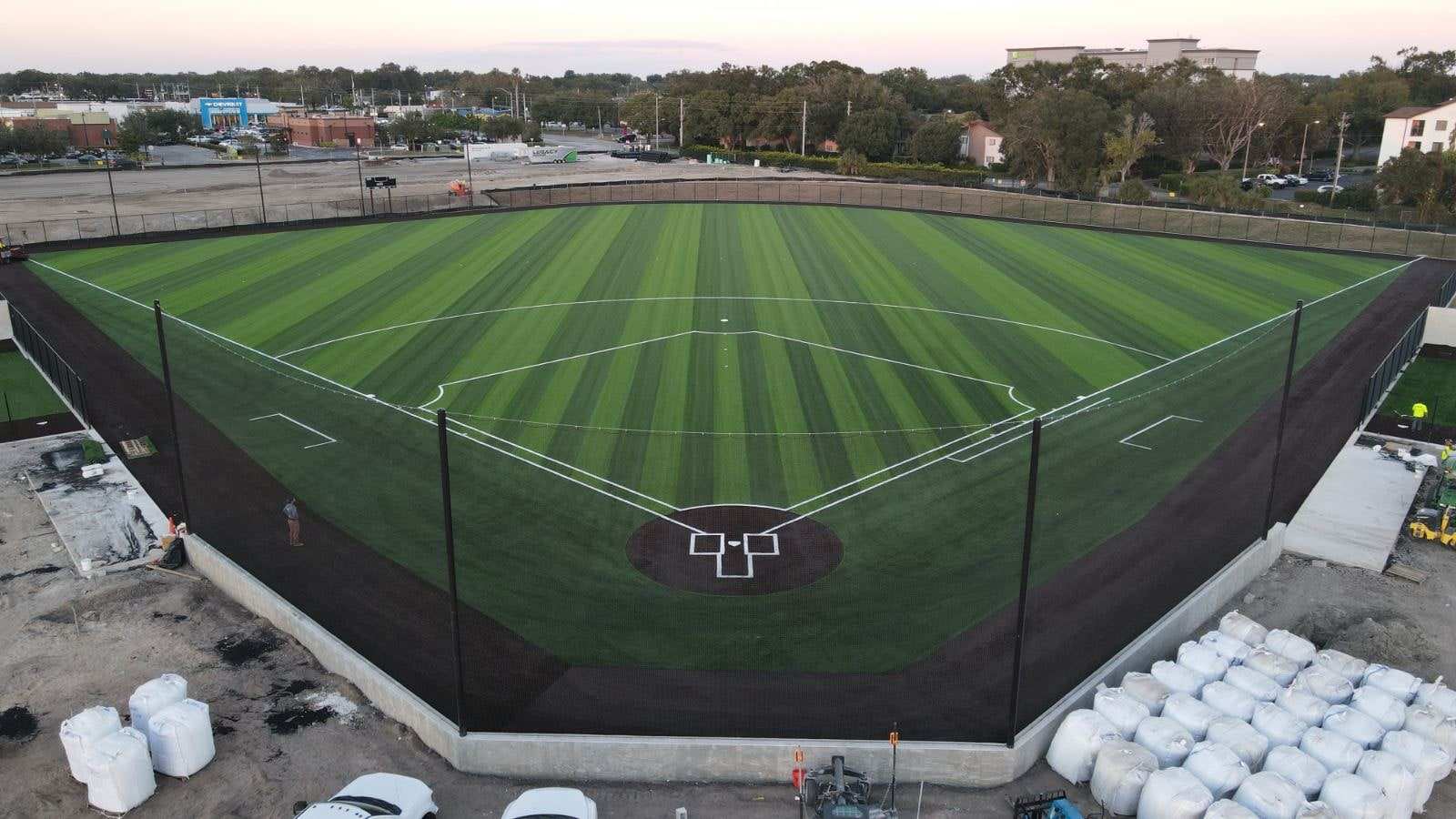
Lines, infill and grooming, then the field is ready to play.
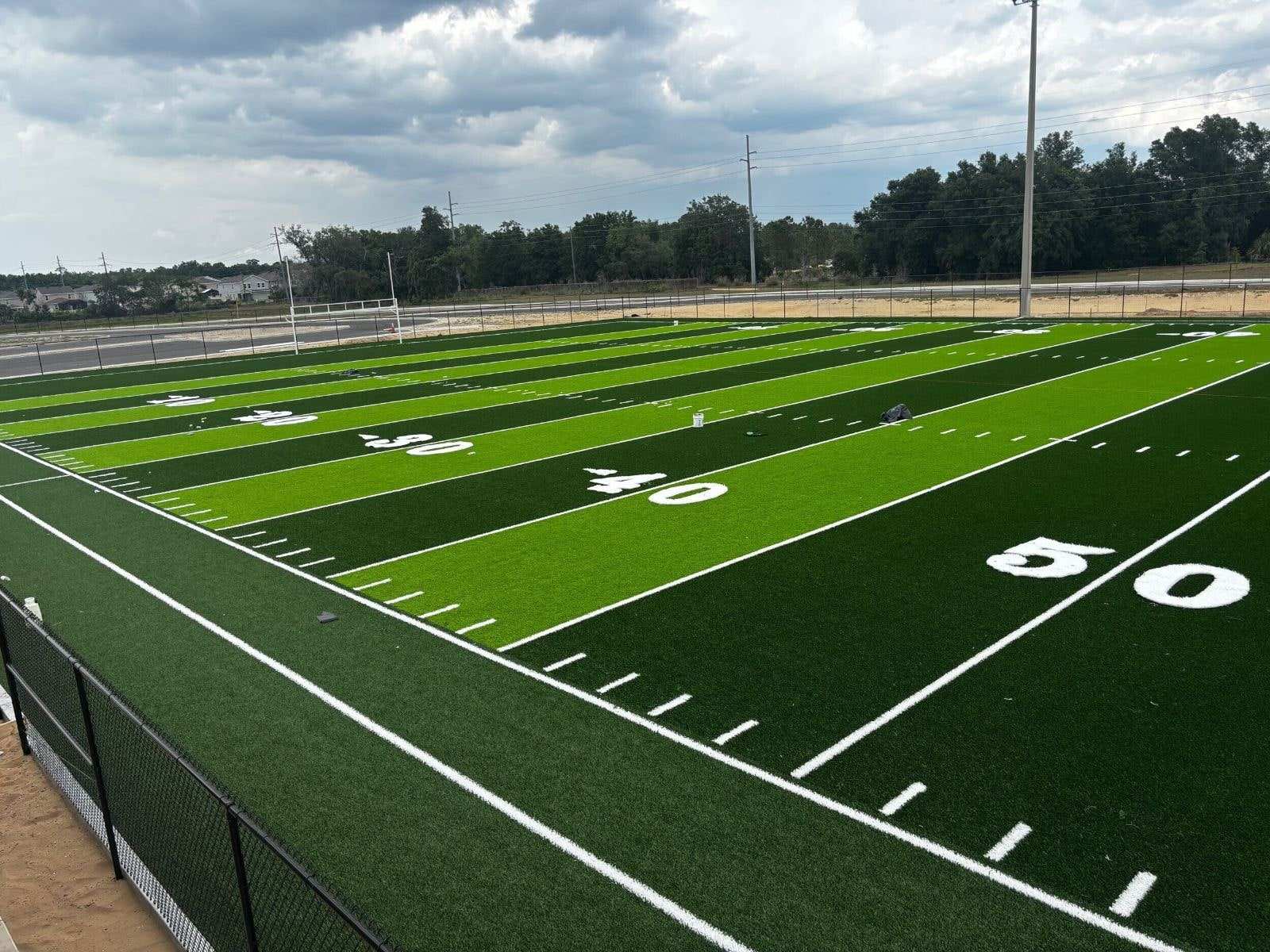
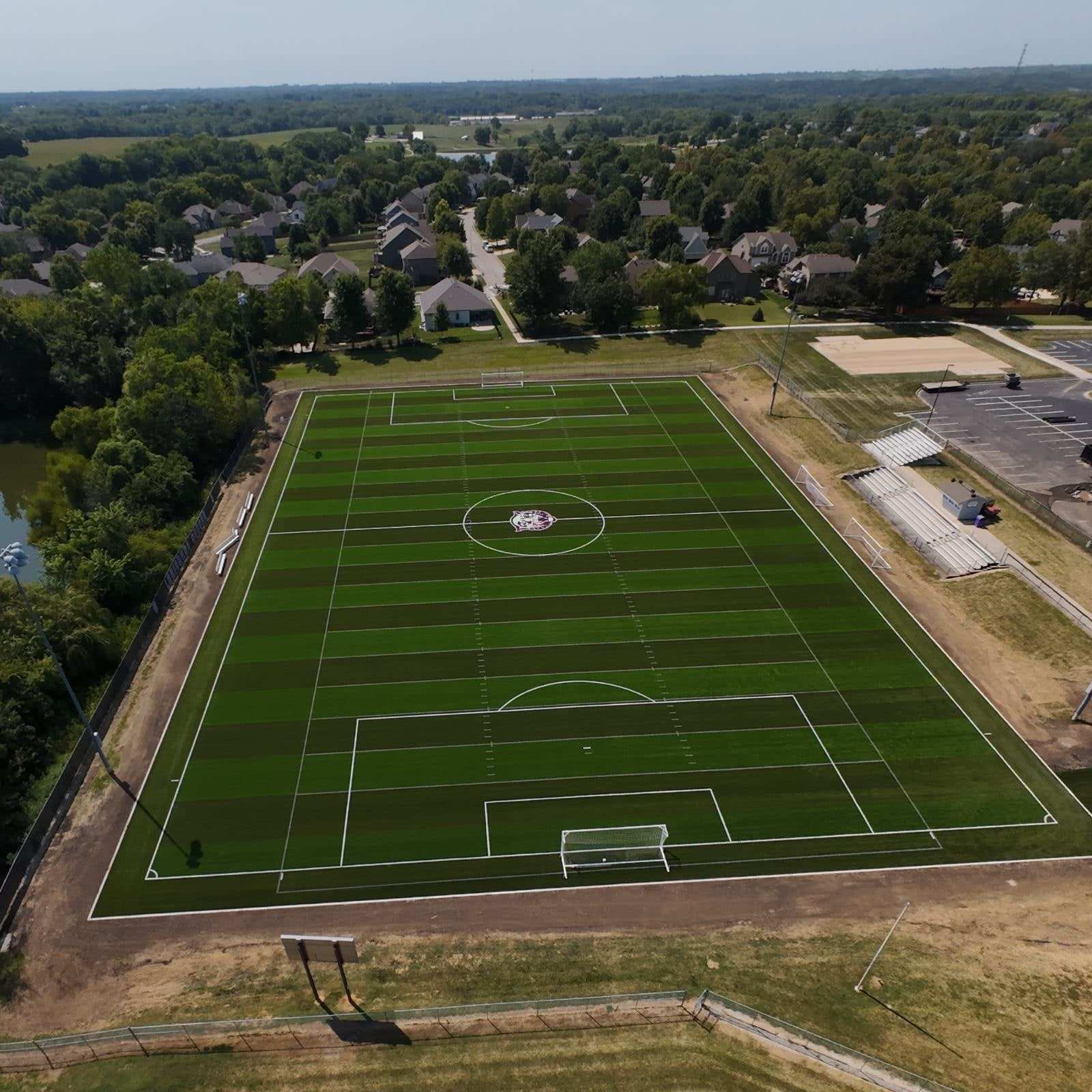
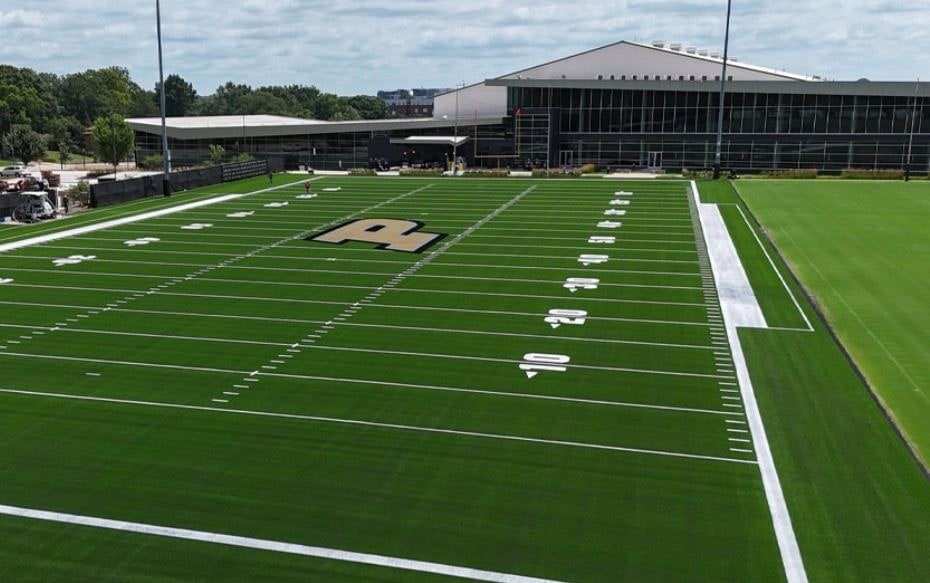
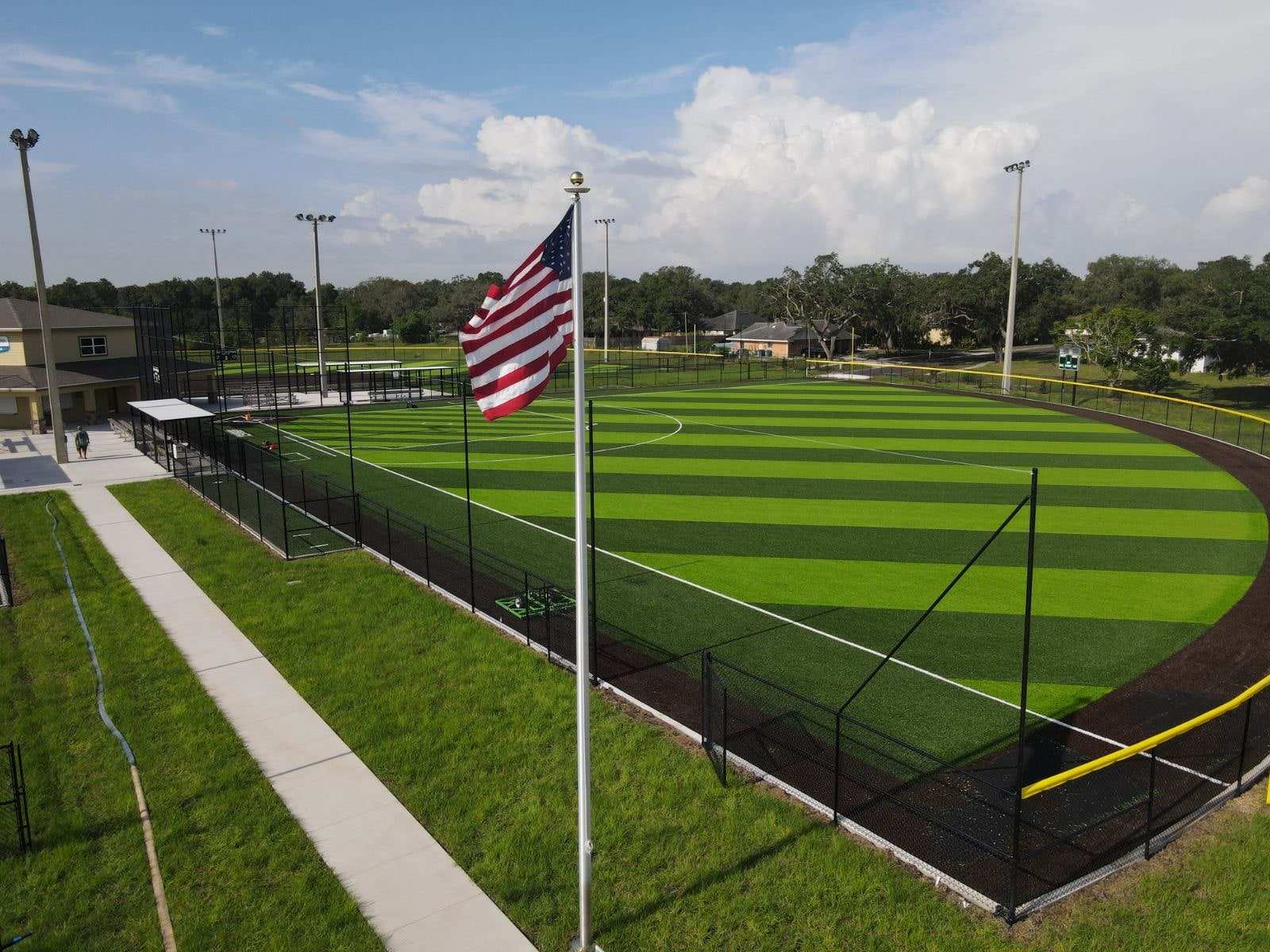
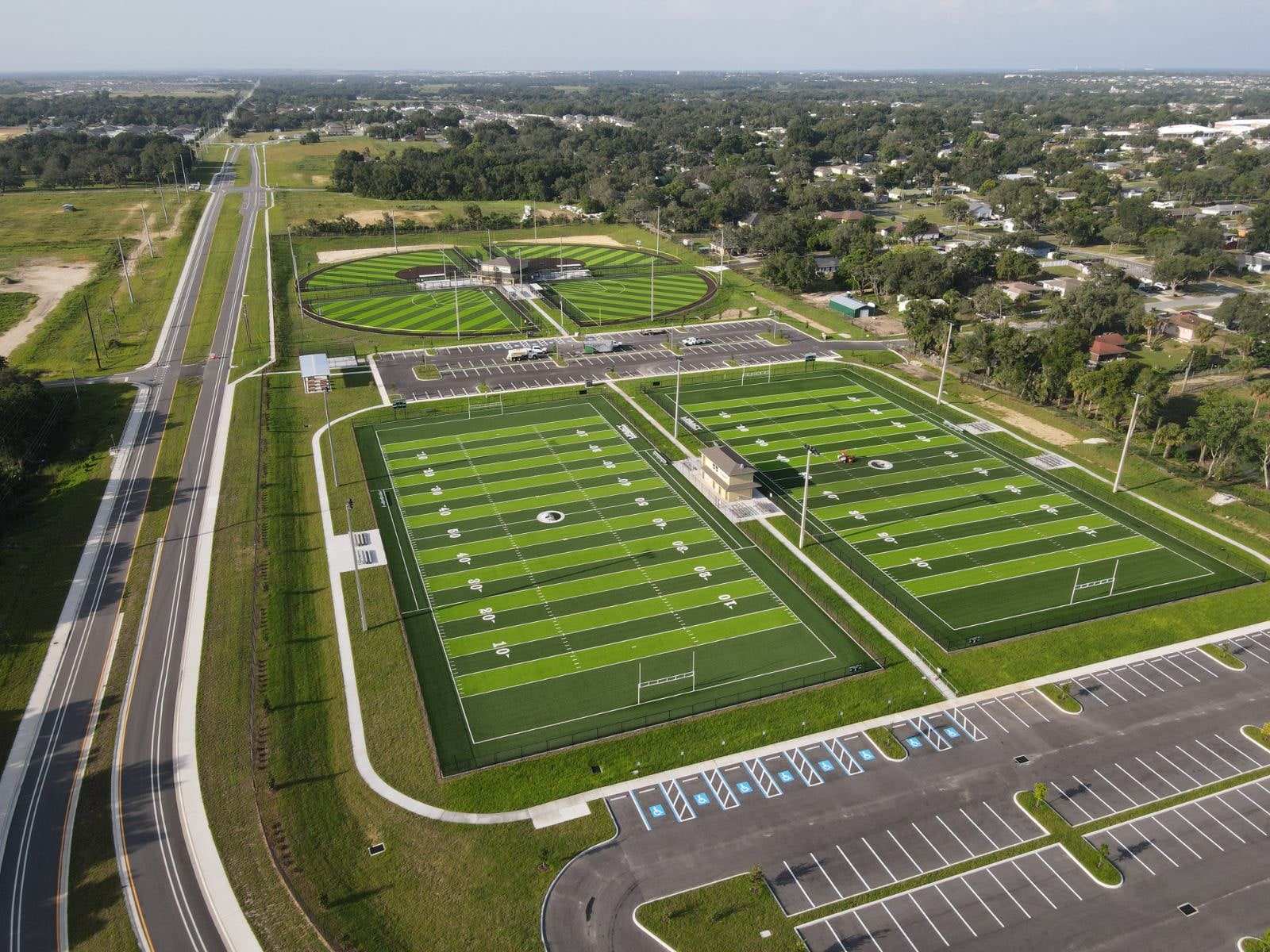
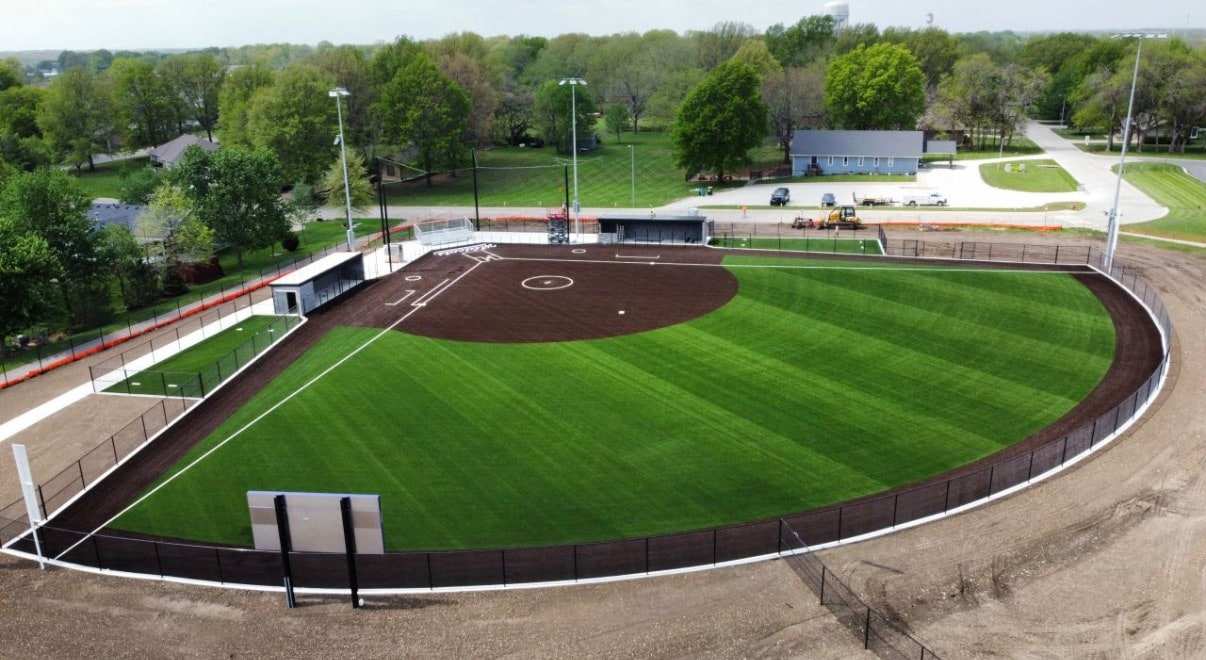
Every level of play
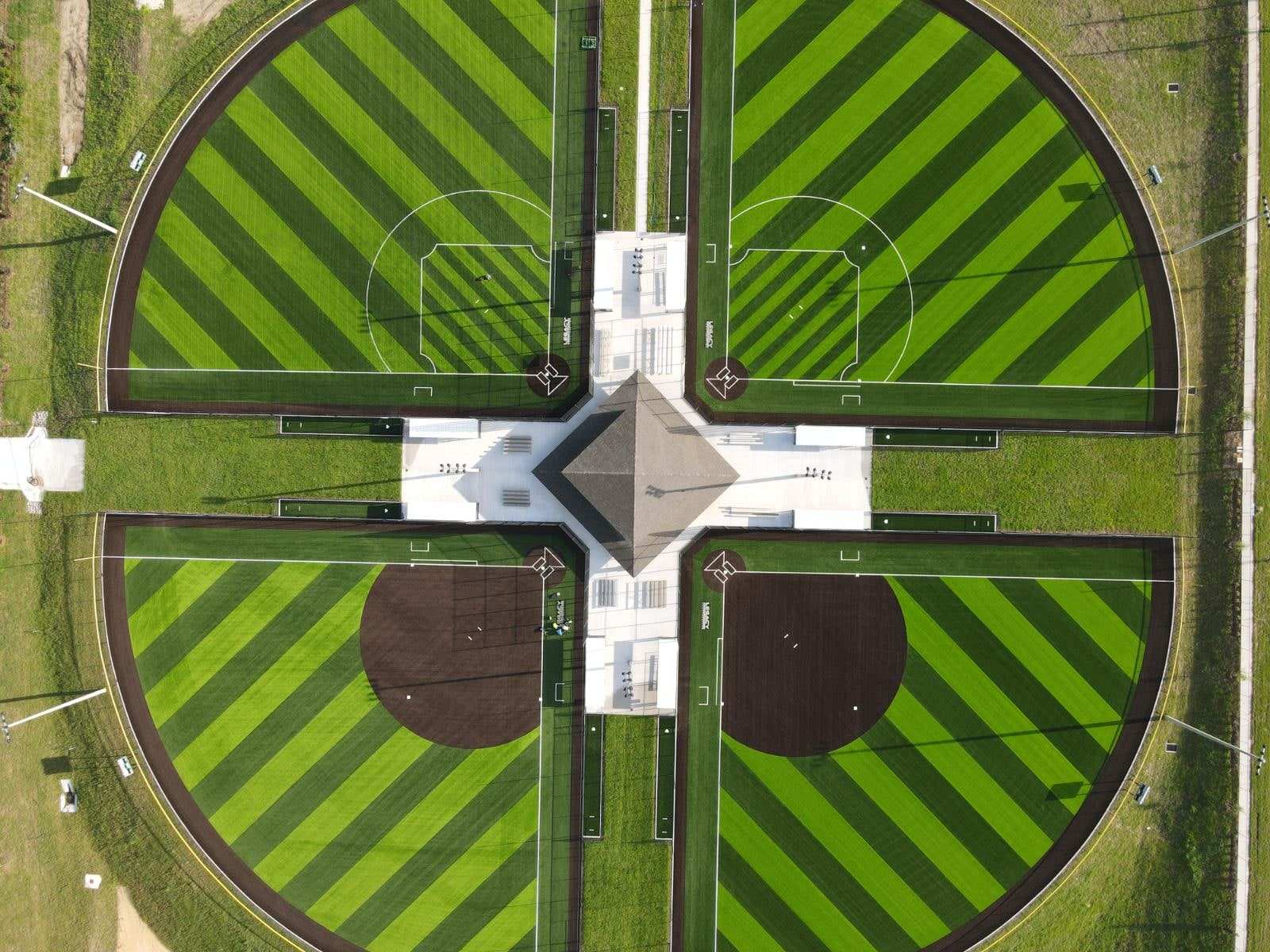
Spec sheet
These are our standard Dual Sport specs. Every value can be changed to match your bid, sport or governing body. Need a full submittal package for your board? Our field team can send spec sheets and samples.
Request submittalsOrder online
$1.79 / sq ft
Rolls are 15 ft wide, cut to the length you need. 225 sq ft minimum.
Free sample · $25 flat shipping per order
Made in U.S.A.Ships from Dalton, GA10-year warranty All sales final
Planning your field
A synthetic field is a system: the turf, the infill that supports it, an optional shock pad, and the base underneath. Each layer changes how the field plays and how safe it tests.
Infill holds the fibers upright and adds cushioning. Common options include crumb rubber (ambient or cryogenic, from recycled tires), EPDM, sand or coated silica, organic infills like cork and coconut fiber, and TPE (Synthetic Turf Council glossary (opens in a new tab)). Speed Zone’s fiber blend is built for infill retention, and we pair it with the infill your spec calls for.
A shock pad, or e-layer, is a permeable layer under the turf, typically rubber granulate bound with polyurethane. It adds impact absorption, and it can be reused across more than one turf lifecycle, which lowers the cost of the next replacement.
Field safety is measured as Gmax, the peak deceleration on impact; lower is softer. ASTM F1936 limits each test point to 200, and the Synthetic Turf Council recommends staying below 165 for the life of the field. Test at least once a year (Sports Field Management Association guide (opens in a new tab)).
Synthetic surfaces get hotter than grass in direct sun, up to about 50°F hotter in Penn State’s research, and watering cools them only briefly (Penn State Center for Sports Surface Research (opens in a new tab)). Plan hydration breaks, shade and practice times for summer.
Step 01
Send us your bid spec or tell us how the field will be used. We return spec sheets and samples for your board, architect or athletic director.
Step 02
Grading and earthwork set the foundation for drainage.
Step 03
A compacted, laser-graded base is prepped and the field is laid out.
Step 04
Custom-length rolls go down, seams are joined and inlaid markings line up.
Step 05
Infill is installed and groomed, and the field is ready to play.
The core tasks are surface cleaning, debris removal, grooming, and redistributing or topping up infill, plus annual impact testing (STC maintenance guidelines (opens in a new tab)). The Sports Field Management Association puts typical synthetic field upkeep at about $5,000–$8,000 a year in materials and 300–500 labor hours. Budget for it from the first season.
Most synthetic fields last about ten years, depending on climate, use and maintenance (University of Illinois Extension (opens in a new tab)). Speed Zone carries a 10-year warranty. A turf field also needs no rest after rain. Natural grass typically needs one to two days (DC Department of General Services (opens in a new tab)).
Speed Zone is a Dual Sport field system designed for multi-use fields, from schools and parks through professional training and competition fields.
Speed Zone is perforated with 3/16" holes on a 4" staggered pattern for permeability greater than 30 inches per hour.
Yes. Rolls are 15 feet wide and can be manufactured in custom lengths up to 220 feet to reduce seams.
Yes. Because we manufacture Speed Zone in our own plant, pile height, face weight, fiber, backing, drainage and color can all be built to the spec your project calls for.
Speed Zone carries a 10-year warranty.
Speed Zone is made at our plant in Dalton, Georgia, with custom fiber formulations and a polyurethane-coated backing.
Building an indoor facility or batting cage? See Legacy Speed gym & cage turf.