Built for the way football fields get used
A football field takes concentrated wear between the hash marks and in front of the benches, and it often doubles as a practice field, a band field and a soccer field. Speed Zone uses a 2-inch pile of slit-film and monofilament polyethylene fiber at 42 oz per square yard, tufted into a woven primary backing and locked with a 20 oz polyurethane coating. Tuft bind tests above 8 lbs, so fibers stay put under cleats.
Lines, numbers and logos
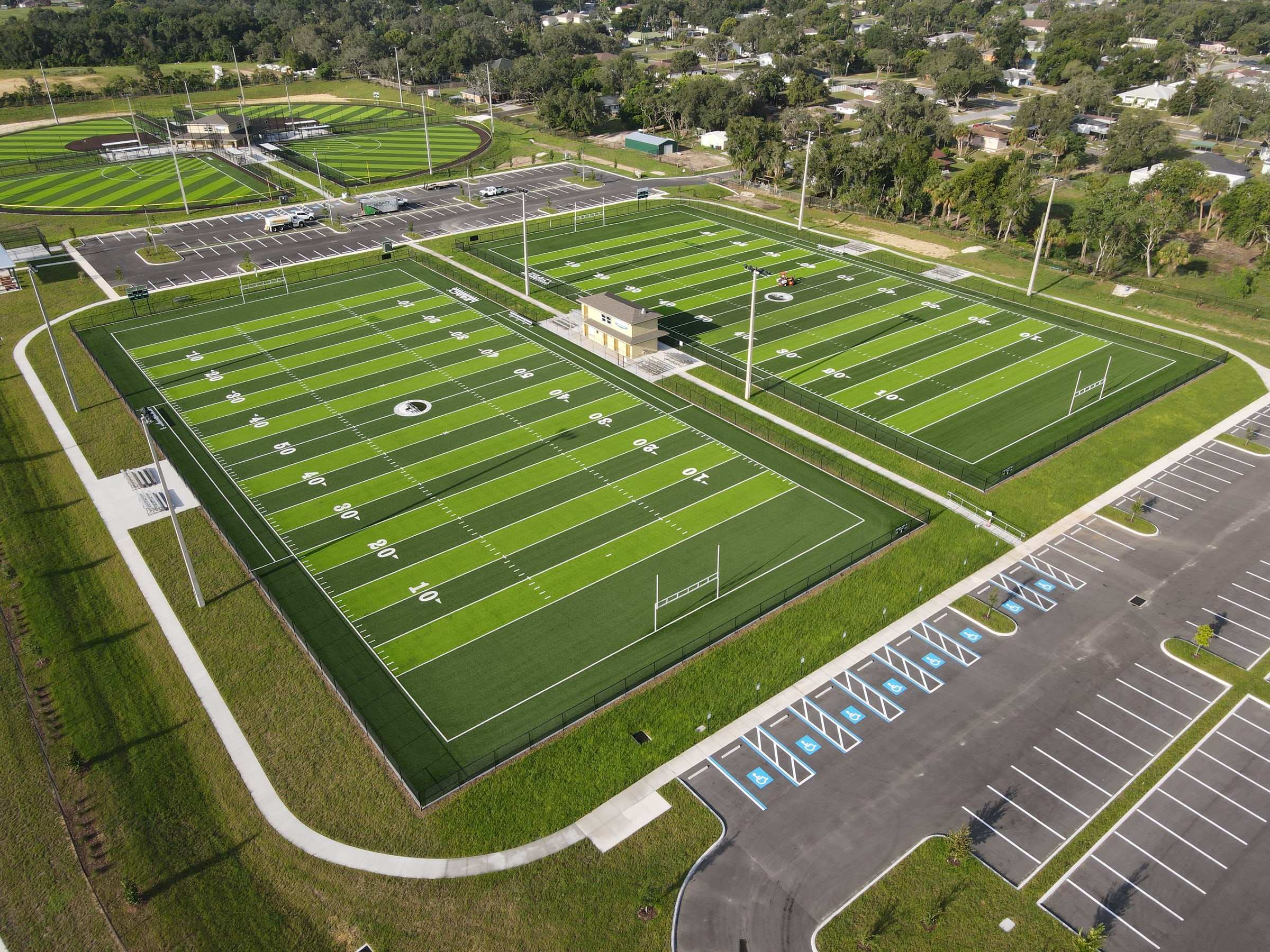
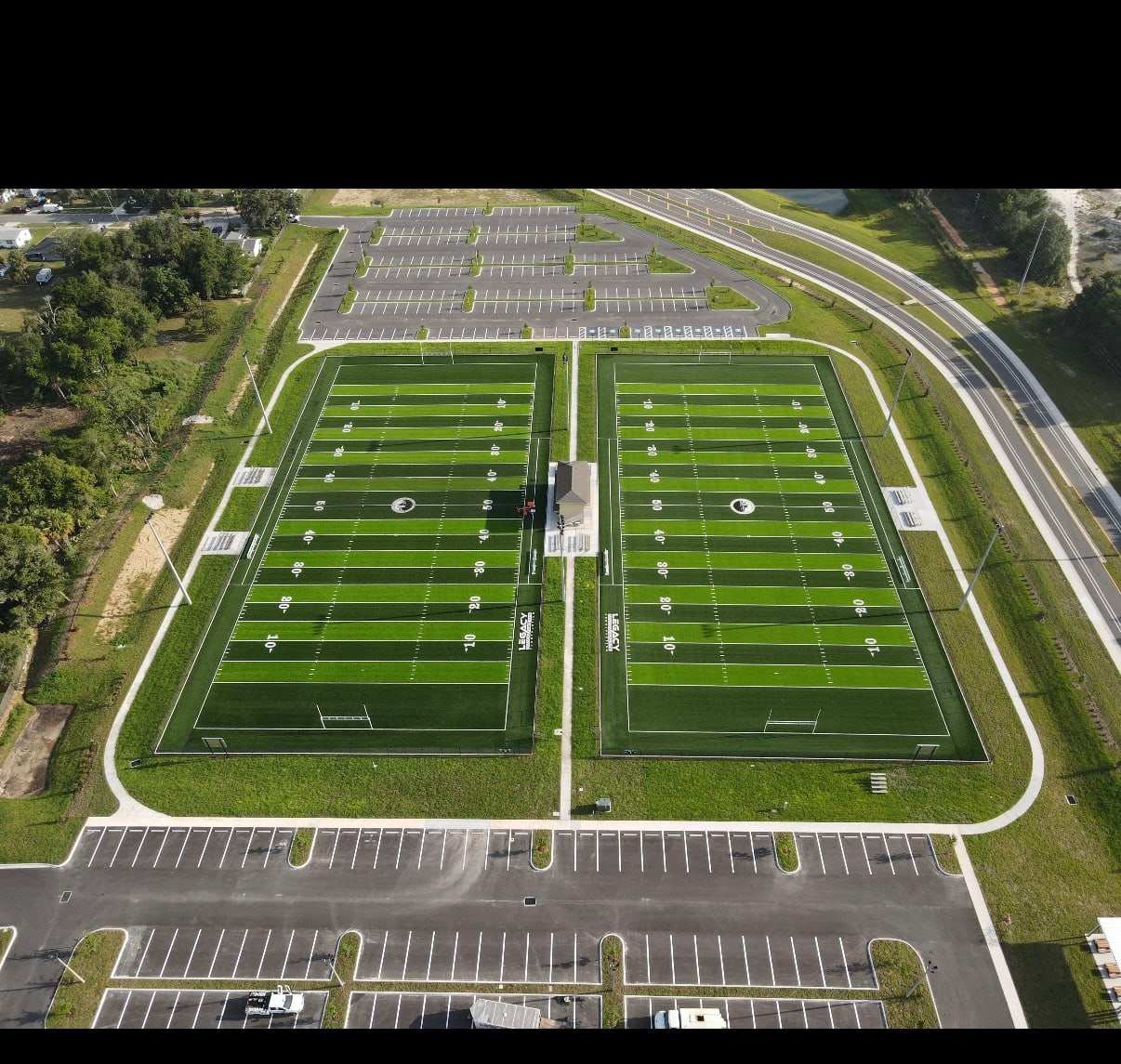
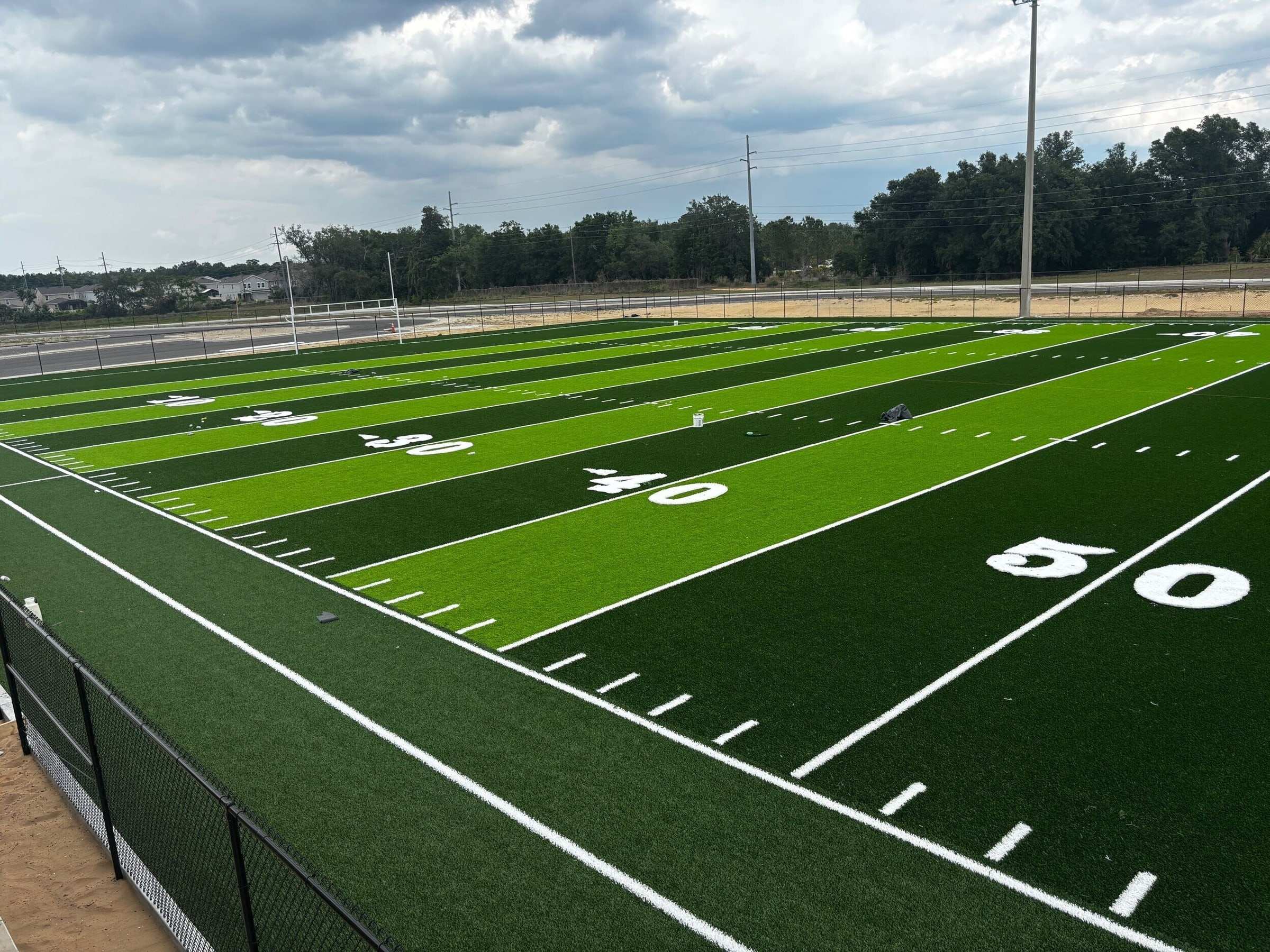
Decide your markings before we manufacture. High school fields under NFHS rules put hash marks 53 ft 4 in from each sideline, while NCAA fields put them 60 ft in. Both use 4-inch white field lines. College end-zone decorations must stay at least 4 ft from any line. We tuft your layout in so it never needs repainting.
If the field also hosts soccer or lacrosse, each sport gets its own line color. Inlaid lines can’t be moved later, so plan every format up front. Anything you’ll change often can be painted with a turf-safe paint.
Drainage and roll layout
Speed Zone is perforated with 3/16-inch holes on a 4-inch staggered pattern for permeability above 30 inches per hour, so the field is playable soon after rain. Rolls are 15 ft wide and manufactured to custom lengths up to 220 ft, which lets us run sideline to sideline with fewer seams.
Planning a multi-sport stadium field
Most turf football fields host more than football, so lay out every sport before we manufacture. NCAA football lines are 4 inches wide, while soccer lines can run 4–5 inches under NCAA rules and up to 5 inches under IFAB Laws. Each sport gets its own inlaid color, commonly white for football and yellow for soccer. Logos and end-zone lettering go in at the same time, kept clear of the markings each rules book requires.
Practice fields can be simpler: inlay the football lines and paint anything that changes by season with a paint made for synthetic turf.
Safety testing and heat
Impact attenuation is measured as Gmax. ASTM F1936 caps any test point at 200, and the Synthetic Turf Council recommends keeping the field below 165 for its life. Your infill and shock pad choices set that number, and we build to the target in your spec. Synthetic fields also run hotter than grass in direct sun, so plan water breaks and shade for summer practices.