Green With Every Step
Pile height
2.0"
Face weight
42 oz per SY
Yarn
PE · Slit-film / Mono
Permeability
> 30" per hour
Roll size
15' wide · custom to 220'
Warranty
10 years

More games on the same field

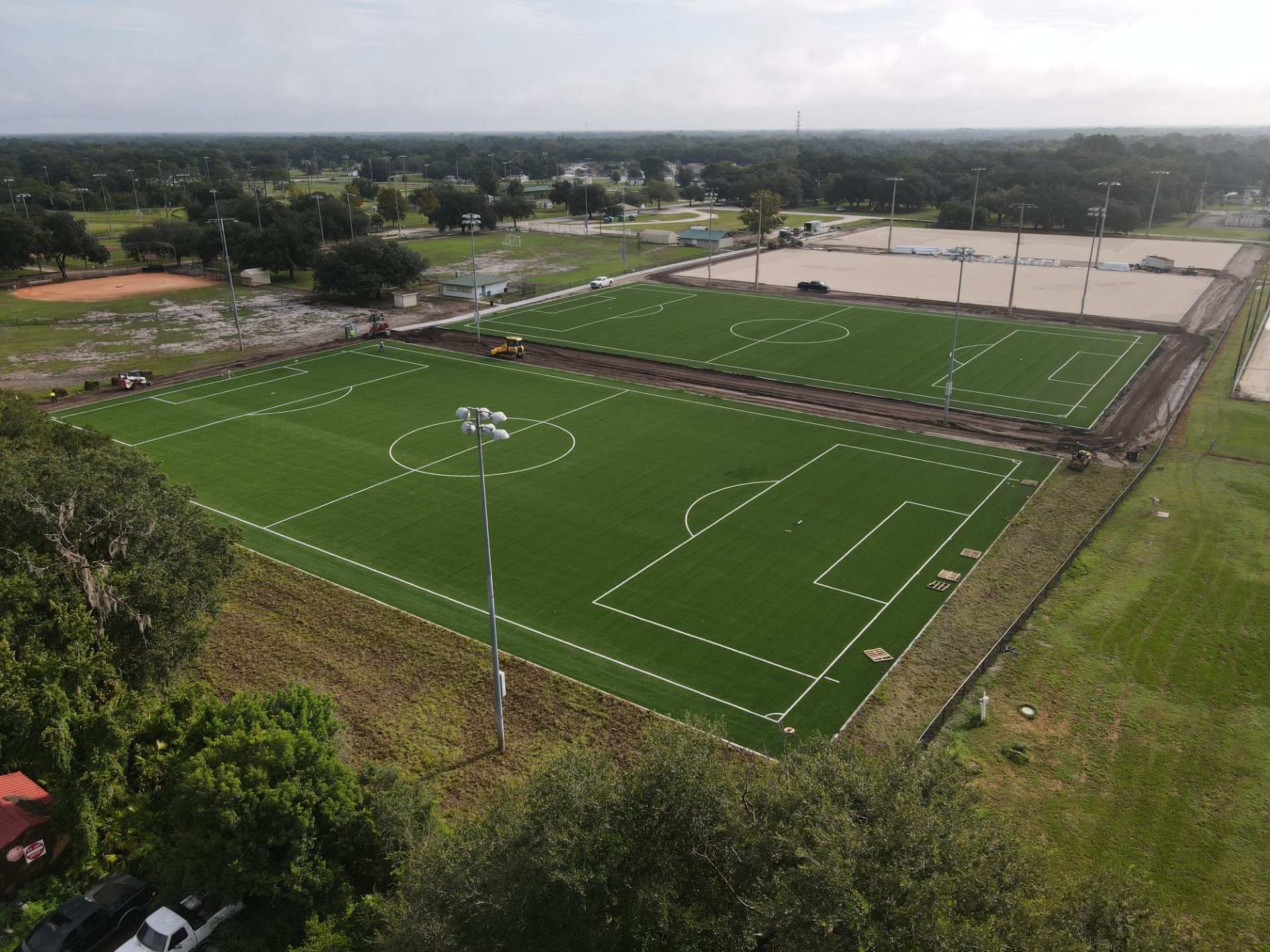
Soccer programs usually want more playing hours, and turf delivers them. San Francisco Recreation and Park reports that each grass-to-turf conversion adds about 800 playable hours a year, roughly a 50% increase. A turf field also needs no rest days after rain.

Speed Zone uses a 2-inch pile of slit-film and monofilament polyethylene at 42 oz per square yard, built for traction, infill retention and balanced shock absorption.

Size the field to your level

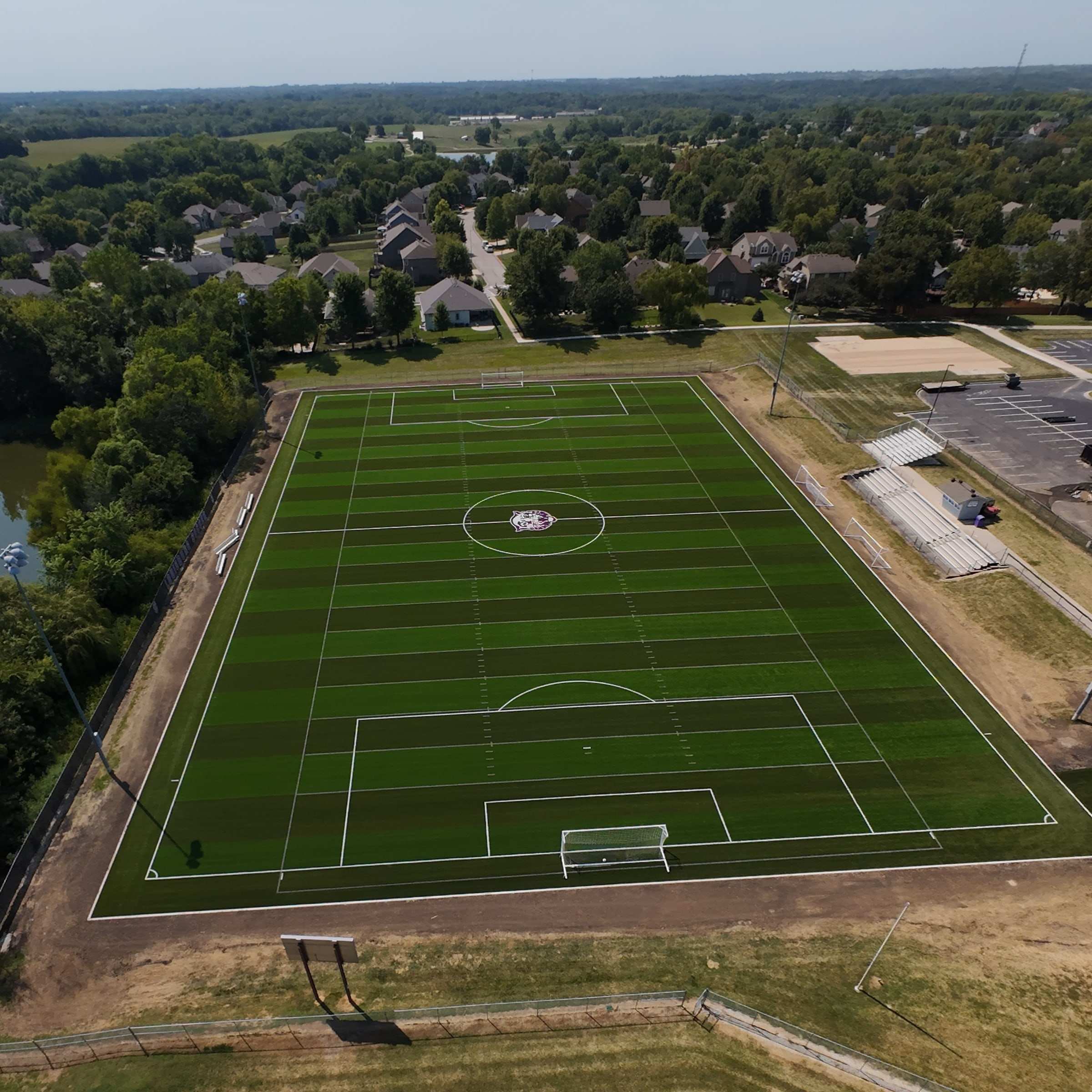
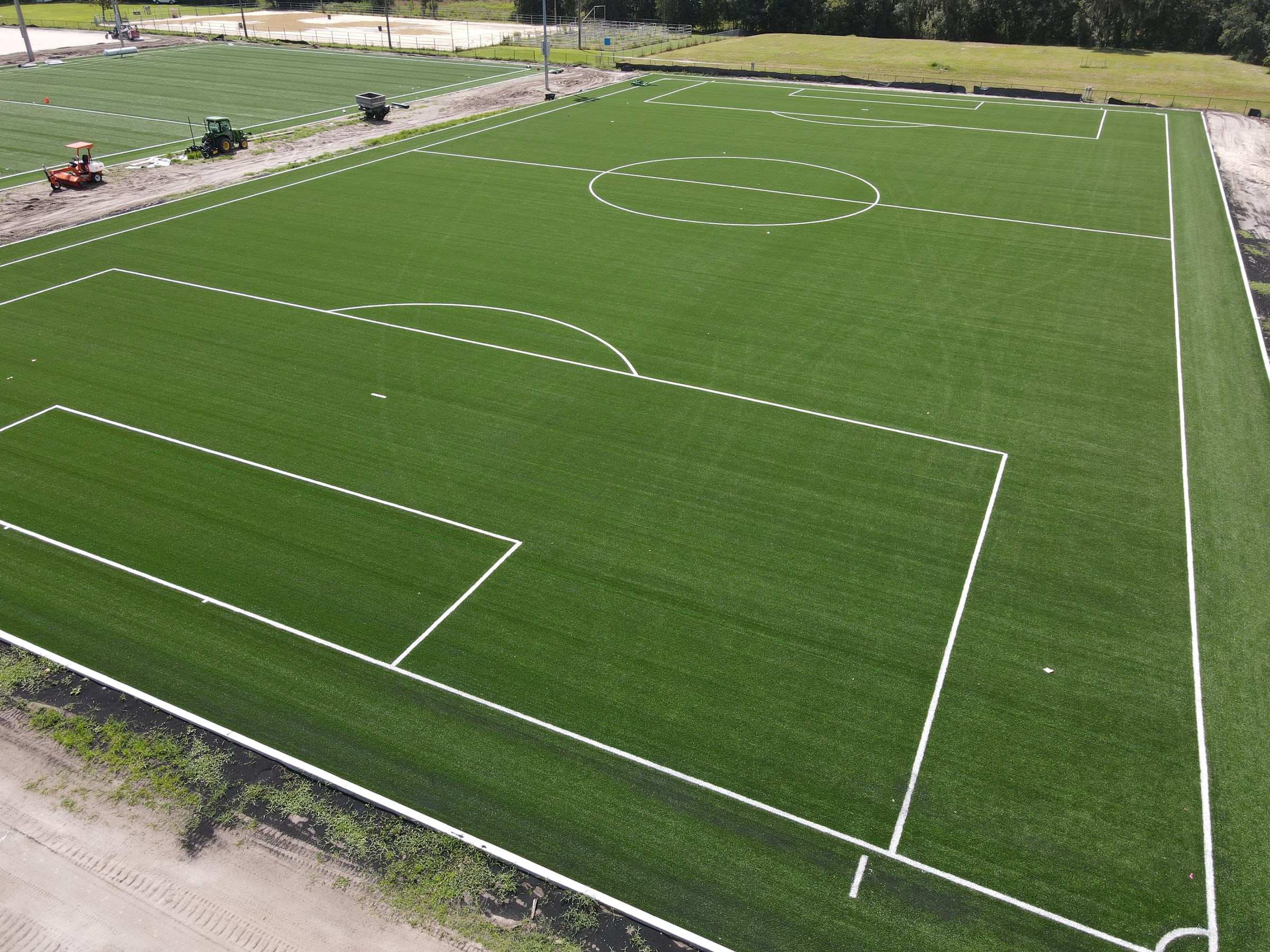
NCAA fields run 115–120 yards by 70–75 yards, with 4–5 inch lines. Under IFAB Laws, international matches use 110–120 by 70–80 yards, and lines may be no wider than 5 inches. Youth programs often split a full field into small-sided games. US Youth Soccer recommends 70–80 by 45–55 yards for 12U, 55–65 by 35–45 for 10U and 25–35 by 15–25 for 6U–8U.

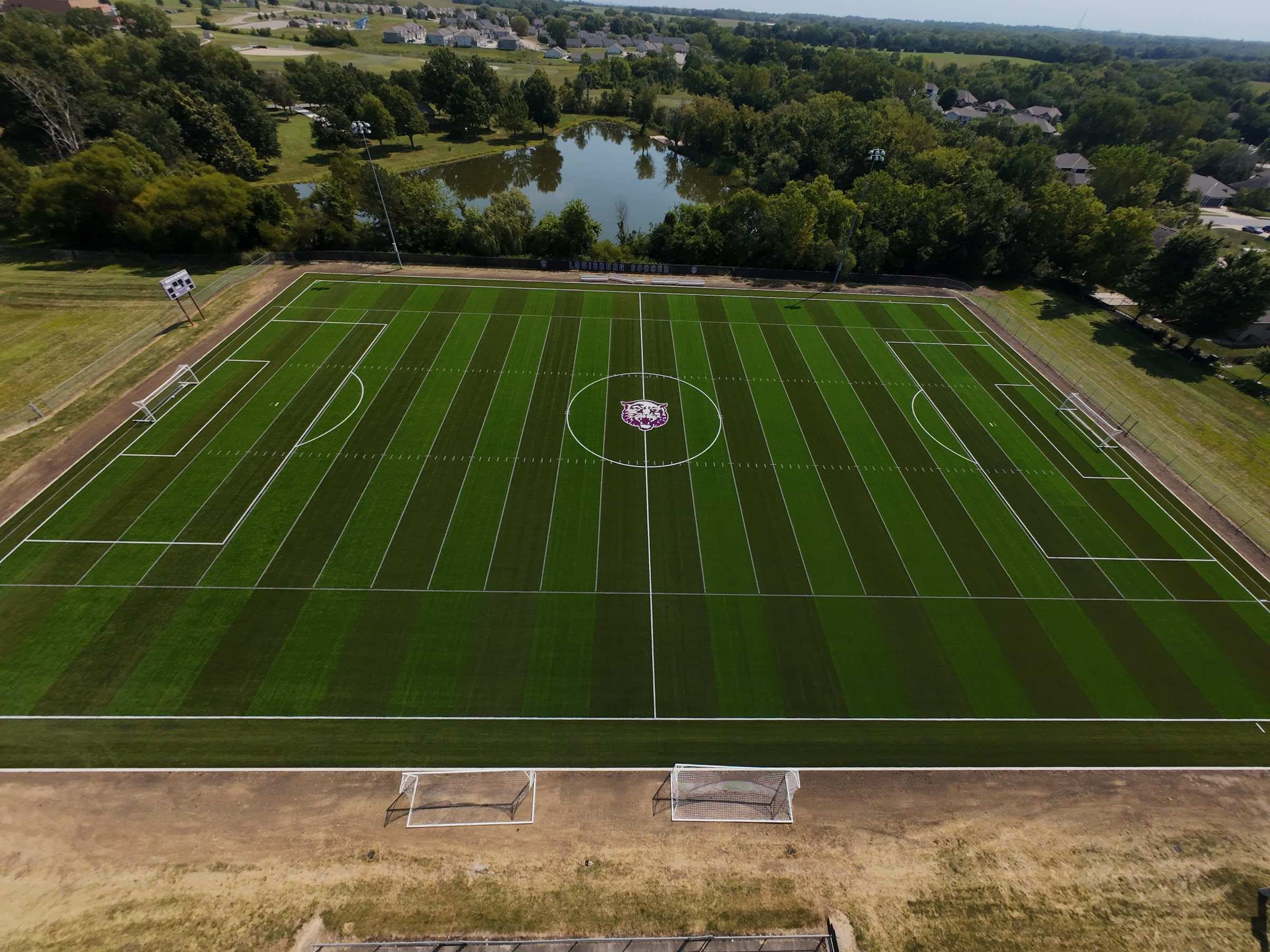
We inlay the main pitch and can add youth fields in a second color. Plan every layout before manufacturing, because inlaid lines are permanent.

Certification and play

NFHS and NCAA allow synthetic surfaces. Matches under IFAB Laws on artificial turf require FIFA Quality Programme certification, and IFAB requires artificial surfaces to be green. If certification is part of your bid, tell us at the start so the system is specified for it.

Built for heavy recreational use

Recreation and club fields see the most hours. FIFA’s Quality Programme describes its FIFA Quality level, the one for recreational, training and grassroots fields, as built for 40–60 hours of play a week. For a busy youth program, the decisions that matter are how many small-sided layouts to inlay, where portable goals will sit, and a grooming schedule that keeps infill even in the highest-traffic areas.

Drainage and grade

Speed Zone is perforated for permeability above 30 inches per hour. NCAA guidance prefers a synthetic soccer field slope under 0.75% from the center toward the touchlines, much flatter than the 1.5% used on native soil fields, because water drains down through the turf instead of across it.

Testing and summer heat

Fields are tested for impact attenuation (Gmax). ASTM F1936 caps any test point at 200, and the Synthetic Turf Council recommends keeping the field below 165. Synthetic surfaces get hotter than grass in direct sun, so plan hydration breaks for summer sessions.
Field size

Soccer field dimensions

Field sizes per IFAB Laws of the Game 2025/26, NCAA 2024–25 soccer rules and US Youth Soccer small-sided guidelines (2017).
LevelLengthWidth
College (NCAA)115–120 yd70–75 yd
International (IFAB)110–120 yd70–80 yd
General competition (IFAB)100–130 yd50–100 yd
Youth 12U70–80 yd45–55 yd
Youth 10U55–65 yd35–45 yd
Youth 6U–8U25–35 yd15–25 yd

Field sizes per IFAB Laws of the Game 2025/26, NCAA 2024–25 soccer rules and US Youth Soccer small-sided guidelines (2017). Rolls are 15 ft wide and made to custom lengths up to 220 ft, so we plan the roll layout to your exact field.

Planning your soccer field

What goes into a turf soccer field

A synthetic field is a system: the turf, the infill that supports it, an optional shock pad, and the base underneath. Each layer changes how the field plays and how safe it tests.

Infill

Infill holds the fibers upright and adds cushioning. Common options include crumb rubber (ambient or cryogenic, from recycled tires), EPDM, sand or coated silica, organic infills like cork and coconut fiber, and TPE (Synthetic Turf Council glossary (opens in a new tab)). Speed Zone’s fiber blend is built for infill retention, and we pair it with the infill your spec calls for.

Shock pad

A shock pad, or e-layer, is a permeable layer under the turf, typically rubber granulate bound with polyurethane. It adds impact absorption, and it can be reused across more than one turf lifecycle, which lowers the cost of the next replacement.

Impact testing

Field safety is measured as Gmax, the peak deceleration on impact; lower is softer. ASTM F1936 limits each test point to 200, and the Synthetic Turf Council recommends staying below 165 for the life of the field. Test at least once a year (Sports Field Management Association guide (opens in a new tab)).

From spec to game day

  1. Step 01

    Spec & submittals

    Send us your bid spec or tell us how the field will be used. We return spec sheets and samples for your board, architect or athletic director.

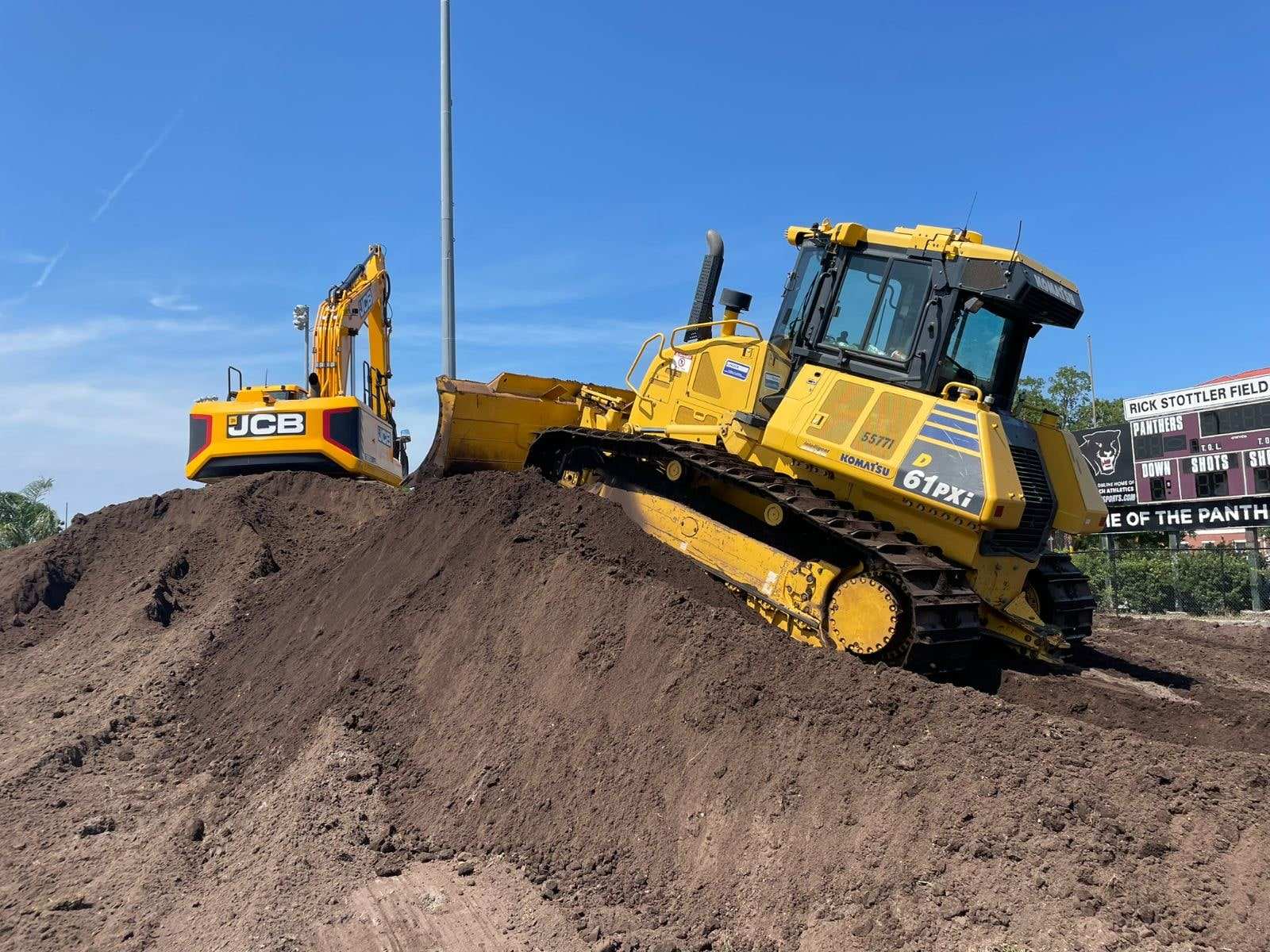
  2. Bulldozer grading a sports field site

    Step 02

    Site work

    Grading and earthwork set the foundation for drainage.

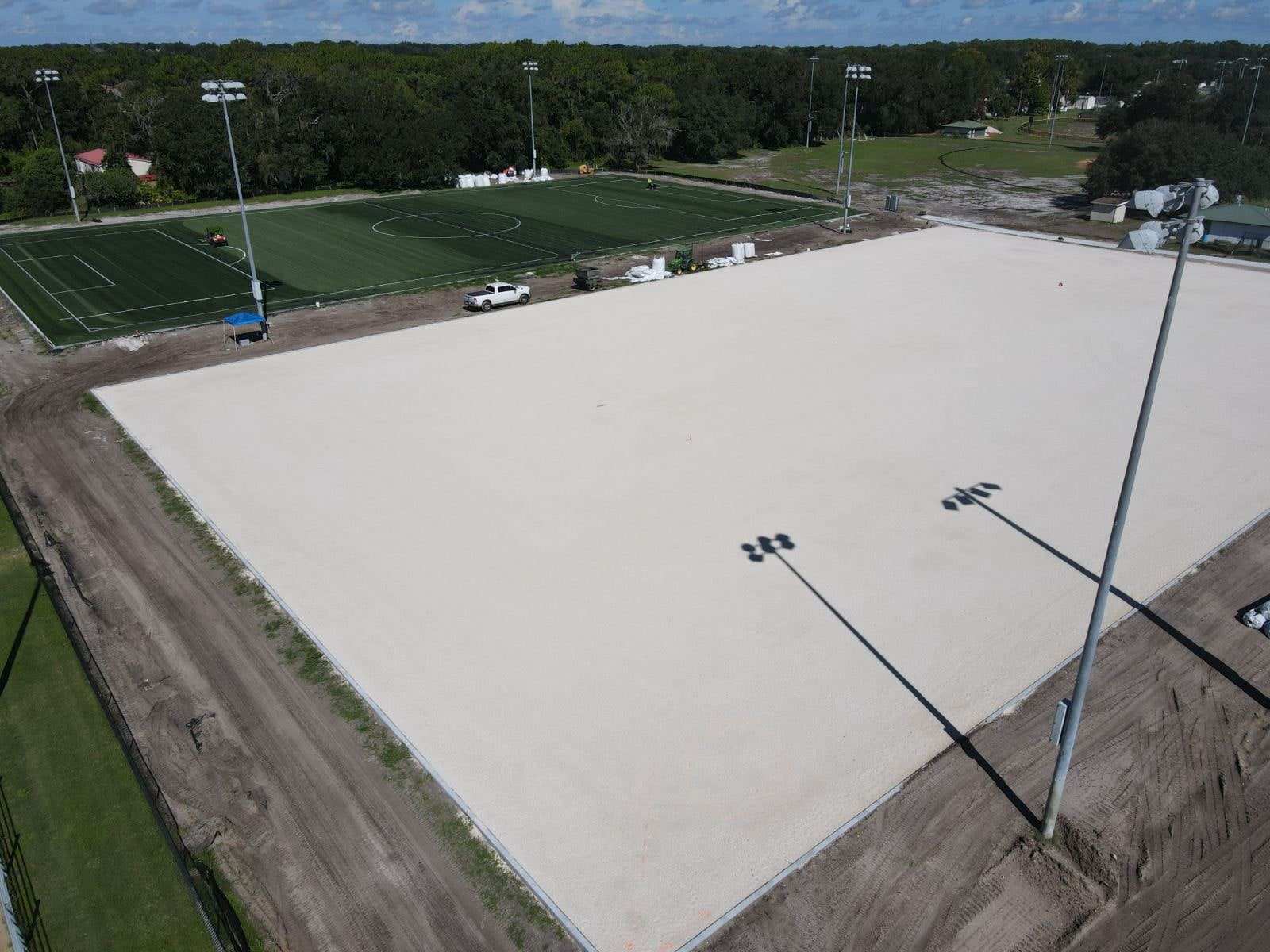
  3. Compacted, laser-graded base next to a finished turf field

    Step 03

    Base & layout

    A compacted, laser-graded base is prepped and the field is laid out.

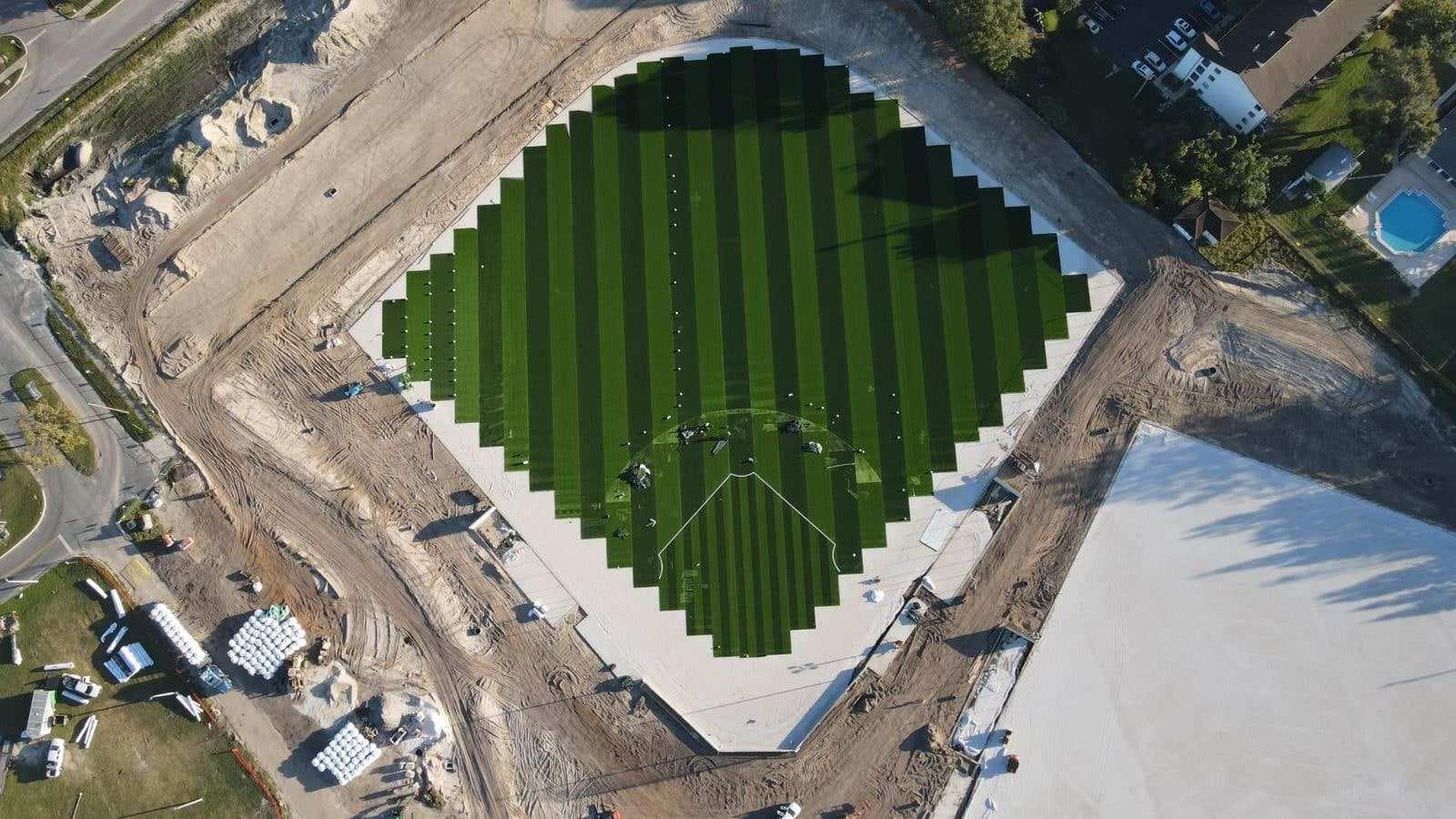
  4. Striped turf rolls laid on a ballfield

    Step 04

    Roll out & seam

    Custom-length rolls go down, seams are joined and inlaid markings line up.

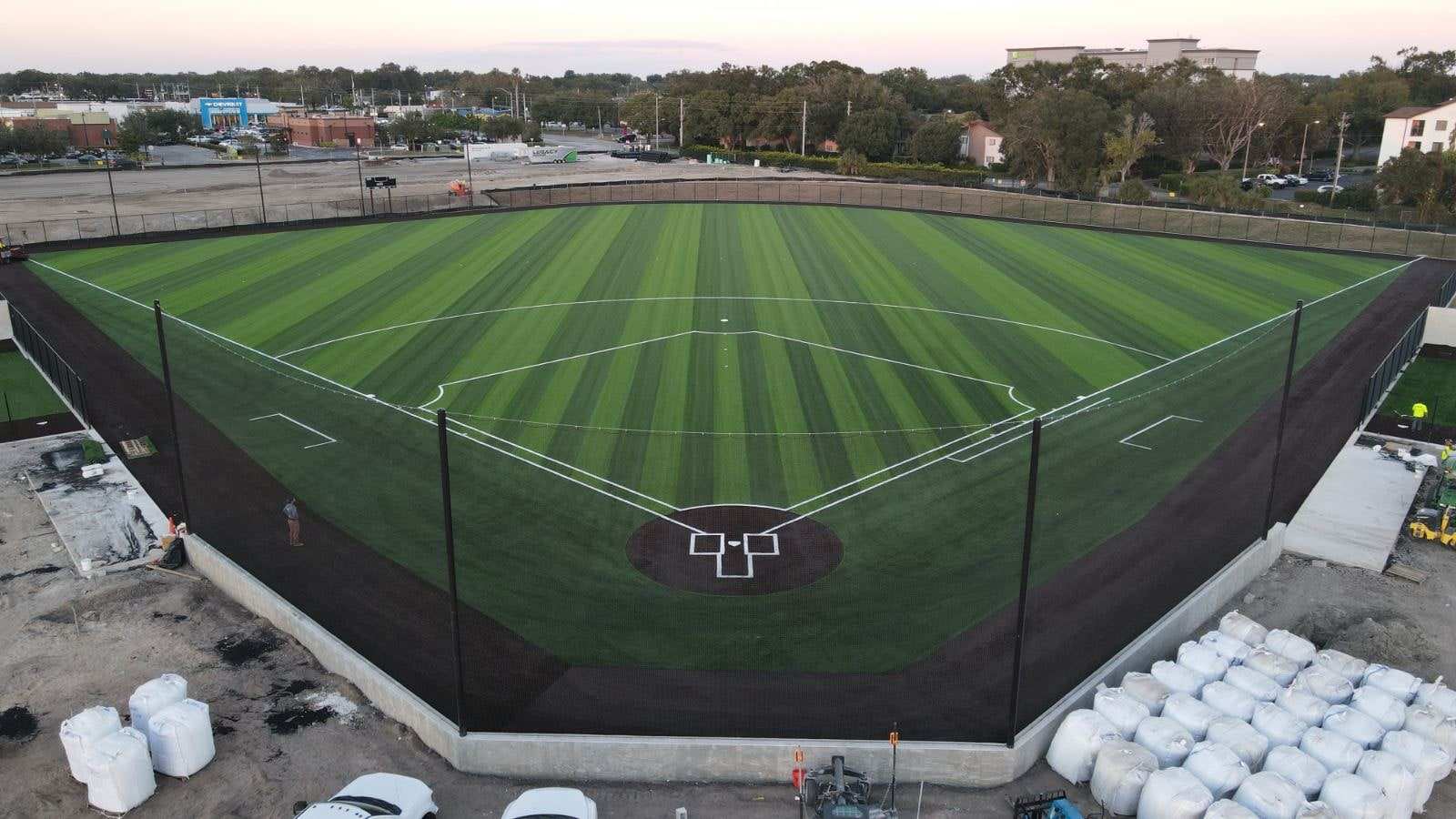
  5. Finished striped ballfield at dusk

    Step 05

    Infill & game day

    Infill is installed and groomed, and the field is ready to play.

Maintenance

The core tasks are surface cleaning, debris removal, grooming, and redistributing or topping up infill, plus annual impact testing (STC maintenance guidelines (opens in a new tab)). The Sports Field Management Association puts typical synthetic field upkeep at about $5,000–$8,000 a year in materials and 300–500 labor hours. Budget for it from the first season.

Soccer turf FAQ

Questions from soccer programs

How big is a college soccer field?

NCAA rules call for 115–120 yards long and 70–75 yards wide, with 120 × 75 as the optimum. Lines are 4–5 inches wide.

Is turf allowed for high school and college soccer?

Yes. NFHS and NCAA rules allow synthetic surfaces. Matches played under IFAB Laws on artificial turf require FIFA Quality Programme certification, and artificial surfaces must be green.

Can we add youth fields across the main pitch?

Yes. US Youth Soccer small-sided fields run from 25–35 yards long for 6U–8U up to 70–80 yards for 12U. We can inlay those in a second color so one field hosts several games at once.

How fast does Speed Zone drain?

Speed Zone is perforated with 3/16-inch holes on a 4-inch staggered pattern for permeability above 30 inches per hour. NCAA guidance prefers a synthetic field slope under 0.75% from the center to the touchlines.

What warranty comes with Speed Zone?

Speed Zone carries a 10-year warranty.