Which turf fits which yard
Match the turf to how the yard gets used: fuller blades for a main lawn, tougher blades for traffic, and a lighter turf for spaces you mostly walk past.
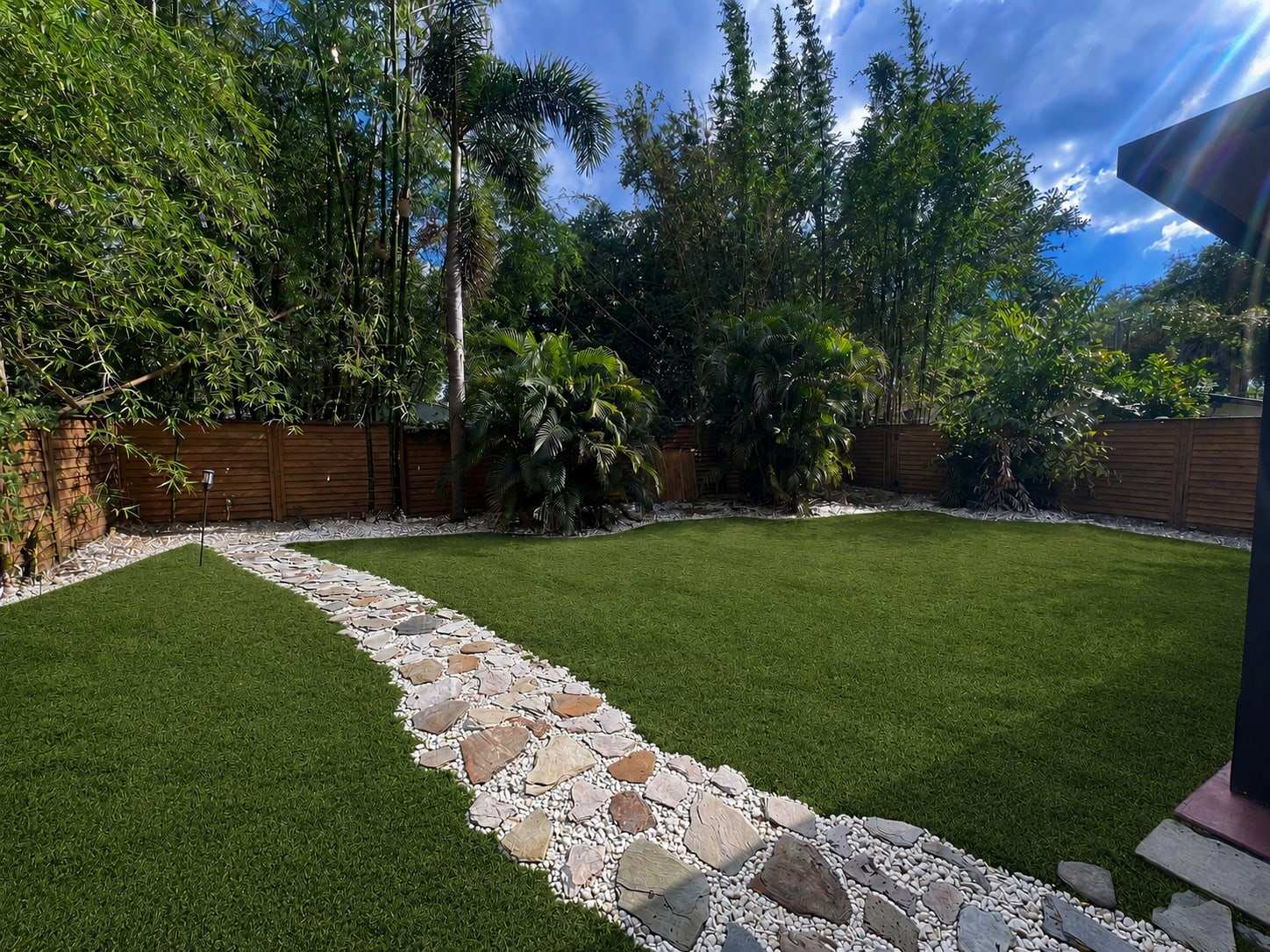
- Main backyard or front lawn: Luxe Flow 75 is our tallest, densest landscape turf, a 1.875 in. S-blade in field green, olive and lime. Pick it when the lawn is the centerpiece.
- Busy, sunny yards: Tropical Flow 62 is a 1.6 in. W-blade with green and tan thatch, made for moderate to heavy traffic.
- Low-upkeep lawns and play areas: Malibu Flow 65 needs no infill, so there is nothing to top off after heavy use.
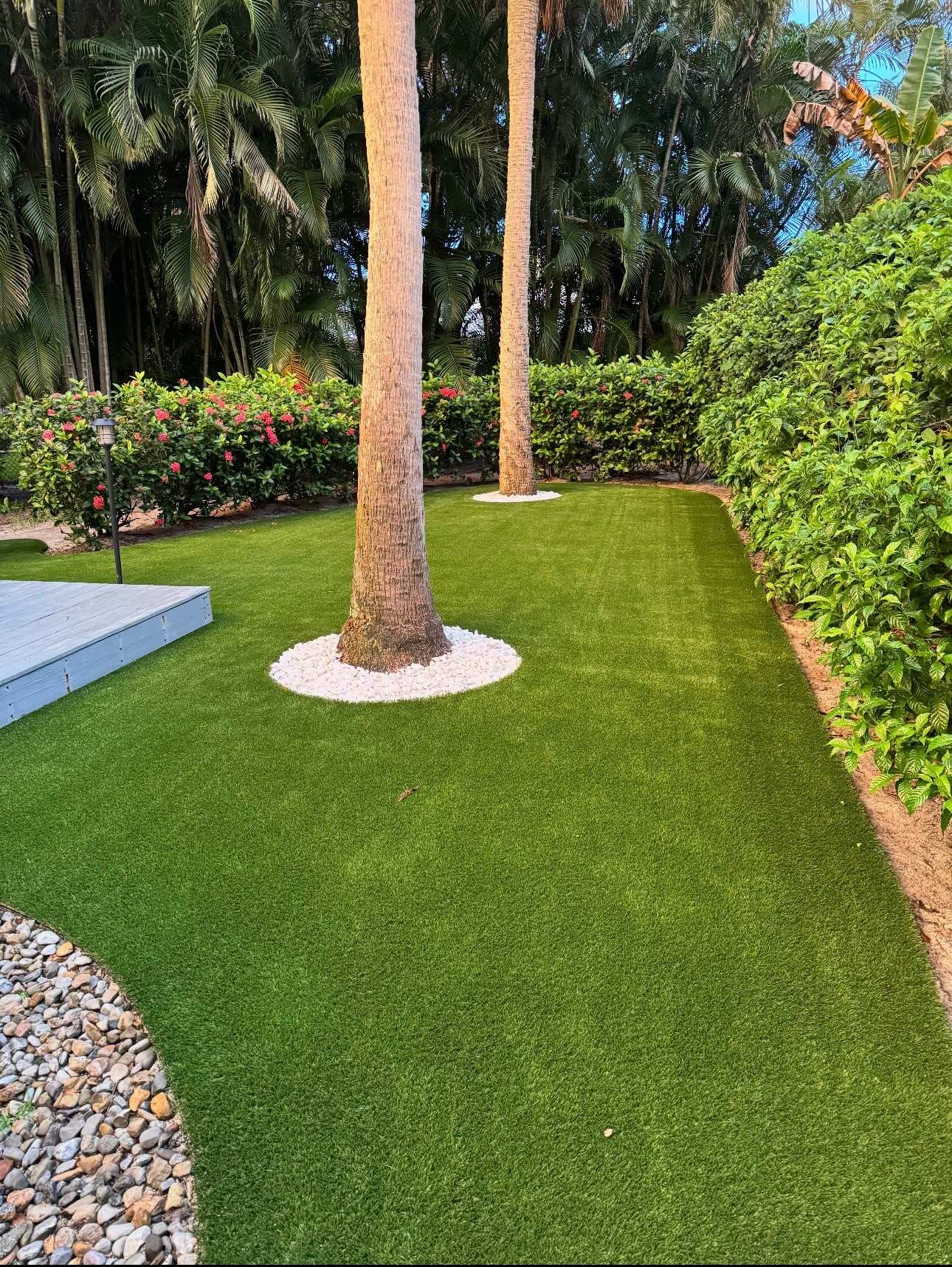
- Street-facing lawns and HOA landscapes: Bermuda is a 1.5 in. four-tone C-blade with curled thatch that reads like a cut Bermuda lawn.
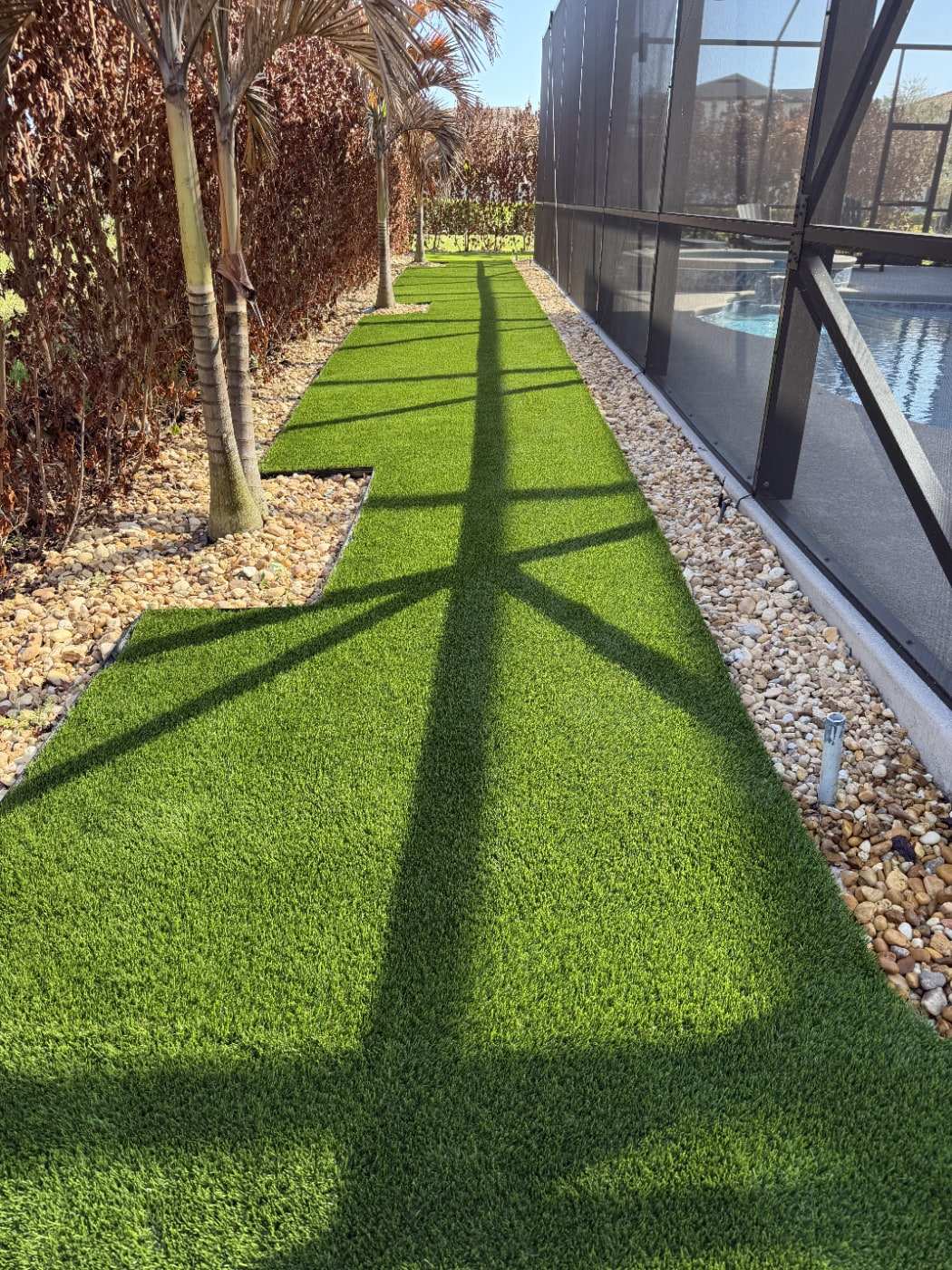
- Side yards and strips: Tropical Flow 50 is the lighter Tropical Flow option for side yards and other low-traffic areas.
If dogs use the yard, read the best artificial turf for dogs before you choose. For a side-by-side on blade shape, pile height and infill, see how to choose artificial turf.
What the installation involves
A turf lawn is only as good as the base under it, so most of the work happens before the turf arrives. Our crews follow the same steps on every lawn:
- Excavate 3 to 4 inches of grass, roots and topsoil.
- Check grading and drainage, with a 1 to 2 percent slope away from the house.
- Compact the subgrade.
- Set edging, plus an optional geotextile weed barrier.
- Build a 3 to 4 inch crushed aggregate base (Class II road base or 3/8 in. minus), compacted in 1 to 2 inch layers.
- Add about 1/2 inch of fines on top, then screed, wet and compact it.
- Walk the base for soft spots and fix them.
Then the turf is rolled out, seamed, nailed down, infilled where the product calls for it, and brushed upright.
Drainage and pool areas
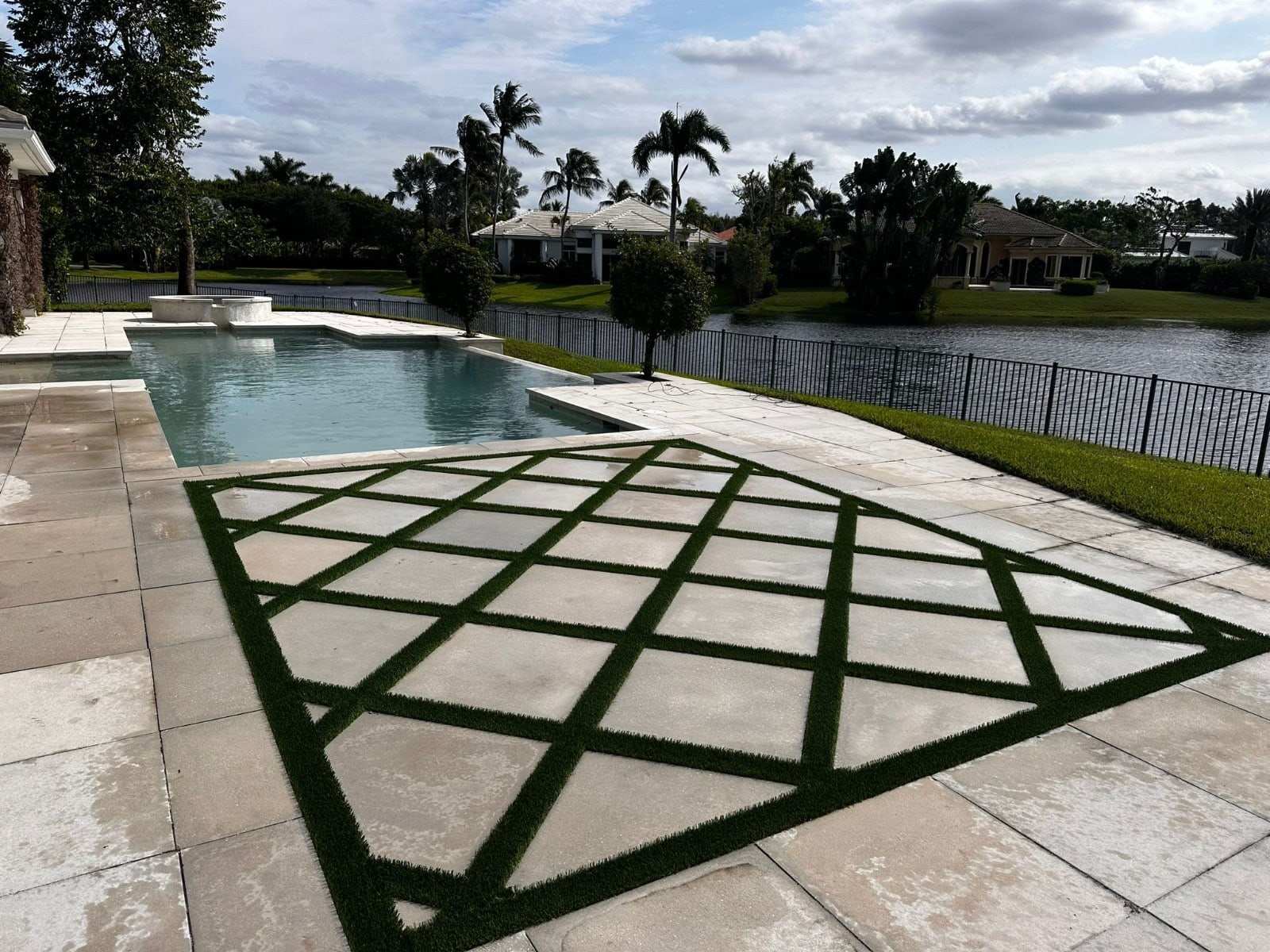
Water drains through the turf backing and into the stone base, then follows the grade away from the house. That is why the slope check in step 2 matters: the base moves water, but it cannot create an outlet where none exists. Around pools, turf is cut to fit between pavers and coping, and the same compacted base keeps it flat at the edges.
Heat in full sun
Artificial grass gets hotter than living grass in direct sun. University of Florida researchers report artificial turf surfaces reaching 174 F on the hottest days, while natural turf stayed near 102 F, and they note that watering turf to cool it cuts into the water it was meant to save. For a lawn in full afternoon sun, plan shade trees, a pergola or a covered patio near where people sit and play, and keep that in mind for pets and bare feet.
Water use and HOA approval
The water savings come from no longer irrigating a lawn. The EPA says U.S. residential outdoor water use is nearly 8 billion gallons a day, mainly for landscape irrigation. In San Antonio, SAWS says a home irrigation system uses 1,500 to 3,000 gallons each time it runs. Your own savings depend on how much you water now; check your water bill or ask your local utility.
If you live in an HOA, get written approval before work starts. Ask what your board needs to see; your installer can supply product specs and a sample. For how turf and grass compare on care and lifespan, read artificial turf vs. natural grass, and for budgeting see artificial turf cost. Warranty terms are on the warranty page.
Get a free estimate
The local installer for your area measures the yard, checks grading and drainage, and brings samples so you can compare turfs in your own light. Find your local installer to book a free estimate.