Where commercial turf fits
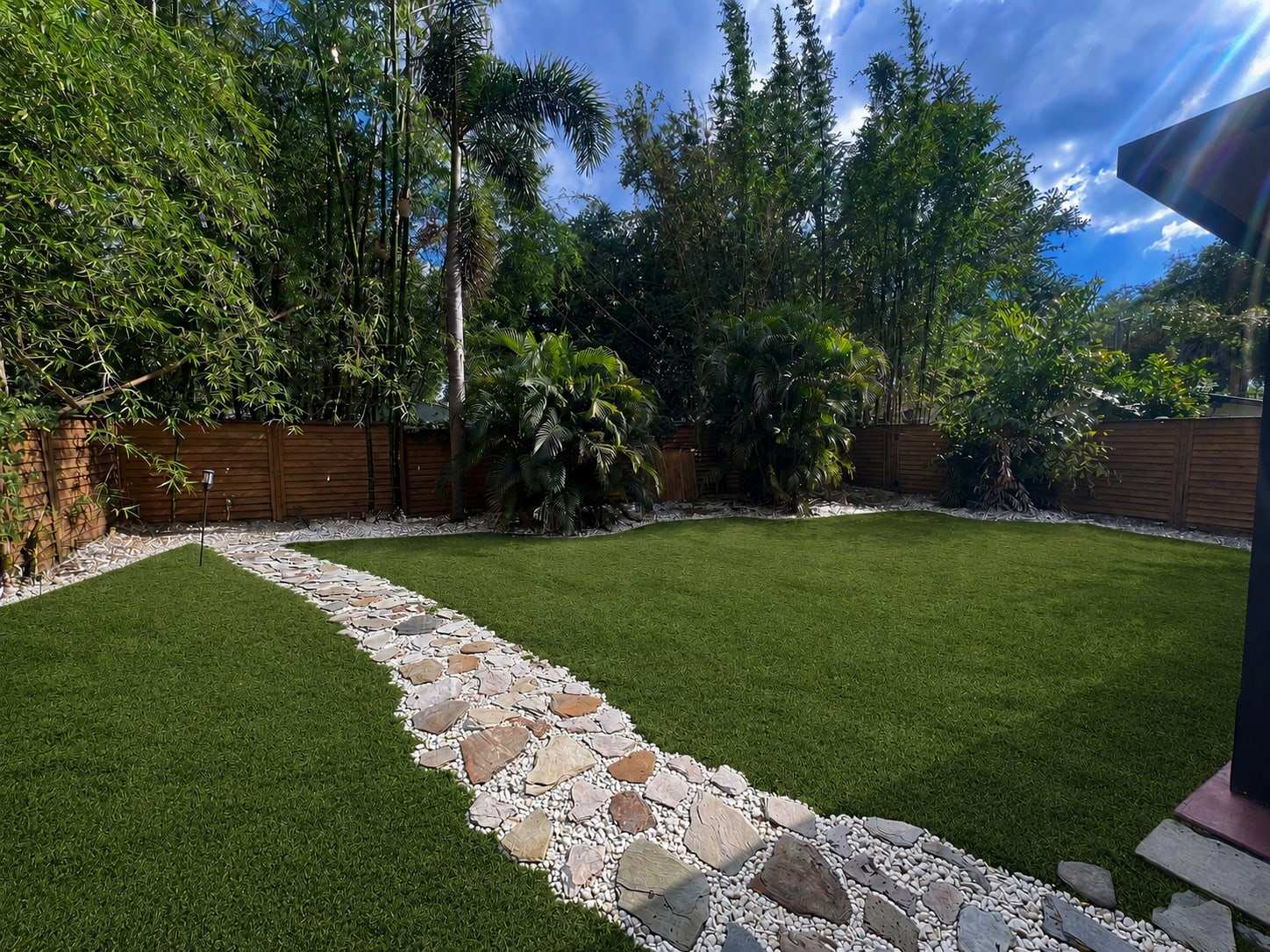
Commercial artificial turf works best on high-visibility areas that are hard to keep green: HOA entrances and common areas, medians, storefront beds, hotel and restaurant patios, multifamily courtyards and rooftop amenity spaces. It does not need mowing, fertilizing or irrigation, so it looks the same between service visits.
The U.S. EPA lists landscaping among the largest water uses in office buildings and hotels. Replacing high-maintenance grass with turf in the areas people see most is one way property managers cut that load. For athletic fields, see sports turf instead.
Which turf to specify
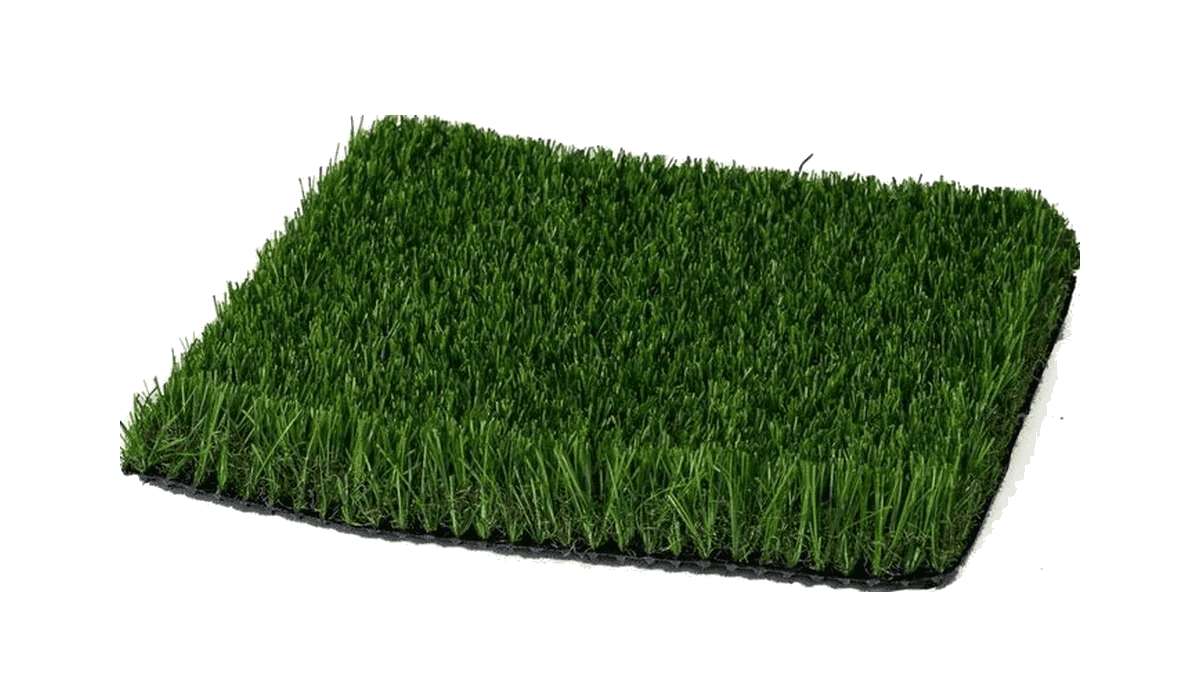
For most commercial landscapes, specify Bermuda. It is built for commercial landscapes, HOA common areas, medians and storefronts: a four-tone C-blade with curled thatch, a 1.5 in. pile and 18,900 stitches per square meter at a 3/8 in. gauge.
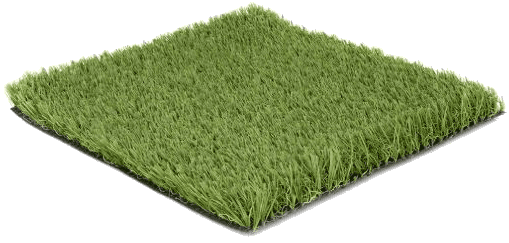
- Medians and narrow strips: Tropical Flow 50 is our lighter option for medians, side strips and budget-conscious projects, with a 1.4 in. W-blade.
- Busy courtyards and lawns: Tropical Flow 62 is a W-blade at 62 oz face weight for sunny areas with moderate to heavy foot traffic.
- Patios and decks: Malibu Flow 65 needs no infill, so there is no loose material to track into lobbies or onto decking. For rooftops, have the building’s engineer or roofer confirm load limits and drainage before you order.
All four carry a 16-year warranty. See warranty for terms, and how to choose artificial turf for a deeper comparison.
Water rules and maintenance
Watering restrictions apply to commercial properties, not just homes. The San Antonio Water System applies its drought rules to all of its customers, sets a Wednesday watering day for medians and entryways without a street address, and adds higher charges for high-use commercial irrigation customers. In northeast and central Florida, the St. Johns River Water Management District’s watering restrictions cover commercial and industrial landscapes and limit sprinklers to set days and hours.
Turf removes that schedule from the equation, but it is not zero maintenance. San Francisco’s parks department, which runs a public turf program, inspects its turf at least twice a month, grooms it and clears loose fibers. For a landscape site, that means clearing leaves and debris, brushing traffic lanes and checking seams and edges. Our maintenance guide covers the routine.
Plan for heat. UF/IFAS turfgrass researchers report that artificial turf surfaces can reach 174°F on the hottest summer days. Put shade over seating areas and play spaces, and keep turf where people pass through or look at it rather than where they sit for long periods in full sun.
Order full rolls direct from Dalton
Commercial jobs can be ordered direct from our Dalton, Georgia plant, in standard 15 × 100 ft rolls or custom roll sizes. Ordering full rolls cuts down on seams across large areas and lets you plan cuts around medians and beds before the turf arrives.
Order samples first so the board, management company or owner can approve the color and blade in person.
A consistent look across properties
Specify one product for every site and properties that share a name or brand will look the same. That matters for HOAs with several entrances, multifamily owners with more than one community and businesses with several storefronts. Write the product name into your landscape spec so replacements and additions match.
How the site gets built
The surface only holds up if the base does. Our installers excavate 3 to 4 in. of grass, roots and topsoil, check grading and drainage, compact the subgrade, set edging and an optional weed barrier, then build 3 to 4 in. of compacted crushed aggregate topped with fines. The turf is then laid, seamed, nailed, infilled where the product calls for it and brushed.
Get a commercial estimate
Tell your local installer the site, the areas you want covered and how many properties are involved. Find yours on our locations page to get a free estimate, and see artificial turf cost for what drives price.