
HOA rules · 6 min read
Can my HOA stop me from installing artificial turf?
What state law in Florida, Texas and Missouri actually says, and how to get an architectural request approved.
Updated · By The Turf Factory
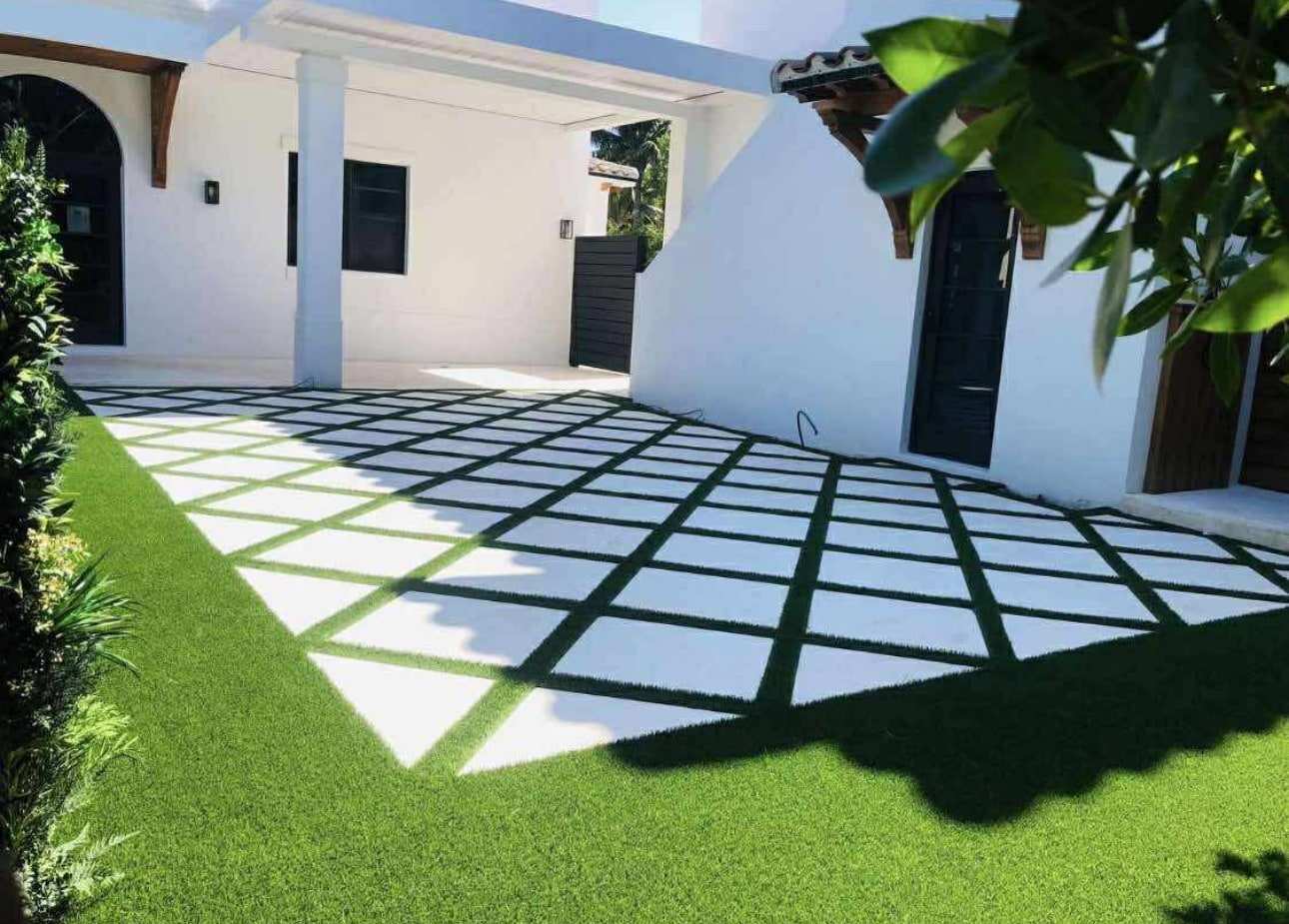
The short answer
Often, yes. Florida limits HOA control only for turf that can't be seen from the street, a neighbor or common area or a community golf course. Texas and Missouri have no statute that protects artificial turf, so your HOA's covenants decide. In most cases the real path is a complete application to your architectural review committee.
The short version: it depends on your state and on visibility
In most cases your HOA can require approval for artificial turf, and in some cases it can say no. Florida gives homeowners a limited statutory right. Texas and Missouri have no statute that protects artificial turf, so the covenants you agreed to when you bought the home control.
This is a plain-language summary of statutes we read, not legal advice. Laws change every session, and your HOA’s declaration, bylaws and architectural guidelines matter as much as state law. If your HOA has denied a request or threatened a fine, talk to a real estate attorney licensed in your state.
Florida: protected only where turf isn’t visible
Florida Statutes §720.3045 is the one law in our three states that names artificial turf. It says that, regardless of an HOA’s covenants or rules and “unless prohibited by general law or local ordinance,” an association may not restrict owners or tenants from installing items on a parcel that are not visible from the parcel’s frontage, an adjacent parcel, an adjacent common area or a community golf course. Artificial turf is listed as an example, next to boats, flags, vegetable gardens, clotheslines and recreational vehicles.
What that means in practice:
- A fenced backyard that no neighbor or common area can see into is the case the statute covers. Your HOA can’t block turf there.
- A front yard, or a backyard visible from a neighbor, a lake, a common area or a golf course, is not covered. Your HOA’s architectural rules still apply.
- The statute sits in Chapter 720, which governs homeowners’ associations. Condominiums fall under a different chapter.
Florida also has Florida-friendly landscaping laws. Section 720.3075(4)(b) says HOA documents “may not prohibit or be enforced so as to prohibit” an owner from implementing Florida-friendly landscaping, and §373.185(3)(b) says the same of deed restrictions. But §373.185 defines Florida-friendly landscaping as quality landscapes that conserve water and are drought tolerant, built on principles like “right plant, right place,” efficient watering and mulching. It does not mention artificial turf. Don’t assume those sections cover synthetic grass. Lead with §720.3045 instead.
Texas: water-saving law protects natural turf, not synthetic
Texas Property Code §202.007 stops a property owners’ association from prohibiting or restricting drought-resistant landscaping or “water-conserving natural turf.” The word “natural” matters. The statute does not address artificial turf, so your deed restrictions decide whether synthetic grass is allowed.
The same section shows how Texas expects these reviews to work. An association may require “a detailed description or a plan” for review, to keep the yard aesthetically compatible with the subdivision, but it “may not unreasonably deny or withhold approval” of drought-resistant landscaping or water-conserving natural turf. Those protections apply to natural plantings. Even so, many Texas HOAs use a similar review process for synthetic turf.
A 2025 bill, H.B. 2269, would have barred associations from requiring grass or turf landscaping. It never made it out of committee and is not law. Check for new bills before you rely on this summary.
Missouri: your covenants govern
We found no Missouri statute that addresses artificial turf or drought-tolerant landscaping in HOAs. The main Missouri section on what covenants can’t prohibit, RSMo §442.404, covers political signs, rooftop solar, for-sale signs and backyard chickens. It doesn’t mention turf or landscaping.
That leaves your subdivision’s declaration and architectural guidelines in charge. Read the landscaping, lawn maintenance and architectural review sections, and look for words like “sod,” “live grass” or “lawn.” Then apply through the architectural review committee.
How to get HOA approval
Send the architectural review committee a complete package the first time. Most denials and delays come from missing details, not from the idea of turf itself. Include:
- Product spec sheet. Name the exact product, pile height, face weight, blade colors and backing. Our product pages list these specs.
- A physical sample. Committees approve what they can see and touch. Ask your installer for a sample of the turf you’re proposing.
- Site plan. Mark where turf goes, where planting beds stay, and the edging and borders. A simple sketch on your plat or a marked-up aerial photo usually works.
- Installation method. Describe the base: grass and roots removed, a compacted crushed aggregate base, edging, and grading that sends water away from the house. See backyard lawns for how our crews prepare the base.
- Contractor information. Company name, license or registration where your city requires one, and proof of insurance.
- Warranty and maintenance. Note the 16-year warranty on our landscape turf (see warranty terms) and how you’ll keep it clean. Our maintenance guide helps here.
What HOAs commonly ask for
HOA rules vary, but approvals tend to come with conditions about appearance and drainage. Ask your committee whether these apply before you sign a contract:
- A natural look. Multi-tone blades and a tan thatch read as real grass from the street. Bermuda is made for HOA common areas and residential lawns, with a four-tone C-blade and curled thatch. Tropical Flow 62 uses field green and olive blades with green and tan thatch. For a full lawn, Luxe Flow 75 has a 1.875-in. pile in three greens.
- Front yard limits. Some HOAs allow turf only in rear yards, or only in part of the front yard with planting beds kept.
- Borders and edging. Clean edges along walks, driveways and beds.
- Drainage. Proof that water won’t be pushed onto neighboring lots.
- Upkeep. Requirements to keep turf brushed, clean and replaced when worn.
Turf from The Turf Factory is Made in U.S.A. and lead free and PFAS free. Some committees ask about materials, so that’s worth noting in your request. For broader questions, see artificial turf vs. natural grass and what turf costs.
Get help with your submittal
Your local installer can measure your yard, recommend a product that fits your HOA’s rules and give you the specs and sample your committee needs. Find yours in Melbourne, FL, San Antonio, TX or St. Louis, MO, or browse all locations to request a free estimate.
Plan your HOA submittal
Get a free quoteSources
- Florida Statutes §720.3045, Installation, display, and storage of items (opens in a new tab)
- Florida Statutes §720.3075, Prohibited clauses in association documents (opens in a new tab)
- Florida Statutes §373.185, Florida-friendly landscaping (opens in a new tab)
- Texas Legislature, S.B. 198 (83rd Leg.) enrolled text amending Property Code §202.007 (opens in a new tab)
- Texas Property Code §202.007, current text (opens in a new tab)
- Texas Legislature Online, H.B. 2269 (89th Leg.) bill history (opens in a new tab)
- Revised Statutes of Missouri §442.404 (opens in a new tab)