A city with its own water system
Alamo Heights sets its own watering rules, so a San Antonio rule summary may not match what applies on your street. The city incorporated in 1922 as an independent town about five miles northeast of downtown San Antonio, with its own school district, and today it pumps its own water from four city wells. Its 2020 population was 7,357.
That independence shows up in the drought rules. When the Edwards Aquifer Authority cuts pumping, Alamo Heights declares its own stage. In early October 2026 the city was in Stage 3, which allows sprinklers and irrigation systems only once every other week, during two four-hour windows. Drip and soaker hoses can run any day in those same hours, and a hand-held hose any time.
What every-other-week watering does to a lawn
Two weeks between sprinkler days is a long stretch in a San Antonio summer. At the airport, NOAA normals put the August average high at 96°F. Grass that dries out between watering days thins out first along driveways and walks, where the pavement adds heat. Turf removes that area from the schedule entirely. You can still keep beds and trees on drip, which the city allows more often.
Deep front yards
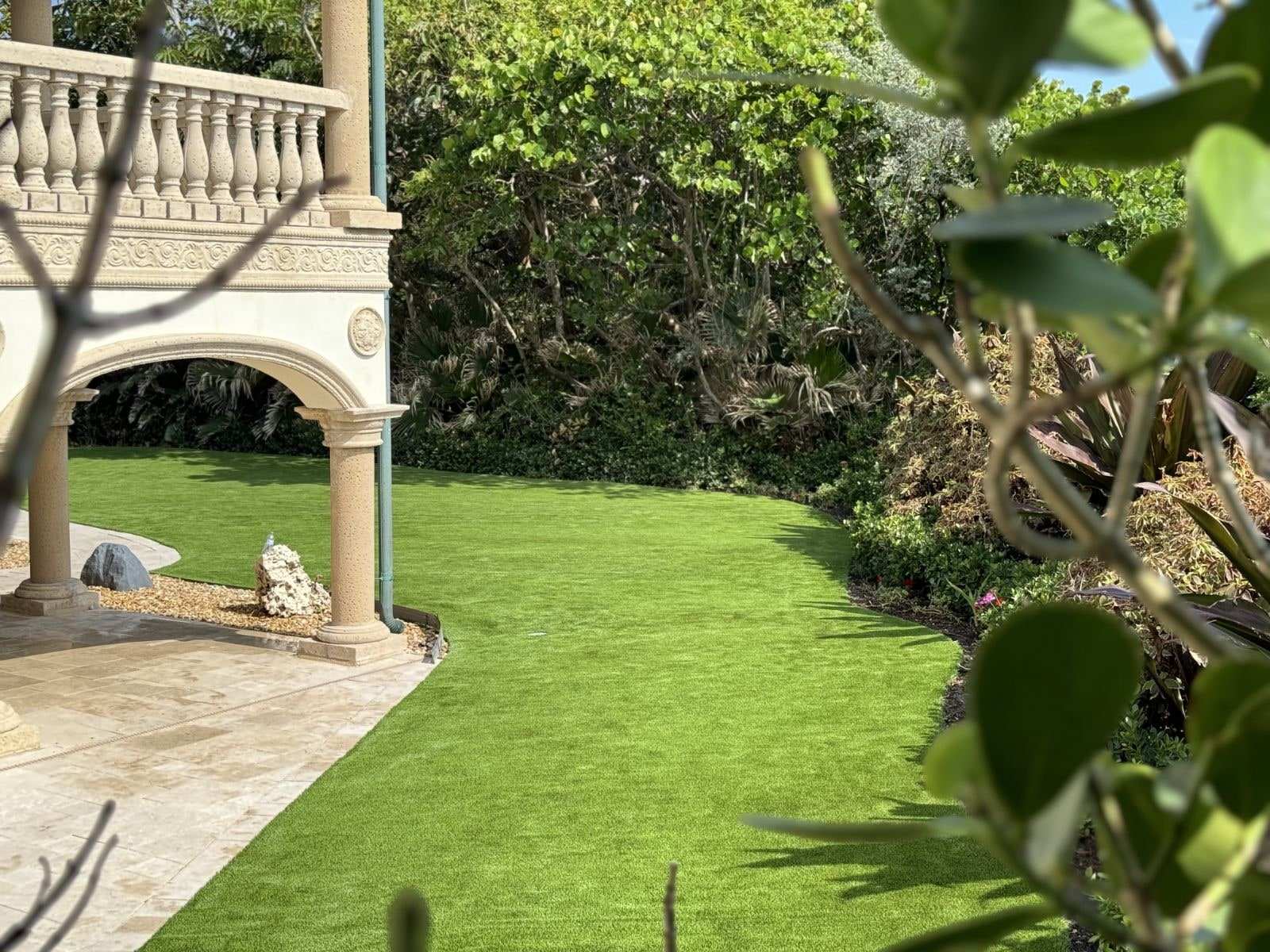
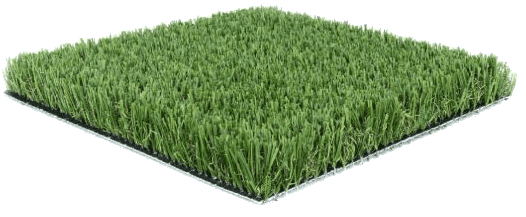
The city’s single-family zoning sets a minimum front yard of 30 feet in the SF-A district and 25 feet in SF-B. That’s a lot of lawn facing the street, and it is the first thing people see. For a front yard of that depth we usually recommend Luxe Flow 75. It has a tall S-blade in three greens with a two-tone thatch, and it holds up to a close look from the sidewalk.
The same zoning code limits fences, walls and other non-living barriers to 3 feet in the required front yard. Turf itself isn’t a barrier, but keep that rule in mind if your plan includes a raised border or a low wall along the property line.
Near the Olmos Basin
The Olmos Basin belongs to the City of San Antonio and the City of Alamo Heights. Olmos Dam was finished in 1926 as a flood-control structure, and the basin is usually dry and used for parks and a golf course. Homes near creeks and low ground still deal with heavy spring rain, since May is the wettest month locally. We grade and compact a drainage base under every install so water passes through the turf instead of collecting on top.