Turf in a city built around parks
St. Peters puts a lot of effort into green space, and plenty of homeowners want the same look at home without the weekend work. The city has more than 1,000 acres of parks and trails, the most extensive park system in St. Charles County, plus the St. Peters Rec-Plex. It incorporated as a city in 1959 and counted 57,732 residents in 2020.
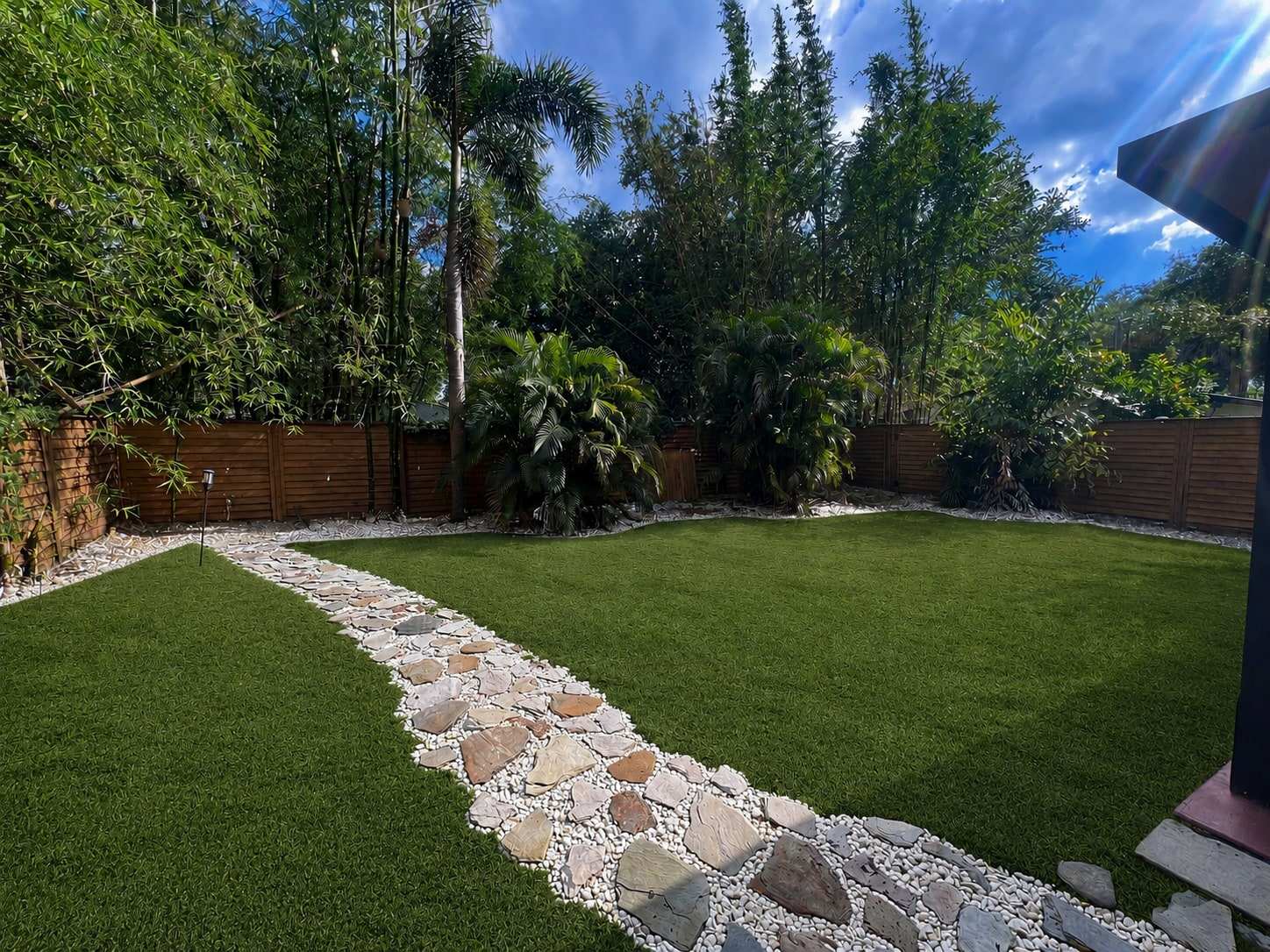
Yards here are mostly suburban lots with fenced backyards, and the typical turf jobs are practical: replace a tired backyard lawn, finish a side yard the mower can’t reach, or lay turf between stepping stones like the yard in the photo.
Where your water comes from
St. Peters treats part of its own water supply, and buys the rest already treated. The city draws from two sources: Missouri River water treated at the City of St. Louis Howard Bend plant, and groundwater pumped from wells in the Mississippi River floodplain. That groundwater carries a lot of iron, so the city softens it with lime at the St. Peters Water Treatment Plant, which it has run since 1980.
Every gallon you put on a lawn runs through that system and onto your bill.
The watering math
A green cool-season lawn in a St. Louis summer is thirsty. University of Missouri Extension says lawns may need 1 to 1.5 inches of water a week to stay green. One inch of water over 1,000 square feet is roughly 620 gallons, so a 2,000-square-foot backyard can use about 1,250 to 1,900 gallons a week through July and August. Turf drops that to zero. You may still hose it down after a dusty week or where a dog goes, but that’s minutes, not a sprinkler cycle.
Paths, beds and edges
Stone paths and planting beds are where turf installs succeed or fail. We cut each stone in by hand, secure the edges, and keep a clean border where turf meets mulch so the beds don’t spill onto the lawn. It also ends the edging chore. MU Extension notes zoysia and bermuda build thatch quickly, and both creep into beds and over pavers. Turf stays where we put it.