Our home base
O’Fallon is where our St. Louis crew starts every morning, so jobs in town get the shortest drive on our schedule. The city has grown fast. It went from about 28,000 people in 1995 to more than 69,000 by 2004, and the 2020 census counted 91,316, which makes it the most populous city in St. Charles County. A lot of O’Fallon’s subdivisions, and the lawns that came with them, went in during that run.
WingHaven is the best-known example. It’s a 1,100-acre development that started in 1999, mixing homes with offices, schools, shops and a golf course. Older parts of town sit closer to Dardenne Creek and parks like Fort Zumwalt, a 47.5-acre park with a fishing lake and the historic fort.
What a typical O’Fallon project looks like
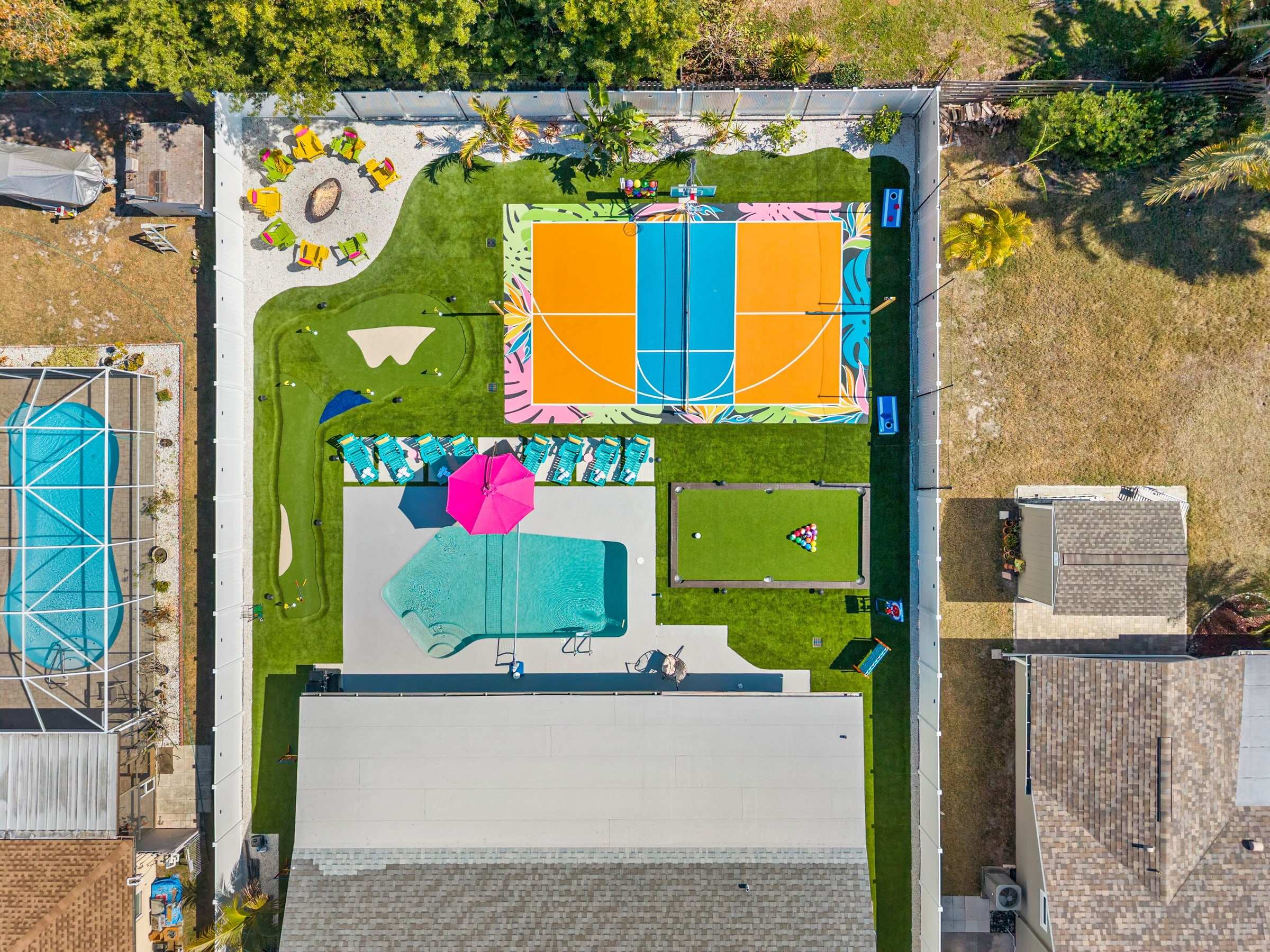
Many projects combine more than one area. The yard in the photo is a good example: lawn turf around a pool, a pickleball court and a putting green, all on one lot. We plan those pieces together so seams, edges and drainage line up instead of fighting each other.
Pairings that work well on subdivision lots:
- A lawn turf main area with a putting green cut in near the patio
- Turf strips between pool coping and the fence line
- A fenced dog area on a shorter pet blade, separate from the play lawn
Water and sewer in O’Fallon
Turf won’t change your sewer charge much if the city bills your sewer. The O’Fallon Water and Sewer Department reassesses sewer usage from winter water use, because summer lawn watering doesn’t go down the drain. Where turf helps is the water side. Some O’Fallon addresses are on city water, others on Public Water Supply District No. 2 or Missouri American Water, so the rate you save depends on your provider.
Built for St. Louis summers and winters
O’Fallon gets real heat and real freeze. NOAA’s 1991–2020 normals for Lambert airport show about 47 days a year at 90°F or hotter and about 85 nights at or below freezing. We excavate the old sod, compact a crushed-rock base and grade it so water drains through the turf backing. The finished surface stays green through August heat and comes out of winter without the mud and bare spots a worn lawn shows each March.